

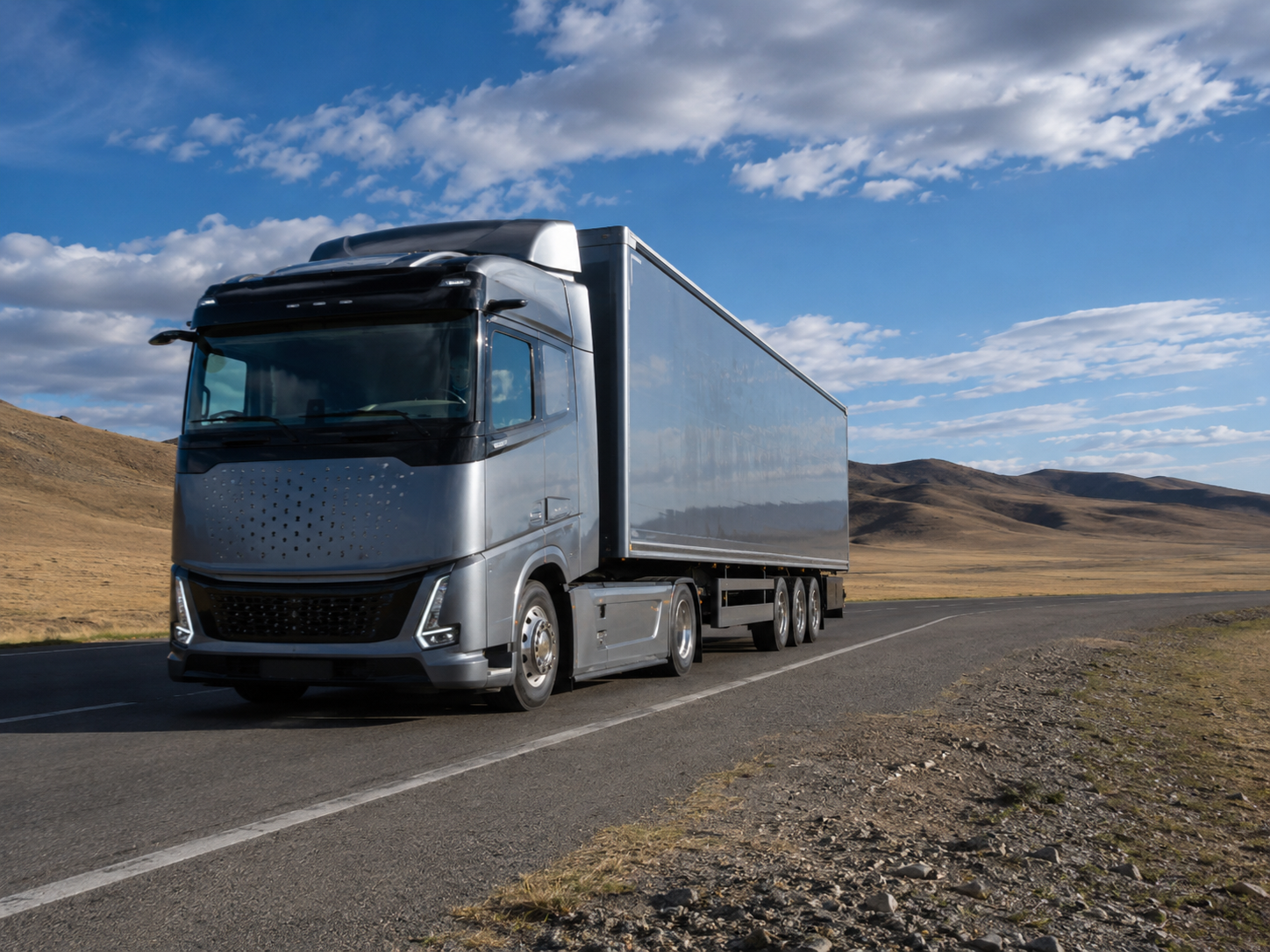
Mongolia Tests an Electric Truck on a Long-Haul Route
Monlogistics Group and Newcom LLC have completed Mongolia’s first long-distance freight trial using a heavy-duty fully electric truck. The vehicle covered approximately 1,400 kilometres on a round trip from Ulaanbaatar to Zamyn-Uud between August 7 and 9, 2026.
The Mongolian government and MongolianNews reported the completion of the trial. The project forms part of the government’s “Let’s Free Up” policy, known as “Chölöölye,” and its “Green Hub” initiative, or “Nogoon Örtöö,” which promotes the adoption of environmentally friendly technologies.
The test was designed to assess whether heavy electric road transport could operate effectively under Mongolia’s climate, road and commercial freight conditions.
Gross Combination Weight Reached 40 Tonnes
The trial involved a series-produced heavy electric tractor equipped with a high-capacity lithium iron phosphate battery. The make and exact model of the vehicle were not identified in the published information.
The truck and trailer had a gross combination weight of 40 tonnes and could carry a payload of up to 25 tonnes. These figures are consistent with the requirements of conventional long-haul commercial freight operations.
Completion of the route demonstrated the technical feasibility of using a heavy electric truck on one of Mongolia’s strategically important transport corridors. Zamyn-Uud lies near the Chinese border and is a major gateway for the country’s international trade and overland logistics.
Estimated CO₂ Savings Reached 1.5 Tonnes
According to the reported trial results, replacing a comparable diesel truck with the electric vehicle prevented an estimated 1.2–1.5 tonnes of CO₂ emissions during the round trip. This figure represents a calculated environmental benefit rather than a direct measurement of emissions during the journey.
Regular electric freight services on the route could reduce annual emissions by hundreds of tonnes. The actual impact would depend on the number of trips, payloads, vehicle energy consumption and the electricity sources used for charging.
Electrification Could Reduce Fuel Costs
The trial organisers said electricity consumption per kilometre remained stable and energy costs were lower than the cost of diesel fuel. Detailed figures for electricity use, charging prices and the total operating cost of the journey have not been published.
For Mongolia, freight electrification could also help reduce dependence on imported petroleum products. A larger electric commercial fleet may make transport costs less vulnerable to global fuel price fluctuations and supply disruptions.
Further deployment will require high-capacity charging stations, reliable electricity supplies and maintenance infrastructure designed for heavy electric vehicles.
Read also: Inner Mongolia Launches 136-Tonne AT150 Driverless Electric Mining Truck