

In global trade, there are certain cargoes for which delayed information can be just as costly as delayed delivery.
Fresh fruit, vegetables, meat, seafood, dairy products, pharmaceuticals, and other temperature-sensitive goods require continuous monitoring throughout their journey. For cargo owners, knowing a container’s location is no longer enough. They also need to know whether the required temperature is being maintained, whether the refrigeration unit is operating correctly, and whether any issue requires immediate action.
That is why Maersk’s latest technology upgrade goes far beyond a routine equipment modernization. It demonstrates how temperature-controlled cargo transportation is becoming an increasingly digital business.
Maersk Is Upgrading IoT Devices Across Its Entire Reefer Fleet
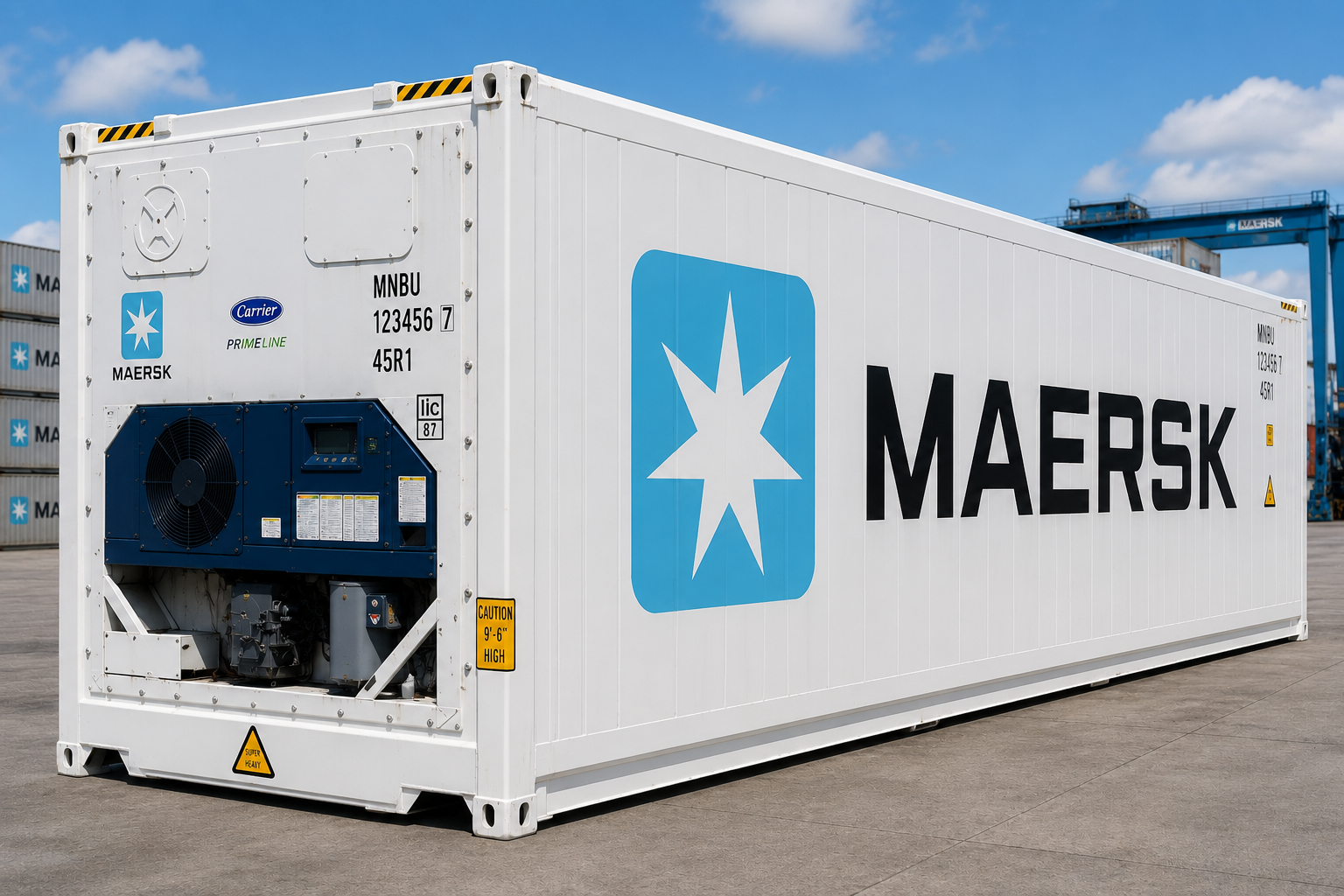
A.P. Moller – Maersk has begun a large-scale modernization of its refrigerated container fleet by deploying next-generation Internet of Things (IoT) connectivity devices across all reefer containers.
The company plans to replace every existing communication device throughout its global reefer fleet over the next several years.
Approximately 30% of the fleet has already been upgraded.
Once the rollout is complete, Maersk expects to standardize its hardware, improve the reliability of data transmission, and provide customers with a consistent digital experience regardless of which reefer container is carrying their cargo.
Why This Matters for Temperature-Controlled Cargo Transportation
In today’s logistics industry, data has become almost as valuable as the cargo itself.
Companies shipping temperature-controlled goods expect far more than basic shipment tracking. They want complete visibility into the condition of their cargo at every stage of the journey.
That includes continuous monitoring of:
- Container temperature;
- Humidity levels;
- Refrigeration unit performance;
- Potential deviations from required operating conditions;
- Events occurring during transportation;
- Real-time data availability.
According to Bruce Marshall, Head of Reefer Cargo at Maersk, customers transporting temperature-sensitive products increasingly rely on uninterrupted, high-quality data throughout the container’s entire journey.
A Digital Platform Already Connects 450 Vessels
The IoT rollout represents only one phase of Maersk’s broader digital transformation strategy.
The company is currently completing deployment of a new digital communications platform across a fleet of approximately 450 vessels.
This infrastructure will serve as the technological foundation for the next generation of cargo monitoring and supply chain management services.
In practical terms, Maersk is creating a unified digital ecosystem that connects vessels, containers, customers, and internal operating systems in real time.
From Shipment Visibility to Intelligent Decision Support
Since 2019, Maersk customers have been using the company’s Captain Peter platform to monitor shipments from the moment a container is packed until it reaches its final destination.
Now the company wants to take that capability significantly further.
The objective is no longer simply to display information, but to interpret it.
Instead of asking:
“Where is my container, and what is its current temperature?”
Customers will increasingly receive answers to a much more valuable question:
“What is happening to my cargo right now, is there any risk to product quality, and what action should be taken?”
This marks the transition from a shipment tracking platform to an intelligent decision-support system capable of helping customers respond before problems become costly.
Why Standardizing IoT Devices Matters
Over the years, Maersk’s reefer fleet has operated with several generations of IoT hardware.
That naturally resulted in differences in connectivity quality, data consistency, and compatibility with digital platforms.
By standardizing its technology, Maersk expects to:
- Improve data reliability;
- Simplify equipment maintenance;
- Create a more consistent customer experience;
- Accelerate deployment of new digital services;
- Deliver more accurate and predictable monitoring of temperature-controlled cargo transportation.
The Bigger Picture for Global Logistics
Maersk’s initiative reflects one of the most significant trends reshaping the container shipping industry.
Competition is becoming less about fleet size and more about the quality of digital services.
For companies transporting temperature-controlled cargo, simply providing a refrigerated container and ocean transportation is no longer enough.
Customers increasingly expect continuous access to operational data, early detection of potential issues, and digital tools that not only identify problems but also recommend the most effective corrective actions.
That is why Maersk’s IoT modernization is much more than a technical upgrade.
It represents another step toward intelligent supply chains, where a refrigerated container evolves from a simple transport asset into a real-time source of operational data, predictive insights, and decision support—helping preserve product quality throughout the entire journey.