

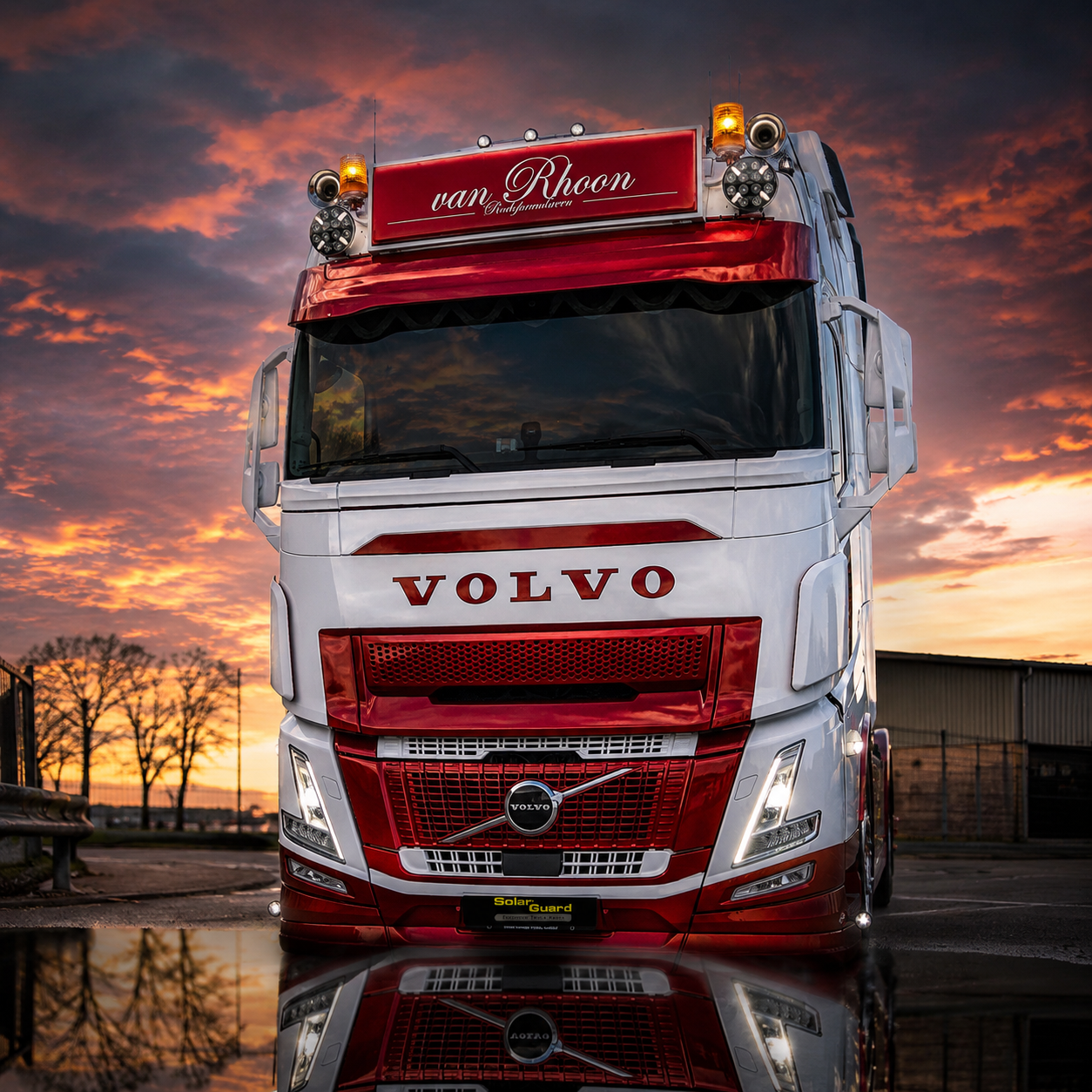
As the global automotive industry debates a full transition to electric vehicles, the world’s leading commercial truck manufacturers are preparing for a very different reality.
Volvo Trucks has unveiled an all-new global internal combustion engine platform designed to power heavy-duty trucks well into the next decade. Rather than abandoning diesel technology, the company is investing in its evolution—creating a new generation of engines capable of operating on renewable and alternative fuels.
The announcement reflects the realities of global freight transportation. Despite the rapid growth of battery-electric trucks, long-haul logistics still demands long driving range, maximum payload capacity, and minimal downtime—requirements that today’s battery technology can only meet in limited applications.
Not a Step Backward, but a Bridge to Zero Emissions
Volvo Trucks emphasizes that internal combustion engines remain one of the company’s three strategic pillars for achieving net-zero emissions by 2040.
Its long-term technology roadmap includes:
- battery-electric trucks;
- hydrogen fuel-cell electric trucks;
- internal combustion engines powered by renewable fuels.
The new engine platform has been engineered from the outset to operate not only on conventional diesel but also on biodiesel, HVO, biogas and, in the future, green hydrogen.
Rather than forcing the freight industry to abandon its existing infrastructure, Volvo aims to reduce emissions while allowing fleets to transition gradually using multiple fuel technologies.
Fuel Efficiency Remains the Industry’s Most Valuable Metric
For trucking companies, the cost per mile remains the single most important operating factor.
That is why Volvo is highlighting fuel efficiency—not horsepower—as the biggest advantage of its new engine platform.
According to the company, the new engines can reduce fuel consumption by up to 4% compared with the outgoing generation.
Combined with the aerodynamic improvements introduced through the Volvo Aero range in 2024, total fuel savings can reach approximately 9% compared with previous-generation trucks.
For large fleets, this translates into thousands of gallons of fuel saved annually, significantly lowering operating costs while reducing CO₂ emissions.
Engineered from the Ground Up
The entirely new engine platform was developed in-house by Volvo Trucks and incorporates a wide range of engineering improvements.
- New cylinder architecture
- Redesigned turbochargers
- Enhanced engine braking system
- An updated version of the Volvo I-Shift automated transmission
- Higher torque output in both diesel and gas-powered versions
- Expanded compatibility with the I-Roll system
More truck configurations will now be able to automatically shut down the engine while coasting downhill, further improving fuel economy and lowering emissions.
Why This Matters for Global Logistics
For years, many industry observers expected battery-electric trucks to rapidly replace diesel-powered vehicles.
However, the world’s largest freight carriers are taking a more pragmatic approach.
Electric trucks are expanding quickly in urban distribution and regional delivery operations. Long-haul transportation, heavy construction, mining and oversized cargo operations, however, continue to rely on internal combustion engines because of their superior range, payload capability and operational flexibility.
Rather than betting on a single technology, major truck manufacturers are now investing in multiple powertrain solutions, recognizing that the transition to zero-emission freight will vary depending on application.
Technical Specifications of Volvo Trucks’ New Engine Platform
Compatible Fuels
- Diesel
- B100 Biodiesel
- HVO (Hydrotreated Vegetable Oil)
- Biogas / Bio-LNG
- Green Hydrogen (future capability)
D13 Diesel Engine
- Power output: 380–560 hp
- Torque: 1,800–2,900 Nm
G13 Gas Engine
- Power output: 420–500 hp
- Torque: 2,400–2,800 Nm
Key Features
- Up to 4% lower fuel consumption compared with the previous generation
- Euro 6 compliant
- Meets the latest NNR3 noise regulations
- Prepared for future emissions legislation
- New engine braking system
- Redesigned cylinder architecture
- New turbochargers
- Updated Volvo I-Shift transmission
- Expanded compatibility with the I-Roll system featuring automatic engine stop/start while coasting
Truck Models
- Volvo FM
- Volvo FMX
- Volvo FH
- Volvo FH Aero
Market Launch
Sales will begin in the third quarter of 2026.
The initial launch markets include:
- Europe
- Morocco
- Turkey
- India
North America, Asia and South Africa will follow in subsequent rollout phases.
Manufacturing
The new engines will initially be manufactured at Volvo’s engine plant in Skövde, Sweden.
Truck assembly will take place at Volvo’s production facilities in Tuve, Sweden, and Ghent, Belgium.
More Than Just a New Engine
The launch of Volvo’s new engine platform sends a broader message about the future of heavy-duty transportation.
While much of the industry focuses exclusively on battery-electric trucks, Volvo is pursuing a diversified strategy built around electricity, hydrogen and advanced internal combustion engines.
For the global logistics industry, the message is clear: the diesel era is far from over. Instead, it is entering a new phase—one that is cleaner, more fuel-efficient and capable of operating on an expanding range of low-carbon fuels.
That is why many of the world’s largest freight carriers continue investing in modern diesel fleets—not as yesterday’s technology, but as a critical component of the transition toward zero-emission transportation.