

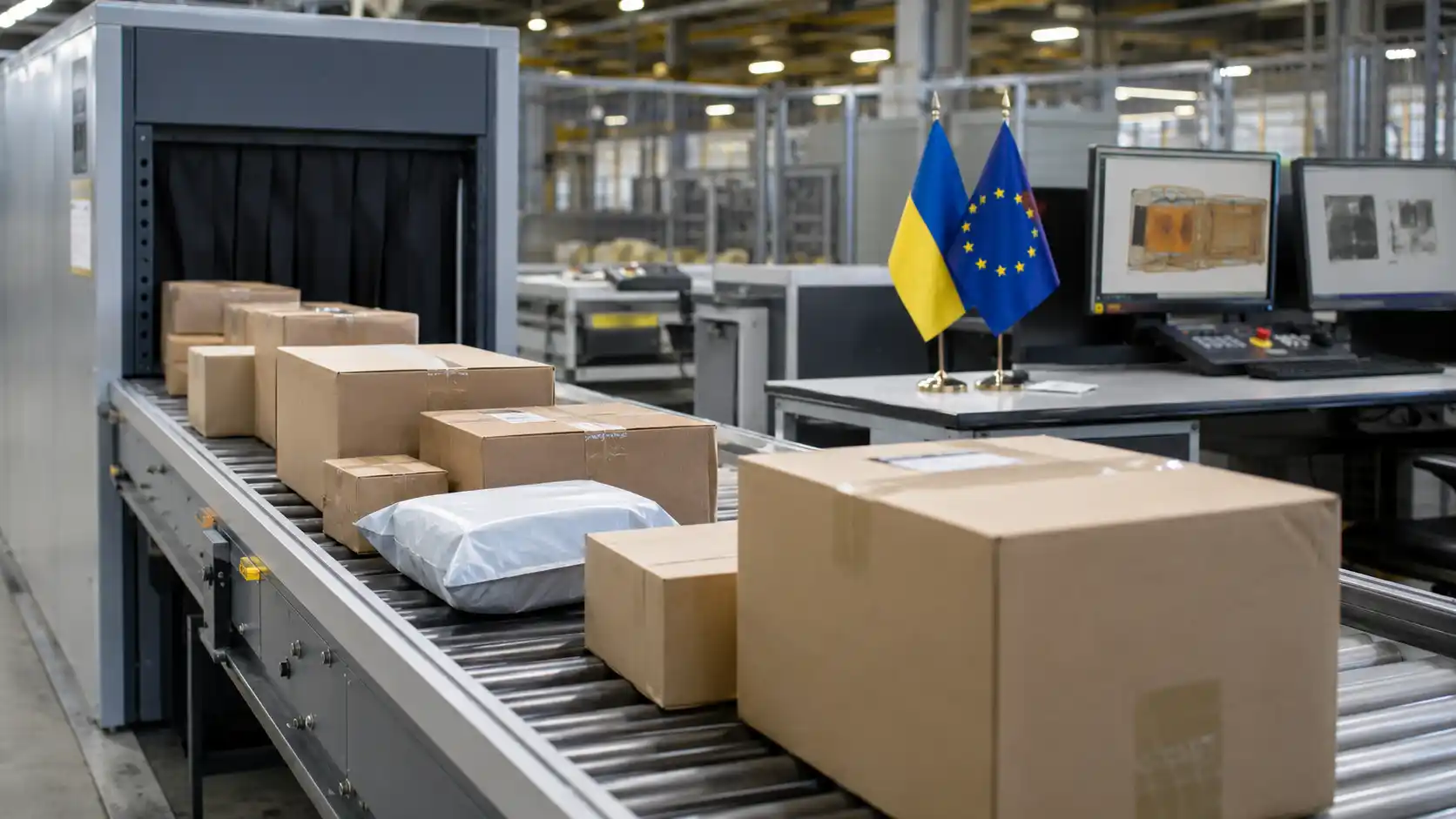
Ukraine must change the taxation of imported consignments worth up to €150, but parliament has again failed to approve the required legislation
Ukraine risks a delay to an approximately €3.7 billion European Union macro-financial assistance tranche unless it adopts legislation removing the tax exemption for low-value imported parcels.
European Commission spokesperson Balazs Ujvari said the law is one of 12 conditions that Ukraine must meet before the payment planned for early autumn 2026 can proceed. The money has not yet been disbursed and remains subject to the Commission’s assessment.
“We are following the discussion very closely and paying particular attention to this law because it is part of the macro-financial assistance requirements,” Balazs Ujvari said
The EU’s target for relevant financial support to Ukraine in 2026 is €8.35 billion, of which €3.2 billion has already been paid. The European Commission is considering a second tranche of approximately €3.7 billion for the beginning of autumn.
“This law must be adopted so that we can continue with the payments as foreseen,” the Commission spokesperson said
On September 1, the Verkhovna Rada again failed to approve draft laws No. 15460 and No. 15112-d, which would change the taxation and customs treatment of international parcels.
The customs bill received 194 votes, short of the required parliamentary majority of 226. The proposals were returned to the government for revision, meaning that Ukraine’s current exemption for commercial goods in imported parcels worth up to €150 remains in place.
According to Reuters, the reform is connected both to EU financing and Ukraine’s commitments under its programme with the International Monetary Fund. The proposed tax was previously expected to generate approximately UAH 10 billion annually for the state budget.
Danylo Hetmantsev, head of the Ukrainian parliament’s finance, tax and customs policy committee, estimated the potentially delayed EU and IMF funding at around €4 billion. The final amount available will nevertheless depend on the lenders’ reviews and Ukraine’s compliance with the relevant programme conditions.
The rejected proposals sought to remove the existing exemption for goods worth up to €150 purchased through foreign online marketplaces. Under the proposed system, commercial marketplace purchases would have been subject to Ukraine’s 20% VAT from the first euro.
Non-commercial parcels sent between private individuals would have retained an exemption of up to €45. The legislation also addressed the obligations of non-resident marketplaces, customs-clearance procedures and exchange-rate rules for distance sales.
Because parliament rejected the bills and returned them for revision, these provisions have not entered into force. Their scope, rates and administrative arrangements may change before a new version is submitted.
Removing the exemption would directly affect cross-border e-commerce. Foreign marketplaces and sellers would need to provide more detailed information about products, transaction values, recipients and collected taxes. Postal, express-delivery and customs operators would also have to adapt their digital systems and data-exchange procedures.
For consumers, VAT could increase the final cost of low-value purchases from foreign platforms. Ukrainian manufacturers and retailers, however, argue that the reform would create more equal competitive conditions because imported marketplace goods currently benefit from the €150 exemption.
The measure could also change parcel-flow patterns. Consumers may consolidate orders, reduce small purchases or shift some spending to domestic sellers. Logistics companies could therefore see changes in shipment numbers, average order values and workloads at sorting centres and customs facilities.
The European Commission regards the legislation as an important measure for mobilising revenue for Ukraine’s budget. This is particularly relevant as the country faces substantial financing requirements resulting from Russia’s continuing aggression.
The failed parliamentary vote does not automatically mean that the €3.7 billion tranche has been permanently cancelled. The immediate risk is a delay until revised legislation is adopted and the remaining programme requirements are fulfilled.
The Ukrainian government must now amend the proposals and seek parliamentary approval again. The timing of the payment will depend on when Ukraine satisfies all 12 conditions and when the European Commission completes its assessment.
Read also: EU Ends €150 Duty-Free Limit for E-Commerce Imports