

Brunner Says Schengen Controls Should Be Phased Out
EU Commissioner for Internal Affairs and Migration Magnus Brunner has called for the gradual removal of Germany’s internal border controls, arguing that stronger protection of the EU’s external borders and the implementation of the new European asylum system have changed the situation.
“It is time to gradually phase out internal European border controls,” Brunner said, according to Verkehrsrundschau.
His position follows an earlier appeal from the European Commission to Germany and other Schengen countries to reconsider prolonged checks. K2Cargo News previously reported that Brussels urged nine countries to restore unrestricted movement within the Schengen Area, warning that repeated extensions of border controls are creating problems for international transport and supply chains.
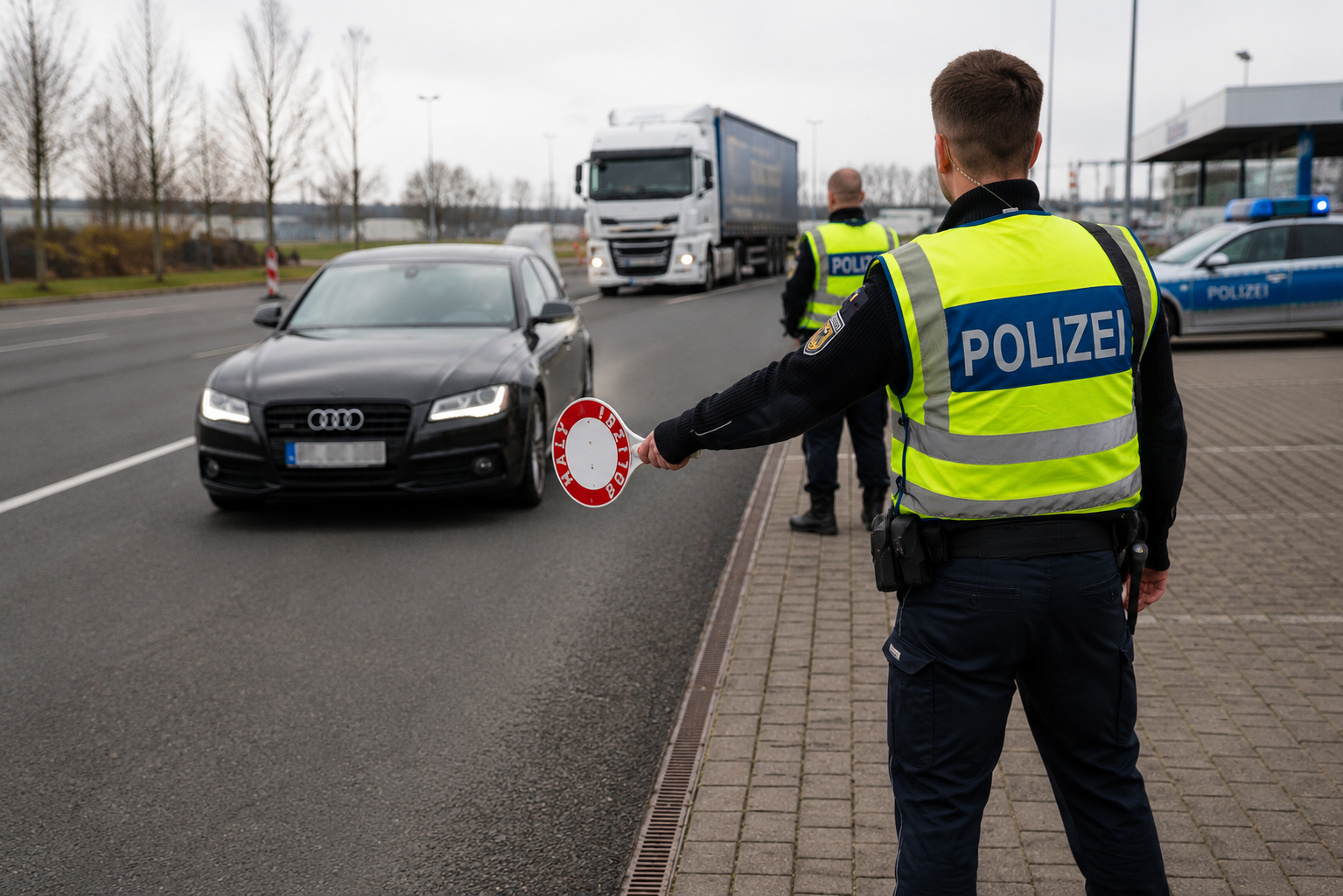
Germany introduced checks at all its land borders in September 2024. The measures were initiated under former Interior Minister Nancy Faeser. In May 2025, her successor, Alexander Dobrindt, tightened the controls and subsequently extended them several times.
The current measures are due to remain in effect until September, and the German Interior Ministry has not yet announced plans to abandon them.
Irregular Border Crossings Have Declined
Brunner pointed to a significant reduction in irregular migration as one of the main reasons for changing the current policy.
According to the EU border agency Frontex, the number of detected irregular crossings at Europe’s external borders fell by approximately one third during the first half of the year.
The commissioner also said that the EU’s external borders are now better protected. In his view, stronger common procedures and improved cooperation with partner countries reduce the need to maintain systematic checks between Schengen members.
The decline does not mean that migration pressure has disappeared. However, Brunner believes that checks at internal European borders should again become exceptional and targeted rather than a semi-permanent feature of cross-border travel.
EU Asylum Reform Changes the Conditions
Another major argument is the reform of the Common European Asylum System, known as GEAS, which entered into application on June 12.
The reform introduces common procedures for screening and registering people arriving at the EU’s external borders. It also provides faster asylum and return procedures, clearer rules on which country is responsible for an application and a solidarity mechanism for member states facing increased pressure.
Brunner believes that the new framework creates the necessary conditions for gradually restoring normal movement within the Schengen Area.
Under this approach, migration management should be concentrated primarily at the EU’s external borders rather than through prolonged controls between member states.
Martin Schulz Calls the Checks Ineffective
Former European Parliament President Martin Schulz has also called on Germany to abandon stationary border controls.
“These checks are practically useless and at the same time violate fundamental principles of European law,” Schulz said.
He described permanent checkpoints as symbolic politics that create significant disruption without addressing the main security threats.
Schulz stressed that he does not oppose flexible and selective police checks, which have traditionally been conducted in border regions. His criticism is directed at permanent control points that are maintained regardless of the actual level of risk.
According to Schulz, smugglers, drug couriers and other criminal groups can simply choose alternative routes when they know where stationary checkpoints are located.
As a result, the main burden falls on ordinary travellers, people commuting across the border and transport companies.
Freight Operators Face Queues and Additional Costs
The debate has direct consequences for European road freight transport.
Checks at several crossings from the Netherlands into Germany have led to queues stretching for several kilometres on the Dutch side of the border.
Even when inspectors do not stop every truck, the reduction in road capacity slows the entire traffic flow. Drivers may lose hours waiting to cross, disrupting delivery schedules and increasing operating costs.
For carriers, border congestion means additional fuel consumption, longer paid working hours and less predictable arrival times. It also makes compliance with regulated driving and rest periods more difficult.
A truck delayed at the border may miss a reserved warehouse slot, fail to complete its next scheduled journey or be forced to stop for a mandatory rest period before reaching its destination.
As K2Cargo News noted in its report on the European Commission’s demand to end prolonged internal border checks, delays are particularly disruptive for automotive production, retail distribution and other industries dependent on precisely scheduled deliveries.
Border Residents Are Also Affected
Permanent controls create substantial difficulties for residents of border regions who travel daily between countries for work, education or family reasons.
Martin Schulz comes from an area near Aachen and continues to live in the border region. He argues that local residents experience the negative effects of the controls every day, while their practical benefits remain limited.
For many commuters, even a short inspection can turn a regular journey into a long delay. When congestion affects major motorway crossings, the consequences extend to nearby towns and alternative local roads.
The financial burden is therefore not limited to freight companies. Employees, small businesses and local communities also bear additional costs.
Some Countries Are Already Removing Checks
Brunner welcomed signs that some EU countries are moving toward a gradual return to normal Schengen procedures.
Checks on the motorway connection near Trier between Germany and Luxembourg have already been discontinued. Austria has also ended border controls with Slovenia.
These decisions do not prevent mobile police operations or targeted inspections based on specific intelligence and risk assessments.
Instead, they replace permanent bottlenecks with more flexible enforcement methods that cause less disruption to ordinary passenger and freight traffic.
Brunner’s position suggests that the European Commission will continue to ask member states to justify every extension of internal controls and to use less restrictive alternatives wherever possible.
German Government Continues to Defend the Measures
Despite growing pressure, the German Interior Ministry has not announced the general removal of the controls.
Interior Minister Alexander Dobrindt has repeatedly defended the measures as an instrument for limiting irregular migration and combating people smuggling.
He maintains that checks should remain in place until the new European migration and asylum system is fully operational.
Critics dispute the claim that Germany still faces an exceptional situation serious enough to justify prolonged internal border controls.
Schulz argues that the emergency cited by the Interior Ministry does not exist and that the European Commission should take a firmer position toward Germany.
Courts Are Examining the Legality of the Checks
The dispute is also moving through the German courts.
The Administrative Court of Koblenz recently ruled in favour of a law professor from Saarbrücken who challenged a check carried out at the German–Luxembourg border.
The decision was issued at first instance, and Dobrindt appealed against it. The case therefore does not yet provide a final legal answer on the broader validity of Germany’s border-control policy.
Schulz expects the checks eventually to be overturned by the courts, although proceedings through all judicial levels may take considerable time.
He argues that permanent checkpoints are incompatible with the Schengen rules, which guarantee free movement and permit internal border controls only in exceptional circumstances and for limited periods.
Schengen Faces a Test Between Security and Free Movement
The dispute highlights one of the main challenges facing the European Union: balancing security and migration concerns with unrestricted movement across internal borders.
Temporary checks are permitted under the Schengen Borders Code, but they are intended to remain exceptional. When they are repeatedly extended, temporary restrictions risk becoming permanent in practice.
For the logistics industry, the issue is not merely political or legal. The efficiency of European road freight depends on trucks being able to cross national borders without systematic interruptions.
Ending permanent checkpoints would not mean abandoning border enforcement. Instead, the emphasis could move toward external-border protection, cross-border police cooperation, mobile inspections and targeted measures against specific risks.
Brunner’s comments indicate that the European Commission believes lower migration figures and the new asylum framework now provide sufficient grounds to begin this transition.