

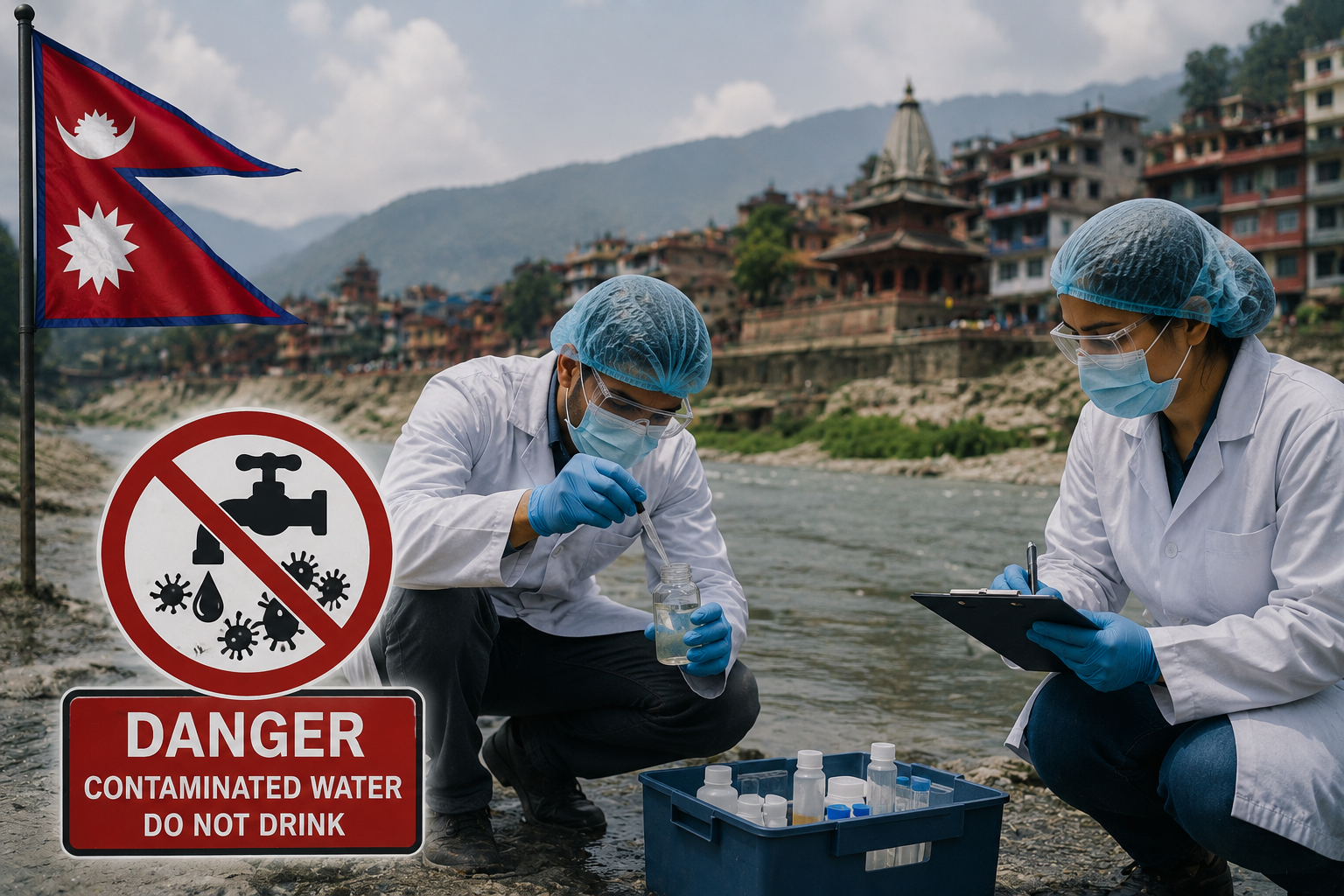
The Nepalese government regularly monitors drinking water quality across the country. The latest inspections revealed an alarming situation: every water sample tested contained dangerous fecal coliform bacteria as well as Escherichia coli (E. coli). With the monsoon season underway, experts warn that Nepal could face a large-scale outbreak of waterborne diseases.
Although more than 90% of the population has access to drinking water, the Nepal Multiple Indicator Cluster Survey (MICS) 2024–2025 found that 60% of drinking water sources are contaminated with E. coli and other harmful microorganisms. According to specialists, this points not only to deteriorating infrastructure but also to a systemic crisis in the country’s water supply.
The primary cause is the country’s aging and damaged water pipeline network, much of which runs alongside sewage systems, allowing wastewater to seep into drinking water supplies. Instead of upgrading the infrastructure, authorities continue to advise residents to boil water, use filtration systems, or purchase bottled water—options that are simply unaffordable for many Nepalese families.
Doctors warn that contaminated water significantly increases the risk of outbreaks of cholera, dysentery, typhoid fever, and hepatitis A and E, while also causing widespread gastrointestinal illnesses. Experts stress that the monsoon rains merely expose a long-standing problem. Without urgent repairs to the water supply system, continuous water quality monitoring, and stricter government oversight, the risk of widespread disease outbreaks and additional fatalities will continue to rise.
Read also: China Unveils Four AI Development Priorities at WAIC 2026
