

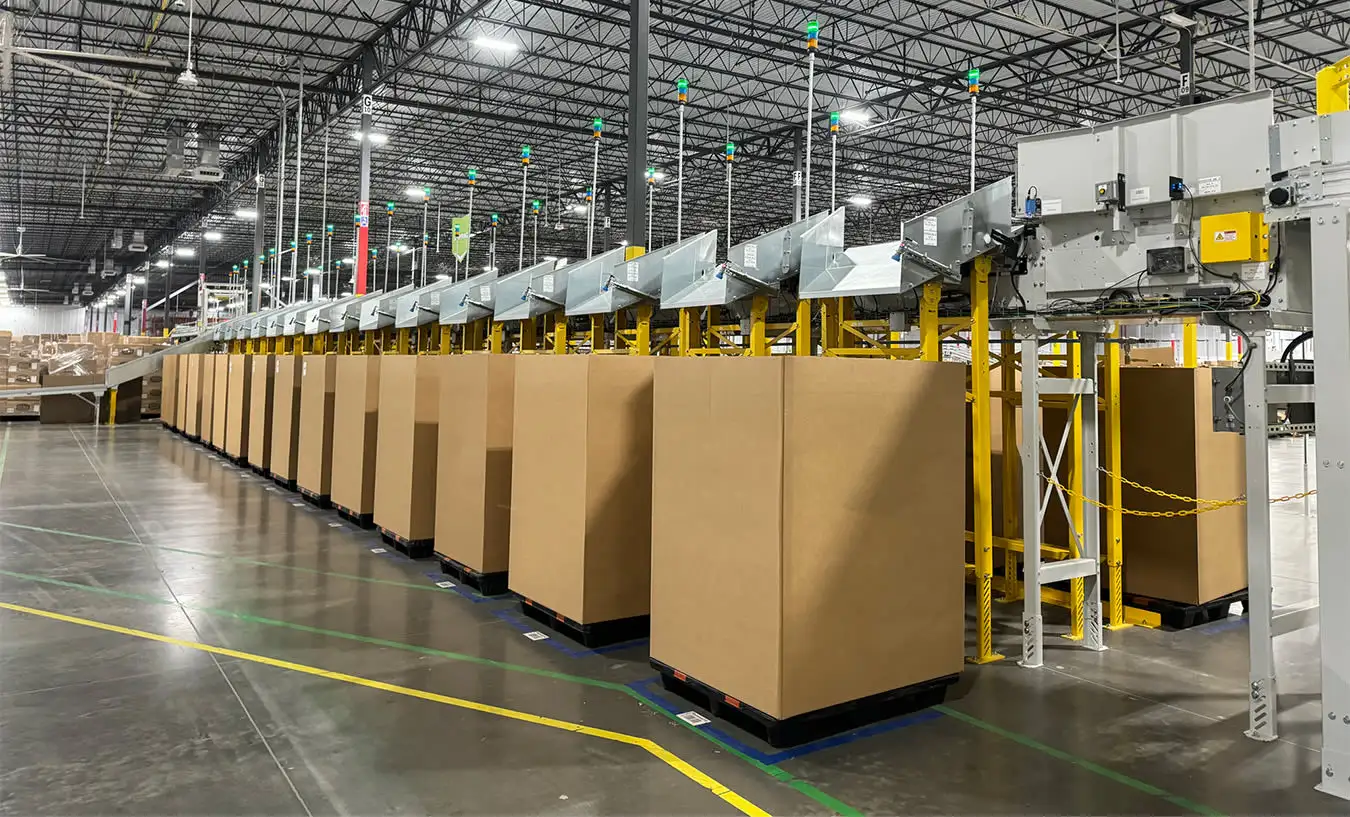
New operations in Mississauga and Manchester will allow businesses to position inventory closer to customers while managing freight, customs and order fulfillment through one platform
Flexport takes fulfillment beyond the United States
San Francisco-based logistics company Flexport has launched its first fulfillment operations outside the United States, expanding the service into Canada and the United Kingdom.
According to the company’s official announcement, published on September 2, 2026, fulfillment is now available in Mississauga, Ontario, and Manchester, England.
Businesses can import inventory in bulk, store products inside the destination market and fulfill domestic orders without sending every parcel across an international border. Customers will retain access to the same Flexport platform, account team, freight services and customs relationships used for their existing international shipments.
Orders and returns can remain within Canada or the United Kingdom after the inventory has entered the market and completed customs clearance.
“Our customers built demand in Canada and the UK long before they had a good way to serve it,” Flexport founder and CEO Ryan Petersen said
Petersen said customers combining Flexport’s US freight and fulfillment services had already achieved measurable efficiencies and cost savings through the company’s end-to-end logistics model.
Mississauga facility targets the Toronto market
Flexport’s Canadian fulfillment center is located in Mississauga, close to Toronto Pearson International Airport and within reach of the country’s largest population center.
The facility holds Health Canada certifications covering medical products, supplements and consumer goods. Inbound receiving began in July 2026, while the first outbound customer orders are scheduled to ship in September.
Holding inventory in Canada allows brands to replace repeated cross-border parcel shipments with consolidated imports. Goods can be transported into the country in bulk, cleared through customs and distributed as domestic orders.
The model may shorten delivery times and make customs expenses more predictable. It can also simplify returns because products do not have to cross the US–Canada border each time a customer sends an order back.
The location provides access to Toronto’s consumer market, Ontario’s road network and the main freight corridors connecting Canada with the northeastern United States.
Manchester warehouses use AutoStore robotics
In the United Kingdom, Flexport is operating through two partner-run fulfillment facilities in Manchester. Both locations are equipped with AutoStore automated storage and retrieval systems.
AutoStore places products inside bins arranged in a dense grid. Robots travel across the top of the structure and bring the required bins to human picking stations, reducing the need for workers to walk through conventional warehouse aisles.
Flexport says the technology can hold approximately the same volume of inventory in one-quarter of the floor space required by a traditional warehouse configuration. This could increase storage density and accelerate the processing of large numbers of smaller e-commerce orders.
Manchester also provides road access to major consumer markets in northern and central England. Flexport has not disclosed the size of the partner facilities, their designed throughput or the expected number of daily orders.
Tariff uncertainty increases the value of local inventory
The expansion comes as international trade becomes increasingly complex. Changing tariffs, closer scrutiny of product origin and stricter importer requirements are increasing the risks faced by businesses serving customers directly from overseas warehouses.
Domestic storage does not eliminate customs procedures or import duties. It does, however, allow companies to consolidate inventory, complete customs clearance in advance and process subsequent purchases as domestic deliveries.
This is particularly relevant to North American supply chains, where components and finished goods may move between Canada, the United States and Mexico before reaching consumers. Tighter enforcement of origin rules can affect the duty applied to a product even when it is physically shipped from a neighboring country.
During Flexport’s Tariff Trends 2026 webinar, company representatives said the next phase of trade uncertainty could focus increasingly on who is permitted to act as importer of record, when imports can be completed and how customs authorities determine a product’s true country of origin.
The proposed 50% US Section 338 tariffs on selected Canadian products discussed during the webinar had been temporarily delayed while Washington and Ottawa negotiated. They should therefore be treated as a potential measure rather than an enacted duty.
Customs compliance becomes a separate supply-chain risk
Flexport has said US customs authorities are preparing to examine importer-of-record registrations more closely. Businesses using a post-office box or an address that is not their actual principal place of business could face additional scrutiny, while incomplete contact information may result in importer records being deactivated.
Customs brokers working with foreign importers may also face broader due-diligence requirements covering ownership structures, affiliated companies, US assets and the importer’s ability to pay duties.
For shippers, this means warehouse location is becoming part of customs strategy. Businesses must consider not only storage and last-mile costs but also the country of import, origin rules, importer status and the ability to handle returns domestically.
As K2Cargo.News previously reported, Nespresso is diversifying its last-mile delivery network through partnerships with regional carriers. Both strategies illustrate how brands are moving away from highly centralized distribution models toward networks positioned closer to customers.
Continental Europe is planned for 2027
Flexport plans to extend its fulfillment network into continental Europe in 2027, where it already provides freight and customs services. The company has not yet identified the countries, cities or opening dates involved.
Flexport says its logistics network serves more than 13,000 companies and combines air, ocean, road and rail freight with customs clearance, warehousing and fulfillment.
The Canadian and British expansion gives customers an opportunity to manage international freight and domestic order processing through a single logistics provider. Its commercial impact will ultimately depend on pricing, processing speed, inventory availability and Flexport’s ability to maintain consistent service across company-operated and partner-run facilities.
Read also: Nespresso Diversifies Its Last-Mile Delivery Network