

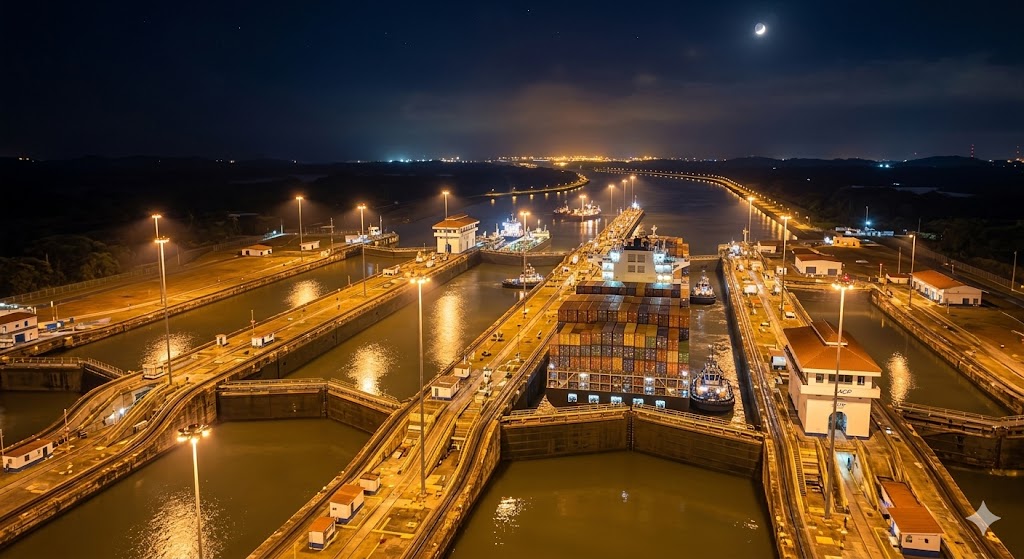
Statistical Shifts
Data from the Panama Canal Authority for May 2026 confirms a radical change in direction: traffic through the canal increased by 18% year-over-year, reaching 1,149 vessels. The energy sector shows particularly strong momentum: the share of oil tankers, LNG carriers, and chemical tankers in total traffic reached 39%, an increase of 6 percentage points compared to 2025.
Strategic Choices: Why Panama?
Geopolitical instability in the Strait of Hormuz has forced operators to make difficult decisions. Today, carriers are left with three main scenarios:
- Risky waiting in the blocked zone of the Strait of Hormuz.
- A long detour around the Cape of Good Hope.
- Reorientation toward the Panama Canal for transit between the Atlantic and Pacific Oceans.
Although the canal is not a direct substitute for the Strait of Hormuz, it has become an effective tool for redistributing flows between Asia and the Americas, helping companies minimize downtime.
The Flip Side: Congestion and Delays
This surge in demand has inevitably led to bottlenecks. Transit wait times have increased by more than 1.5 times, and the cost of priority booking slots continues to rise. Industry analysts are drawing parallels to the Red Sea crisis of 2024–2025, fearing that massive fleet rerouting will lead to a shortage of tonnage and a sharp spike in freight rates.
Impact on the Energy Market
For the energy sector, accustomed to predictable routes through the Strait of Hormuz, this new reality means:
- Increased Shipping Legs: Long detours inevitably extend delivery times.
- Rising Operating Costs: Additional fuel consumption and higher insurance premiums place a heavy burden on the final cost of energy resources.
- Freight Spikes: Rates for transporting crude oil and petroleum products on certain routes have already risen by tens of percentage points.
Who Benefits?
The crisis has redistributed profit streams in favor of the Panama Canal Authority, U.S. East Coast ports, logistics hubs in Mexico, and Caribbean terminals. Tanker fleet owners, whose services have become critically in demand, are also among the beneficiaries.
Risks and Business Outlook
The main concern for analysts is the canal’s limited capacity, which only recently struggled with drought restrictions. If traffic continues to grow at this pace, Panama risks turning from a “lifeline” into another global logistics bottleneck.
Recommendation for Logistics Operators:
The current situation requires an urgent review of procurement and supply chain strategies. Companies dependent on imports of energy and chemical products must factor increased freight costs and longer lead times into their budgets. If tensions in the Middle East persist through the end of the summer, the market may see a new round of rising freight rates and a shortage of available tonnage, making logistics diversification a matter of business survival.
