

Germany Launches Major Infrastructure Upgrade
Germany’s federal motorway operator Autobahn GmbH plans to invest around €500 million in upgrading motorway rest areas across the country.
The funding will be used to modernize sanitary facilities, parking areas, internal road layouts and supporting infrastructure.
The investment is expected to come from the federal budget and is intended to address years of delayed maintenance affecting many facilities.
Approximately 100 motorway rest areas are currently included in the modernization programme.
The project is considered essential not only for motorists but also for the freight industry, since rest areas allow truck drivers to comply with European driving and rest-time regulations.
ADAC Inspection Revealed Serious Deficiencies
The investment programme follows the latest inspection by the German Automobile Club (ADAC).
The organization assessed 50 unattended motorway rest areas equipped with public toilets along Germany’s main holiday routes.
Most locations received only average or poor ratings.
Inspectors reported dirty facilities, missing toilet paper, broken hand dryers, empty soap dispensers and partially closed toilet cubicles.
For truck drivers these shortcomings represent more than inconvenience.
Professional drivers spend mandatory daily and weekly rest periods at motorway service areas. Poor sanitary conditions directly affect recovery, well-being and road safety.
K2Cargo.News previously reported that Europe continues to face a shortage of quality truck parking.
New Facilities Will Follow One National Design
Autobahn GmbH plans to replace individually designed toilet buildings with standardized modular facilities.
The new structures will feature enclosed cubicles, improved thermal insulation, modern technical systems and easy-to-maintain interior materials.
Standardization will accelerate construction while reducing long-term maintenance costs.
It will also simplify servicing, as identical equipment and components can be used nationwide.
Drivers should therefore experience a more consistent level of quality regardless of where they stop.
Modernization Will Extend Beyond Toilets
The programme covers much more than sanitary facilities.
Parking areas, internal roads, pedestrian zones, lighting systems and engineering infrastructure will also be upgraded.
Traffic circulation inside service areas is expected to improve significantly.
Many existing sites force trucks, passenger cars and buses to share limited space, creating congestion and increasing accident risks.
The redesigned layouts aim to separate traffic flows more effectively and improve operational safety.
Truck Traffic Continues to Increase
Germany remains Europe’s largest freight transit market.
Thousands of heavy trucks travel daily along German motorways connecting North Sea ports with Central Europe, Scandinavia and Southern Europe.
At the same time, European legislation requires strict compliance with drivers’ working and rest-time rules.
When no legal parking space is available, drivers may be forced either to violate regulations or stop in unsuitable locations.
Improving parking quality and capacity has therefore become an important part of Europe’s logistics infrastructure.
Bosch and Euro Rastpark Expand Secure Parking
Alongside government investment, private operators are also expanding infrastructure.
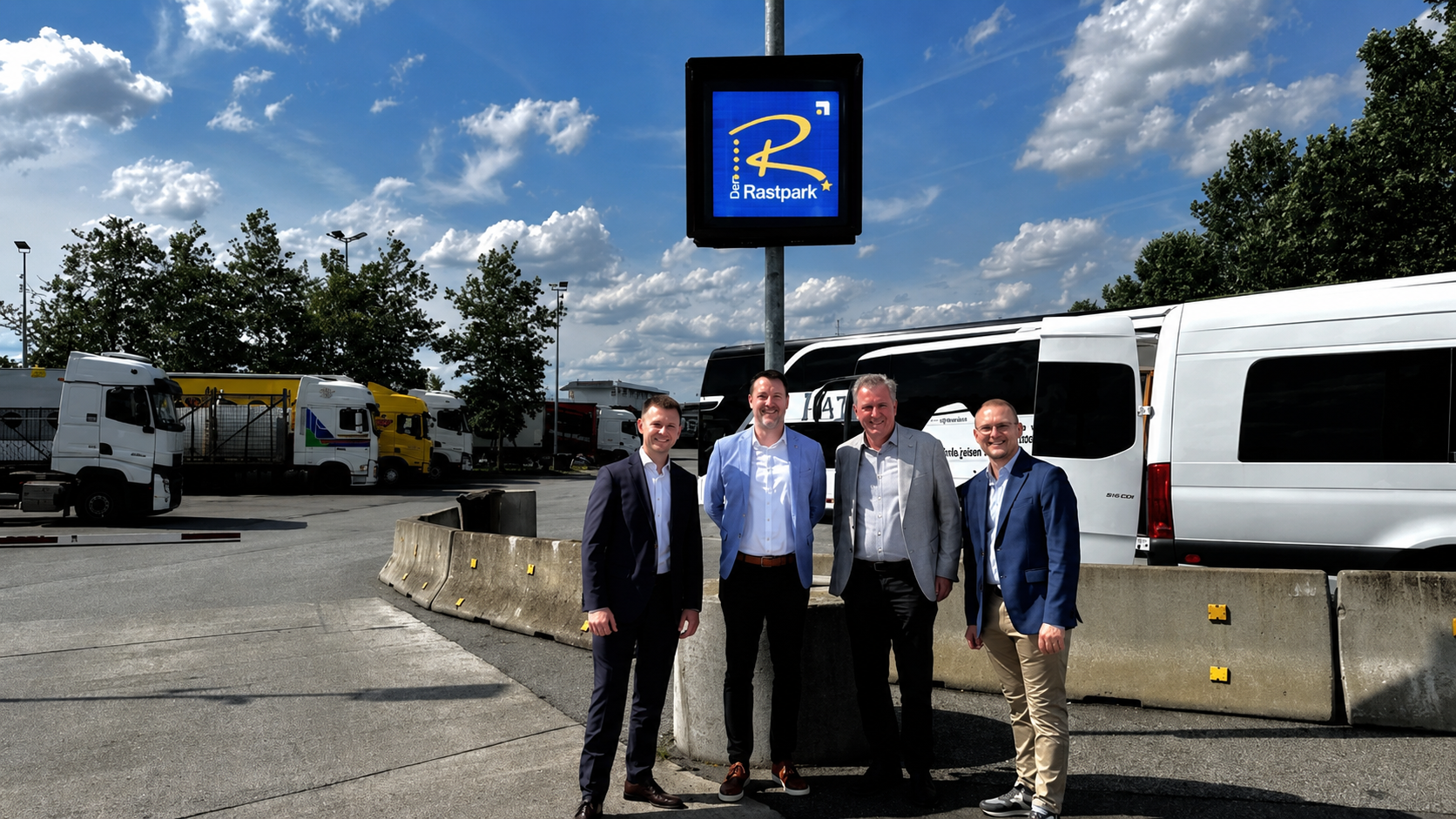
Bosch Road Services and Euro Rastpark have announced a nationwide partnership to enlarge Germany’s secure truck parking network.
Fifteen Euro Rastpark locations will be integrated into the Bosch Secure Truck Parking platform.
The expansion will add approximately 1,900 parking spaces to Bosch’s European network.
For transport companies this significantly improves the chances of securing parking in advance along major freight corridors.
Digital Reservations Improve Route Planning
The Bosch platform allows parking spaces to be reserved before the journey begins.
Dispatchers can include confirmed rest stops during route planning.
Drivers receive guaranteed parking without spending valuable driving time searching for available spaces.
Digital reservations also improve fleet management.
Transport companies know exactly where drivers will stop, how long they will remain there and when vehicles are expected to continue their journeys.
This improves scheduling accuracy throughout international transport operations.
Security Has Become a Priority
The new Euro Rastpark facilities belong to the premium category of secure truck parking.
Sites feature controlled access, automatic barriers, CCTV surveillance and vehicle registration systems.
Such protection has become increasingly important as cargo theft continues to rise across Europe.
Organized criminal groups frequently target unsecured parking areas where drivers must complete mandatory rest periods.
Secure parking substantially reduces the risk of cargo theft, fuel theft and vehicle-related crime.
K2Cargo.News recently reported that cargo theft remains a growing challenge for European logistics.
Modern Rest Areas Offer More Than Parking
Today’s truck parks are evolving into comprehensive service centres.
Euro Rastpark locations provide restaurants, cafés, shops, showers, sanitary facilities, fuel stations, hotels and conference rooms.
For international drivers these services improve working conditions and quality of life during mandatory rest periods.
Drivers can eat, shower, shop, access the internet and prepare for the next stage of their journey.
Better roadside facilities are increasingly viewed as one way to improve driver retention in the European transport sector.
Energy Infrastructure Is the Next Step
Bosch and Euro Rastpark intend to cooperate beyond parking services.
The partners are already exploring joint projects involving energy supply for commercial vehicles.
Future developments may include charging stations for electric trucks and additional infrastructure supporting alternative powertrains.
As electric and hydrogen-powered trucks become more common, motorway service areas are gradually transforming into energy hubs.
Drivers will eventually be able to rest, recharge vehicles and access digital fleet-management services in one location.
Germany Still Needs More Parking Capacity
Despite these investments, Germany continues to face a severe shortage of truck parking.
Heavy vehicle traffic is growing faster than new parking facilities are being built.
Many motorway parking areas reach full capacity during the evening, forcing drivers to stop on motorway exits, shoulders or industrial estates.
Such practices increase both safety risks and cargo theft exposure.
Although Bosch’s additional 1,900 spaces will improve capacity, industry organizations estimate that Germany still requires thousands of additional truck parking places.
Infrastructure Investment Supports European Logistics
Both the Autobahn GmbH modernization programme and Bosch’s parking expansion pursue the same objective: making freight transport safer and more efficient.
Modern sanitary facilities, larger parking areas and digital reservations reduce time lost searching for parking while helping drivers comply with European regulations.
For transport companies this means more predictable schedules, fewer delays and lower security risks.
For Germany, the investment strengthens its position as Europe’s central logistics hub.
As international freight volumes continue to grow, motorway infrastructure is becoming one of the most important factors supporting the competitiveness of the European transport system.
Read also: Europe Faces Growing Shortage of Secure Truck Parking