

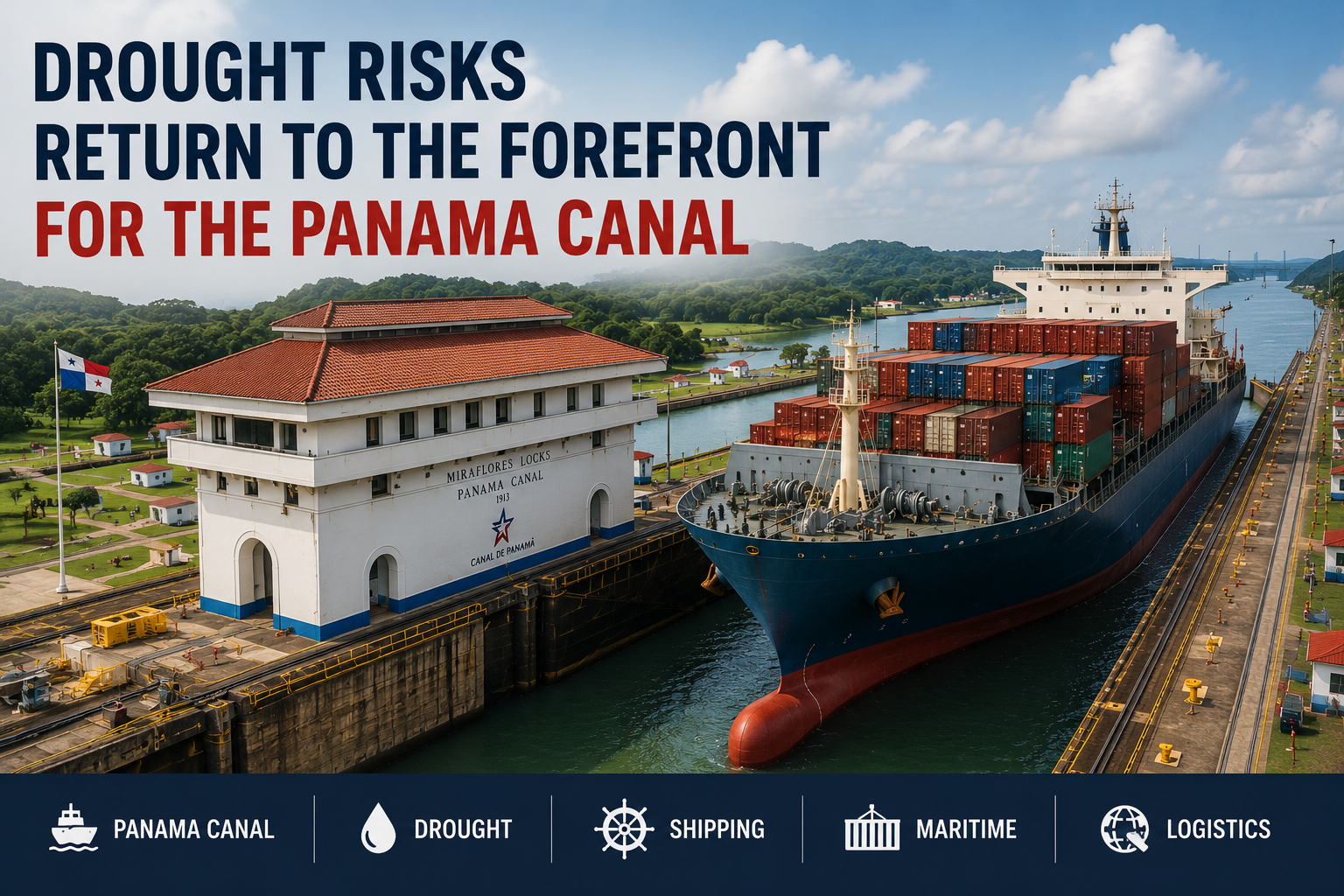
The Panama Canal is preparing for the possible impact of adverse weather conditions and is reintroducing vessel draft restrictions for the first time in nearly two years. Canal authorities have announced that, effective July 3, the maximum authorized draft for vessels transiting the Neopanamax locks will be reduced to 15.09 meters.
The decision is primarily aimed at preserving the water resources of Gatun Lake, a critical component of the canal’s operations. Additional concerns stem from the potential development of the El Niño weather phenomenon later this year, which could significantly reduce rainfall across the region.
Despite the new restrictions, canal authorities have stated that the number of daily vessel transits will remain unchanged for now. However, the shipping industry still remembers the 2023–2024 drought crisis, when severe water shortages led to major transit restrictions and reduced canal throughput by nearly 40%.
Analysts note that the situation is now further complicated by rising global demand for energy transportation. Increasing numbers of tankers carrying petroleum products, liquefied petroleum gas (LPG), and ethane are passing through the canal. As a result, even relatively minor restrictions could have a noticeable impact on global supply chains and maritime logistics.
Another sign of mounting pressure is the growing waiting time for vessel transits, along with the sharp increase in prices for priority booking slots through the canal.
Read also: Investors Value the Future of Maritime Analytics at $3.85 Billion