

The Far East Is Strengthening Its Maritime Logistics Role
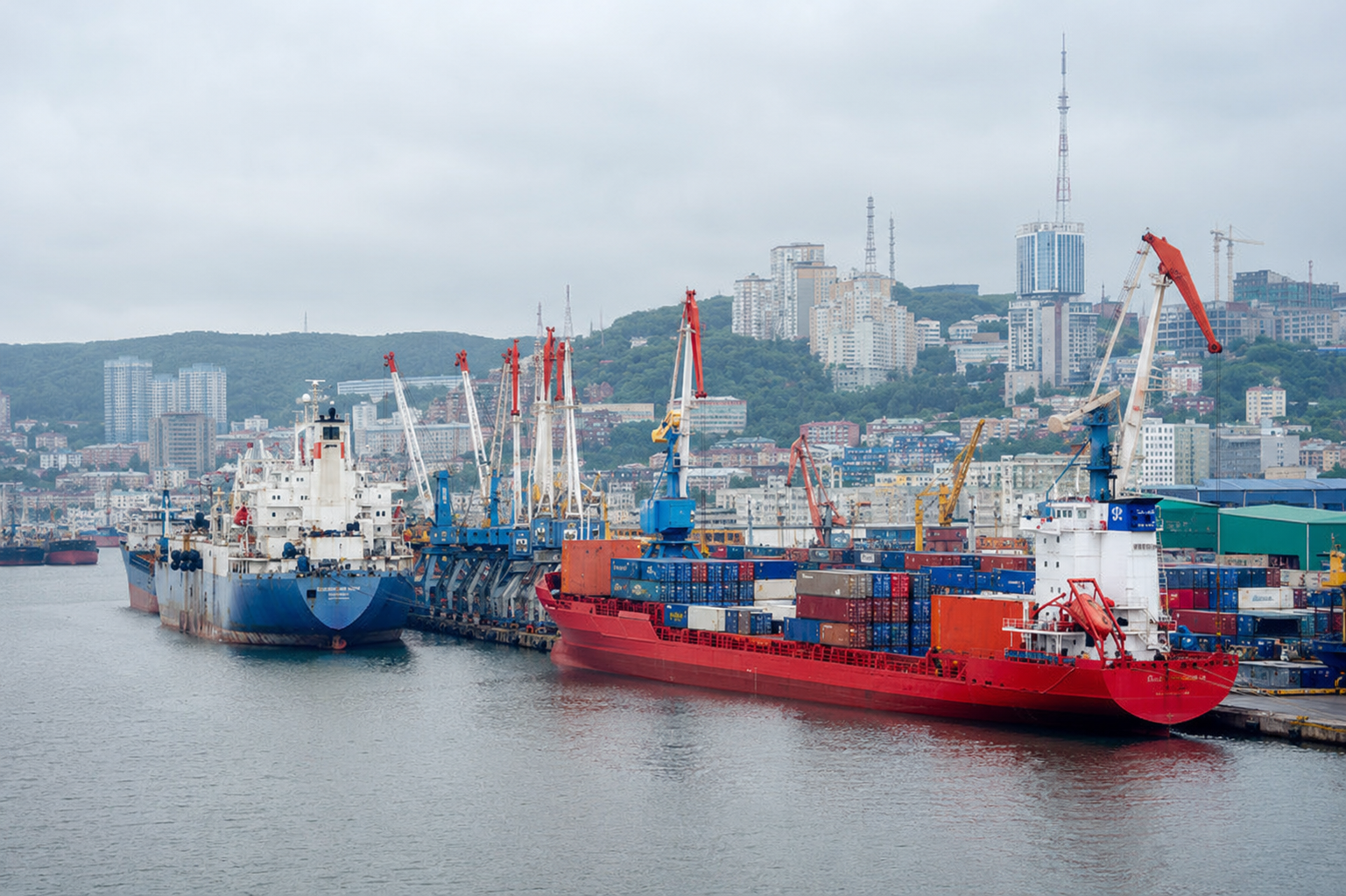
Port infrastructure in Russia’s Far East handles almost one-third of the total cargo throughput of the country’s seaports.
The figure was announced by Russian presidential aide and Maritime Board chairman Nikolai Patrushev at a meeting in Magadan concerning the maritime potential of the macroregion.
According to Patrushev, more than 20 seaports and numerous terminals operate across the Far East, serving export, import and domestic cargo flows.
The region’s proximity to China, the Republic of Korea, Japan and other Asia-Pacific economies makes its ports a major component of Russia’s eastbound foreign trade.
The facilities handle coal, crude oil, petroleum products, containers, metals, timber, fish and other commodities. They are also connected to major railway routes, including the Trans-Siberian and Baikal-Amur mainlines.
Logistics Centres Are Being Developed in Three Regions
Patrushev said maritime logistics centres were being developed in the Magadan Region, Chukotka Autonomous Area and the Republic of Sakha — Yakutia.
New terminals are also under construction in Primorsky Krai. The projects are expected to increase cargo-handling capacity and improve connections between ports, railways and inland areas of the Far East.
Port infrastructure is especially important for northern territories. Maritime transport supports not only exports but also deliveries of fuel, food, construction materials, equipment and other essential supplies.
New logistics centres could improve the reliability of the Northern Supply programme, reduce dependence on individual berths and provide additional storage and cargo-handling capacity.
Port expansion must nevertheless be coordinated with the development of railway approaches, roads, warehouses and power infrastructure. Without parallel investment in landside logistics, higher throughput could increase congestion around terminals and access routes.
K2Cargo.News previously reported that Vladivostok continues to face a shortage of modern warehouse space despite significant import flows and its strategic location.
Ports Are Expected to Strengthen Asia-Pacific Trade Links
Patrushev said the continued development of the port network would strengthen the Far East’s international economic ties and support more effective use of the region’s transport and logistics potential.
Russian shippers have increasingly redirected cargo towards eastern markets in recent years. This has placed additional pressure on Far Eastern ports, railways and border crossings.
New terminals could expand the export capacity available for commodities and manufactured goods while also supporting higher container volumes. For importers, a broader port network creates more options for delivering goods from Asia-Pacific economies.
Port competitiveness will depend on more than berth capacity. Vessel turnaround times, railway access, tariffs, digital documentation and coordination between the different participants in the supply chain will also be important.
The Fishery Sector Accounts for Most of Russia’s Catch
The Far East’s maritime potential extends beyond commercial cargo terminals.
According to Patrushev, the Far Eastern fishery basin accounts for almost 80% of Russia’s total catch of aquatic biological resources and more than half of the country’s fish production.
Fishing remains a major part of the economy in Kamchatka, Sakhalin, Magadan, Primorsky Krai and several other Far Eastern territories.
The industry creates demand for specialised berths, cold-storage facilities, processing plants, refrigerated transport and fishing vessels.
Additional storage and processing capacity in coastal regions could reduce losses, accelerate supplies to the domestic market and increase exports of products with higher added value.
Oil and Gas Projects Increase Port Demand
The oil and gas industry is another important source of cargo.
The development of offshore and coastal fields encourages investment in processing facilities, service bases and specialised fleets.
Ports require infrastructure for tankers, supply ships and other vessels supporting oil and gas operations.
Higher production could increase terminal utilisation, but it also requires strict industrial and environmental safety standards. Remote areas need adequate emergency response and rescue capacity.
The Region Is Expanding Its Shipbuilding Industry
Patrushev also highlighted the development of a modern shipbuilding complex in the Far East.
Major projects include the Zvezda Shipbuilding Complex in Primorsky Krai, the modernisation of the Zhatay Shipyard in Yakutia and plans for a shipbuilding cluster based on the Khabarovsk Shipyard.
Domestic shipyards are expected to support the renewal of transport, fishing and specialised fleets. The region needs vessels capable of operating in difficult climatic conditions, on Arctic routes and at remote ports with limited infrastructure.
Shipbuilding facilities also generate demand for steel, equipment, components, engineering services and skilled workers.
The Far East Could Support Arctic Transport Routes
The region’s port network could play a greater role in the development of the Northern Sea Route and the Trans-Arctic Transport Corridor.
Ports in Chukotka, Yakutia and the Magadan Region could serve as supply, transshipment and vessel-service points. Southern ports in Primorsky and Khabarovsk territories could connect Arctic routes with rail networks and Asia-Pacific markets.
Realising this potential will require new ice-class and cargo vessels, navigation equipment, communications systems, emergency-response facilities and year-round logistics infrastructure.
The Far East already handles almost one-third of Russia’s total seaport cargo. Further growth will depend on coordinated investment in terminals, railway approaches, warehouses, shipbuilding and international transport corridors.
Read also: China-Kazakhstan Lianyungang Base Reaches 8,000 Trains
