

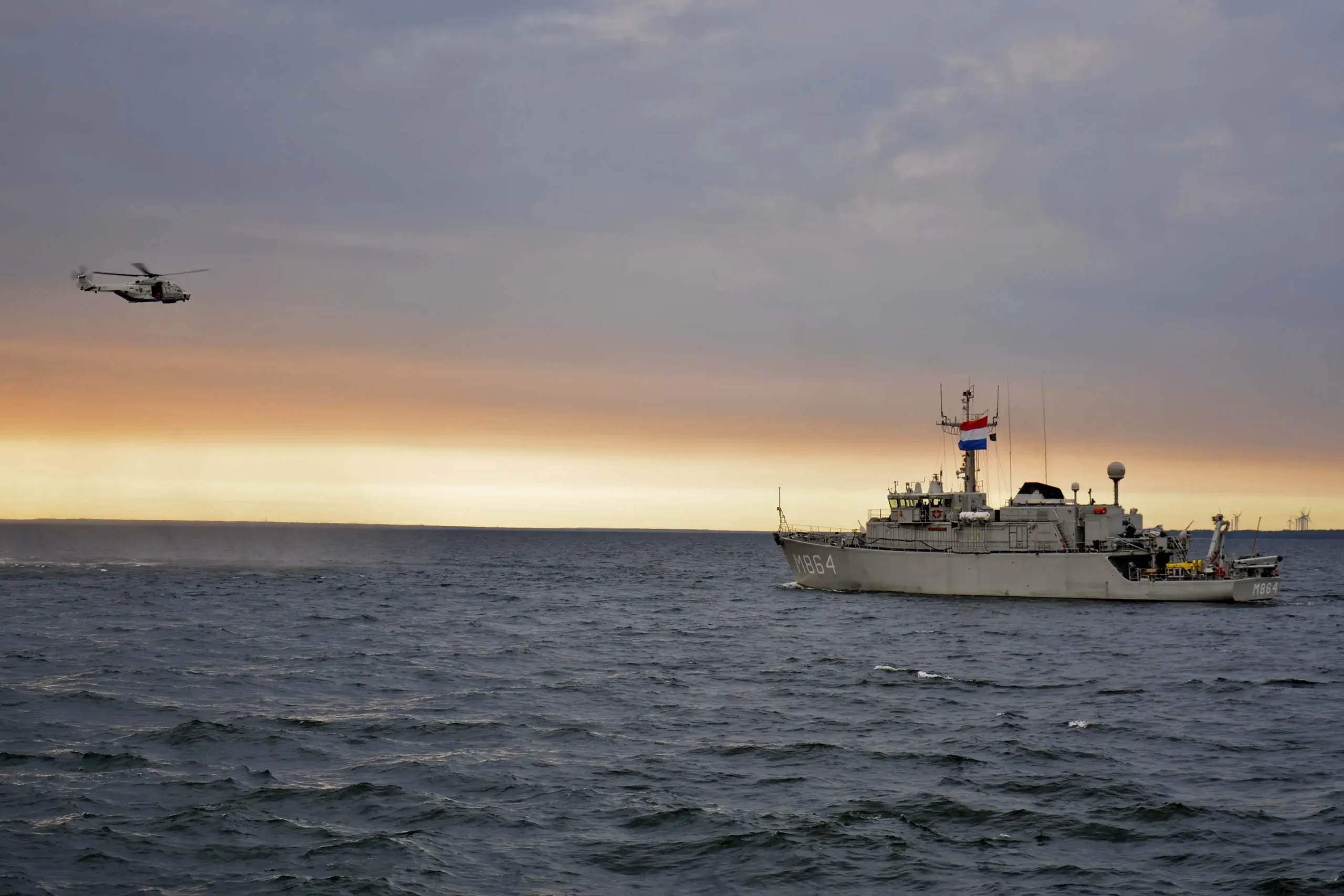
Belgium will transfer four vessels and the Netherlands three, but all seven ships must be refurbished and brought to NATO operational-readiness standards before entering Bulgarian naval service
Bulgaria’s parliament has approved agreements covering the transfer of seven minehunters from the Belgian and Dutch navies to Bulgaria.
Three ships will be delivered under a bilateral agreement with the Netherlands. A separate trilateral memorandum between Bulgaria, Belgium and the Netherlands covers the transfer of four additional vessels.
The documents ratified by the Bulgarian parliament provide for the ships to be transferred together with spare parts, additional equipment and crew-training resources.
Although some reports describe the transaction as a purchase, the vessels are being transferred without a conventional acquisition price. Bulgaria’s financial obligations primarily concern refurbishment, restoration of technical capabilities and subsequent maintenance.
Belgium will transfer four Flower-class minehunters, while the Netherlands will provide three Alkmaar-class ships. Both are national variants of the Tripartite design developed jointly by Belgium, the Netherlands and France.
The vessels are designed to:
- detect naval mines and mine-like objects;
- classify underwater targets;
- deploy disposal systems or diving teams;
- destroy or neutralize explosive ordnance;
- survey shipping channels and port approaches.
The Bulgarian Navy already operates three vessels from the same family, previously acquired from Belgium and the Netherlands. Once all seven transferred ships enter service, the size of this minehunter fleet could theoretically increase from three to ten.
The number of vessels actually available for operations will depend on refurbishment results, crew availability, spare parts and Bulgaria’s ability to maintain the ageing ships.
“These minehunters are particularly necessary. We already have three of the same type, and these seven will complement and further expand our capabilities,” Defence Minister Dimitar Stoyanov said before the vote
Bulgaria has agreed to finance the refurbishment and restoration of all seven vessels to NATO operational-readiness standards.
According to Stoyanov, the maximum cost for each ship could reach €6 million. This creates a potential ceiling of €42 million for the full programme, although actual expenditure will depend on the technical condition of each vessel and the agreed scope of work.
The Netherlands has committed to restoring the technical capabilities and improving the operational condition of its three ships before transferring ownership to Bulgaria. Work on the Belgian vessels is expected to involve Belgian contractors wherever possible.
The programme also includes spare parts, additional equipment and training resources. One condition concerned the training of a Ukrainian crew to operate vessels of this type. The Bulgarian side says that obligation has already been fulfilled.
The first Belgian minehunter could arrive in Bulgaria in September or October 2026. The remaining ships will be transferred in stages after refurbishment and crew preparation.
The vessels are intended for national missions and operations conducted by MCM Black Sea, the joint mine-countermeasures group established by Bulgaria, Romania and Türkiye in 2024.
According to the Bulgarian Ministry of Defence, the group conducts regular activations, surveys shipping channels and supports navigation safety in the territorial waters of the three participating countries.
During its ninth activation in March 2026, the force included one Bulgarian, two Turkish and one Romanian vessel. Bulgaria also continues its own national mine-surveillance missions, placing additional pressure on existing ships and crews.
The group’s responsibilities have gradually expanded. In addition to finding drifting mines, the participants are expected to conduct reconnaissance and surveillance and support the protection of critical undersea infrastructure.
“Bulgaria is part of the mine-countermeasures group established with Türkiye and Romania, and it works in excellent coordination to clear the maritime areas of the three countries,” Stoyanov said
The Black Sea remains a high-risk environment for reasons extending beyond naval mines. The region has experienced maritime drone incidents, damage to civilian vessels and threats to offshore energy infrastructure.
K2Cargo.News recently reported that Romanian forces destroyed an explosive maritime drone near the Neptun Deep gas project. The device was detected only several hundred metres from a strategic facility where hundreds of people were working.
The incident demonstrates why MCM Black Sea has received additional surveillance and infrastructure-protection responsibilities. Minehunter sonar and underwater systems can support the examination of suspicious objects, subsea cables, pipelines and port approaches as well as conventional mines.
Additional vessels alone will not remove every risk. Continuous monitoring will require trained crews, data sharing among the three countries, aviation support and coordination with civilian port authorities.
A drifting mine can close a shipping channel or port approach for an extended period. Even an unconfirmed report of an explosive object may cause traffic suspensions, route changes and additional inspections.
For shipowners, these threats can result in:
- higher insurance costs;
- delays when entering ports;
- route adjustments;
- additional monitoring and communications requirements;
- potential damage to vessels and cargo.
Stronger Bulgarian mine-countermeasures capacity is particularly important for the ports of Varna and Burgas and for routes connecting the western Black Sea with the Bosporus.
Maritime security also directly affects the operation of Ukrainian ports. As K2Cargo.News previously reported, Ukraine’s port infrastructure continues operating under regular attacks and persistent navigation risks.
Expanding Bulgaria’s minehunter fleet will not protect commercial ships from missile or drone attacks, but it could reduce the risk created by drifting ordnance and unidentified underwater objects.
The vessels are second-hand minehunters based on a design developed during the Cold War. Their practical value will depend on refurbishment quality and the condition of their sonar, navigation and mine-disposal systems.
Bulgaria will also need to prepare additional crews. Operating seven extra ships requires not only sailors but also sonar specialists, underwater-system operators, explosive-ordnance personnel and maintenance technicians.
The programme will therefore not end when physical ownership of the ships is transferred. Achieving full operational capability will require repairs, sea trials, certification, crew training and integration into the Bulgarian Navy’s command system.
Despite their age, the vessels could provide Bulgaria with a relatively rapid expansion of its mine-countermeasures capacity. For commercial shipping, the principal benefit should be more regular surveying of navigation channels, port approaches and areas containing critical maritime infrastructure.
Read also: 57 Ships Hit Since June 20 as Attacks Reshape Black Sea Logistics