

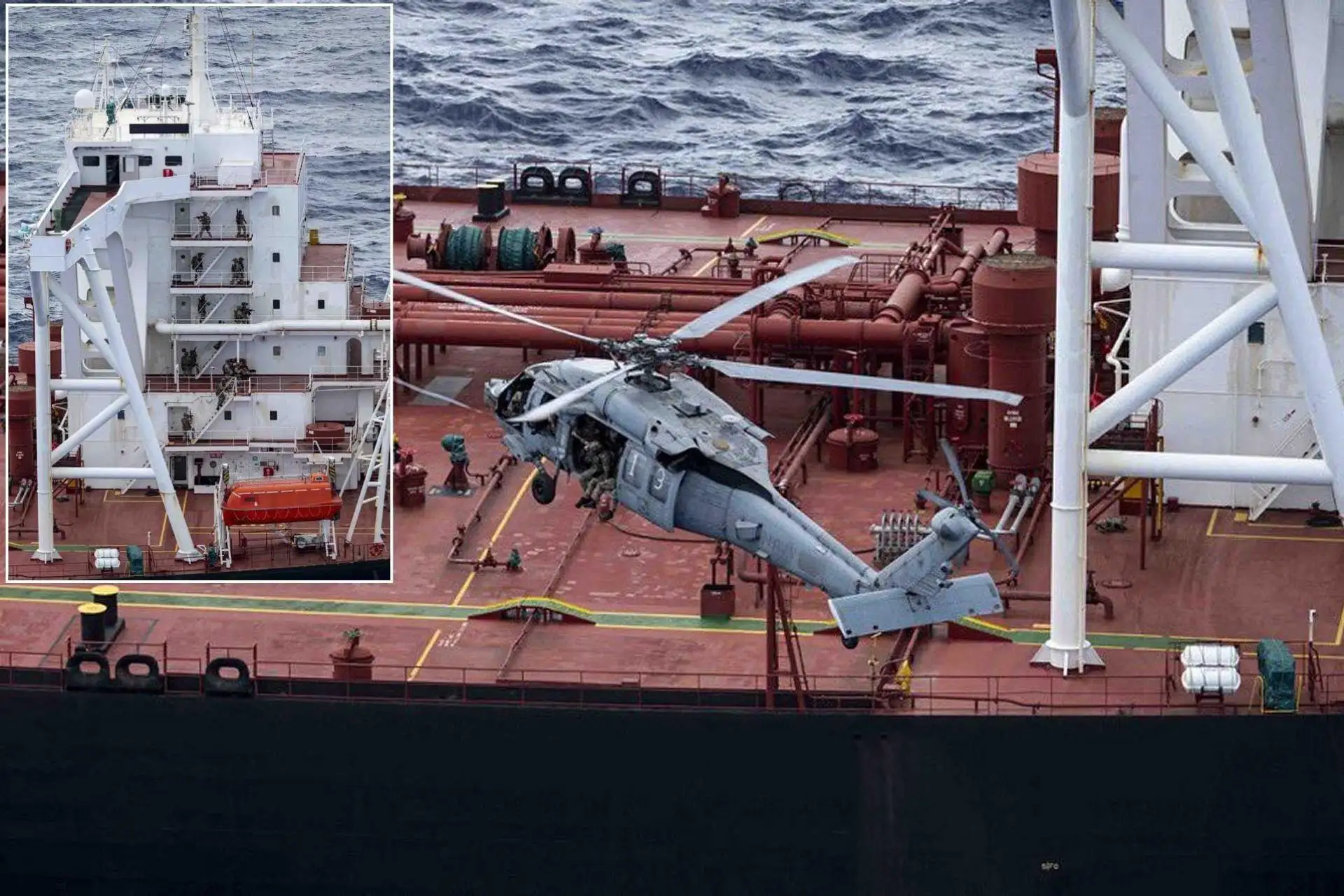
The Justice Department is considering a maritime mechanism unused since World War II, but the plan remains unfinalized and is likely to face major legal challenges
The Justice Department Is Preparing Prize Proceedings
The Trump administration is taking steps toward reviving maritime prize proceedings, a legal process used to determine whether a captured merchant vessel and its cargo may lawfully become state property.
According to Bloomberg Law, the Justice Department is coordinating preparations with the Pentagon and is considering the mechanism primarily for Iranian or Iran-linked oil tankers.
Aaron Reitz, the U.S. attorney for the Southern District of Texas, confirmed that his office is involved. He said federal courts must be prepared to determine the disposition of vessels and cargo captured by the military during an armed conflict.
The proposal remains unfinalized. The White House and the U.S. Navy have not publicly released procedural rules, and no modern prize claim has yet entered a publicly documented court proceeding.
A Separate Tribunal Would Not Be Required
The term “prize court” may suggest that Washington intends to create an entirely new judicial institution. Under U.S. law, however, prize cases would be heard by existing federal district courts exercising maritime jurisdiction.
Chapter 883 of Title 10 of the U.S. Code retains a detailed statutory framework governing maritime prizes. It covers jurisdiction, venue, prize commissioners, custody, sale and the disposition of proceeds.
Federal district courts have exclusive original jurisdiction over proceedings seeking the condemnation of captured property as a prize. When a vessel is brought into a U.S. port, the case is normally filed in the judicial district containing that port.
The administration is therefore considering a specialized form of litigation within the federal court system rather than a process operating outside it.
Houston Could Become the Main Venue
The Justice Department is reportedly examining the Southern District of Texas as the most practical venue. The choice has both legal and operational advantages.
Port Houston is connected to the largest petrochemical complex in the United States. The region has terminals, storage tanks, pipelines and refineries capable of receiving seized tankers and handling substantial crude-oil cargoes.
Once a ship reaches the port, the U.S. attorney could file a prize claim. The district court would need to adopt procedural rules and could appoint prize commissioners, including a naval commissioner responsible for protecting the Navy’s interest in the captured property.
Capture Does Not Automatically Transfer Ownership
Naval forces may intercept a vessel and bring it into a controlled port, but final title normally passes only after a court condemns the ship or cargo as a lawful prize.
Under U.S. rules, enemy merchant vessels may be captured beyond neutral territory. A neutral vessel cannot generally be seized merely because it trades with an opposing state.
The U.S. Department of Defense Law of War Manual identifies a broader set of grounds than the six situations frequently cited in media reports. A neutral merchant vessel may be liable to capture if it:
- carries contraband to enemy territory;
- transports enemy military or public-service personnel;
- communicates information for the enemy;
- breaches or attempts to breach a blockade;
- violates rules in the immediate area of naval operations;
- avoids identification, visit or search;
- resists a lawful inspection;
- uses fraudulent, incomplete, concealed or destroyed papers.
A neutral vessel may also acquire enemy character when operating directly under enemy control, orders, employment or charter.
Prize Law Does Not Eliminate Appeals
Claims that prize proceedings would completely bypass the appeals process require qualification. Title 10 expressly allows an appeal to be filed within 30 days of a district court’s final decree.
The principal advantage is different: outside claims may be narrower, while an appeal does not necessarily prevent the property from being sold. A court may order a sale when the cargo is perishable, likely to lose value or disproportionately expensive to maintain.
Shipowners and other interested parties would still be able to challenge a capture. Their arguments and ability to intervene could nevertheless be more limited than in a conventional civil-forfeiture case.
Civil Forfeiture Is Already Used Against Tankers
In recent decades, the United States has mainly relied on civil forfeiture to take ownership of vessels and cargoes allegedly connected to sanctions violations, money laundering or terrorist financing.
In February 2026, the Justice Department sought forfeiture of the tanker Skipper and 1.8 million barrels of crude oil. U.S. authorities alleged that the vessel transported Iranian and Venezuelan oil for the benefit of the Islamic Revolutionary Guard Corps, used a false flag and spoofed its location.
Civil proceedings can attract claims from shipowners, cargo owners, creditors and other parties. Families holding U.S. judgments against Iran for terrorism-related damages may also seek access to forfeited Iranian assets.
During lengthy litigation, the government must continue paying for security, insurance, crew costs, maintenance, fuel and port services. Prize procedure could enable an earlier sale and a faster transfer of proceeds to the U.S. Treasury.
Legal Challenges Are Likely
A central issue is whether the statute applies because Title 10 describes prize captures made “during war.”
Courts could be asked to decide:
- whether the existing hostilities are sufficient to activate prize law;
- whether separate congressional authorization is required;
- whether the blockade is lawful and effective;
- whether the vessel or cargo has acquired enemy character;
- whether the rights of a neutral flag state have been respected;
- whether the capture complied with international humanitarian and maritime law.
Applying the historical procedure to modern shipping will be complicated by opaque ownership structures, false registration, AIS manipulation, ship-to-ship transfers and intermediaries operating across several jurisdictions.
Shipping Risks Could Increase
Reviving prize proceedings could broaden the commercial consequences of U.S. maritime interdictions. As K2Cargo.News previously reported in its analysis of the Strait of Hormuz blockade, vessel interceptions are already affecting insurance, freight rates and carriers’ willingness to serve Iranian ports.
Shipowners, charterers, banks and insurers may need to strengthen checks covering cargo origin, final destination, flag history, earlier ship-to-ship transfers and operators’ links to enemy state institutions.
Neutral vessels carrying oil, fuel or other dual-use goods could face the greatest exposure. Even if a ship is eventually released, detention may still cause weeks of delay, lost contracts and substantial legal costs.
The initiative could also create a precedent for reciprocal action. Other governments may attempt to apply comparable prize rules against U.S. or neutral shipping in future conflicts. Its full impact will therefore depend not only on the first Houston ruling but also on the response of flag states, insurers and international maritime organizations.
Read also: Hormuz Strait Reopens to Shipping: Industry Awaits Mine Clearance and Clarity on Transit Fees
