

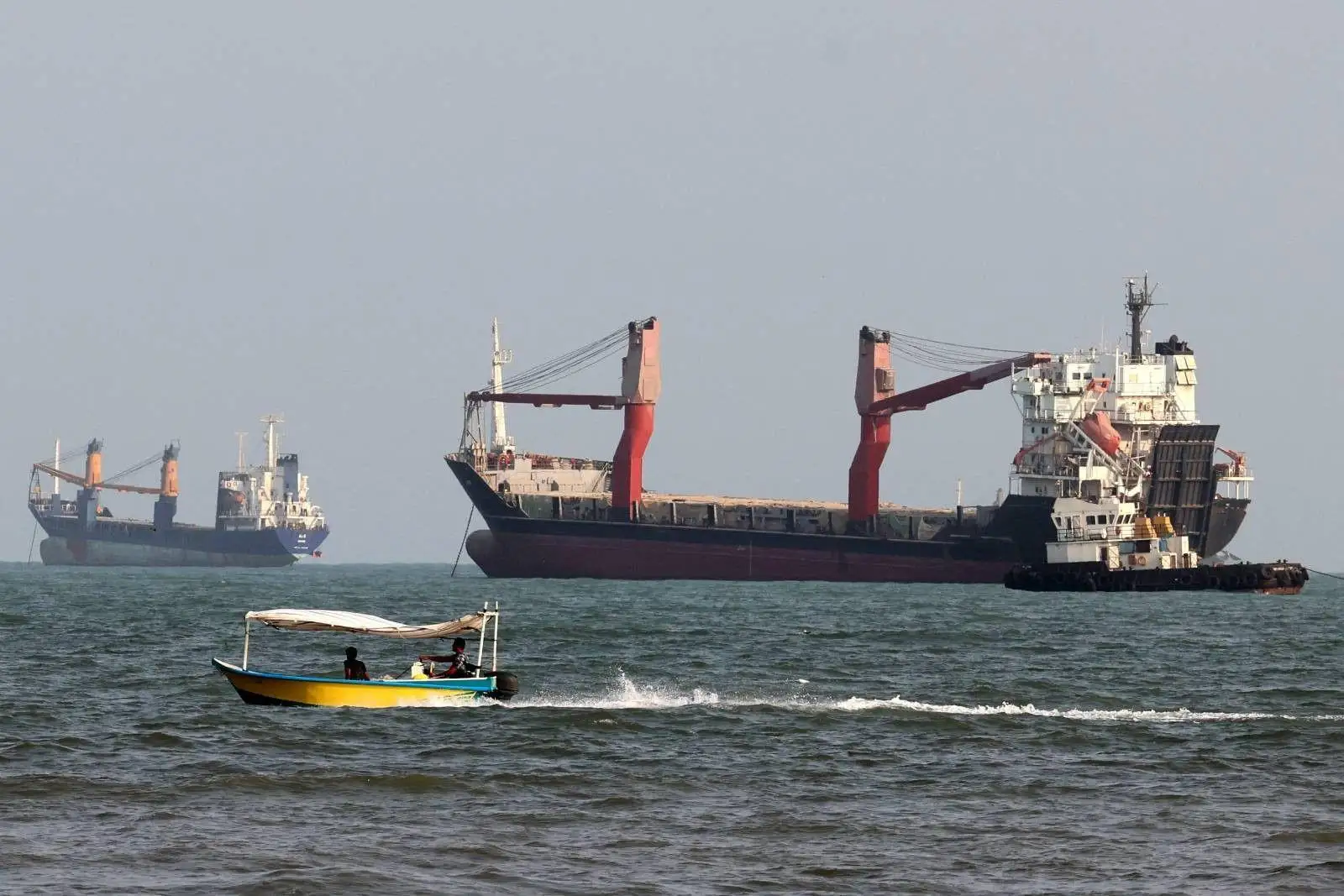
Only half as many commodity vessels crossed the critical energy route as the previous ten-day average, while the conditions of a proposed new navigation corridor remain under negotiation
Only Seven Vessels Crossed the Strait in One Day
Visible commodity-vessel traffic through the Strait of Hormuz fell to seven ships on August 27. The route handled 17 vessels a day earlier, while the previous ten-day average stood at approximately 15.
Preliminary Kpler data show that four vessels exited the Persian Gulf and three entered.
The recorded transits included two medium-range product tankers, one very large gas carrier, one Ultramax bulk carrier, one intermediate tanker and two chemical tankers.
The decline followed a brief recovery in activity and confirms that navigation through one of the world’s most important maritime corridors remains unstable. Traffic continues to depend on security conditions, diplomatic negotiations and shipowners’ willingness to accept elevated risks.
Some Transits May Not Appear in AIS Data
Kpler’s figures are preliminary and primarily cover vessels that can be identified through ship-tracking systems. Some crews are switching off AIS transponders or limiting the transmission of positional information for security reasons.
These voyages may be missing from the initial count. Daily figures can subsequently be revised as satellite observations, port records and updated information from operators become available.
The presence of dark traffic does not, however, change the broader picture. International maritime-security bodies continue to report substantially reduced traffic compared with the period before the regional conflict.
The seven-vessel figure also covers commodity vessels rather than every commercial, regional and support ship. It therefore cannot be directly compared with historical statistics covering all vessel categories.
Iran Is Preparing Conditions for Normal Traffic
The decline comes as diplomatic efforts to normalize navigation through the strait intensify. Following discussions with Qatari representatives, Iran began preparing a list of conditions under which it would support the restoration of regular commercial traffic.
Mohsen Rezaei, secretary of Iran’s Supreme National Security Council, said ending the regional war would be one of the principal requirements.
Other demands previously advanced by Tehran include sanctions relief, an end to the U.S. blockade of Iranian ports and compensation for damage caused during the conflict.
Iran is consequently treating the status of the strait as more than a maritime-security issue. Tehran is linking navigation arrangements to wider political and economic negotiations.
Iran and Oman Are Discussing a New Shipping Corridor
Iran and Oman are simultaneously developing a mechanism for organizing traffic through the waterway. The preliminary framework includes a joint navigation corridor passing through the territorial waters of both countries.
One proposal would route inbound traffic through the Iranian side of the strait, while outbound vessels could use Iranian and Omani waters. The negotiations also cover traffic management, security, mine clearance and a possible division of revenue generated by maritime services.
No final agreement has been published. Access rules, service payments, responsibility for vessel protection and procedures for resolving incidents remain unclear.
The negotiations therefore concern a proposed new navigation system rather than the complete reopening of Hormuz. Even after a political agreement, the parties would need time to issue navigational notices, establish routes, organize communications and provide credible security guarantees.
Insurers Will Assess the Arrangement Separately
A political announcement will not automatically bring ships back. Carriers will require confirmation that the route is safe, war-risk insurance remains available and interaction with Iranian and Omani authorities will follow transparent rules.
The position of protection and indemnity clubs and war-risk insurers will be particularly important. Unclear mandatory payments or the involvement of sanctioned entities in managing the corridor could create additional legal and financial complications.
Shipowners will also consider the probability of renewed attacks, mine risks, vessel detention and sudden changes to transit requirements.
Traffic is therefore likely to recover gradually. Individual tankers and bulk carriers may test the corridor before operators assess actual waiting times, insurance costs and the reliability of protective arrangements.
Restrictions Affect the Entire Gulf Logistics System
Hormuz is critical for more than crude-oil exports. Refined products, liquefied natural gas, liquefied petroleum gas, chemicals, fertilizers and dry-bulk cargoes also move through the strait.
Restricted navigation affects ports in Saudi Arabia, the UAE, Qatar, Kuwait, Bahrain, Iraq and Iran. Vessels must wait longer for passage, revise schedules or remain at anchor outside the highest-risk areas.
Delays disrupt tanker-fleet rotation and increase costs for cargo owners. Even vessels that complete a transit face difficulty planning subsequent voyages and fulfilling long-term contracts.
Some exports can be redirected through pipelines to terminals on the Red Sea or Gulf of Oman. Existing alternative capacity is nevertheless insufficient to replace all maritime trade normally moving through Hormuz.
Bab el-Mandeb Also Remains Under Pressure
Low activity is simultaneously affecting the Bab el-Mandeb Strait, which connects the Red Sea with the Gulf of Aden. Seventeen commodity vessels crossed that route during the same period, with six entering the Red Sea and 11 exiting.
Disruption at two Middle Eastern maritime chokepoints places additional pressure on global supply chains. Carriers avoiding the Red Sea must sail around the Cape of Good Hope, increasing voyage distance, fuel consumption and transit time.
Continued restrictions at Hormuz further reduce the industry’s ability to redeploy vessels efficiently. Tankers, gas carriers and specialized chemical ships are particularly exposed because their capacity cannot easily be replaced by other vessel types.
Carriers Are Waiting for Operational Guarantees
The clearest evidence of recovery will not be political statements but a sustained increase in daily transits, the return of large tankers and gas carriers, lower insurance costs and the restoration of regular schedules.
The industry will also monitor official navigation warnings, the final terms of any Iran–Oman agreement and operational decisions by major shipping companies.
For now, the seven-vessel count demonstrates the fragility of the existing arrangement. Diplomatic contacts may create a path toward a gradual recovery, but the proposed corridor still requires clear rules, international acceptance and guarantees that shipowners consider credible.
Until then, cargo owners will need to retain additional schedule buffers, maintain alternative routing options and account for elevated freight and insurance costs.
Read also: Russia and China Could Receive Preferential Hormuz Access as Iran Plans Special Terms for Ships