

Permission Followed Repeated Requests From Baghdad
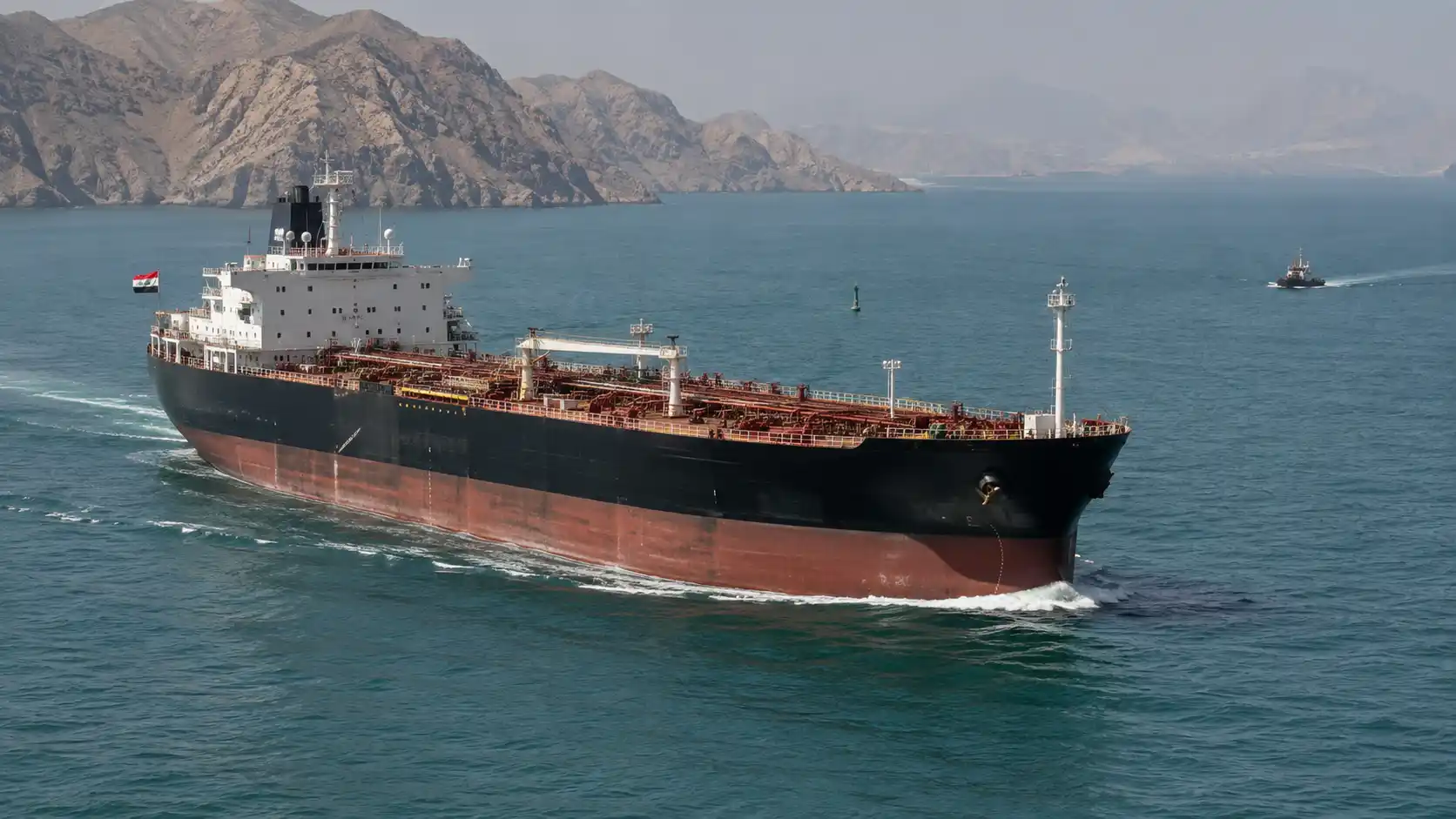
Iran has granted permission for several tankers carrying Iraqi oil to pass through the Strait of Hormuz. The decision followed repeated requests from Baghdad through diplomatic and other channels.
According to Reuters, citing Iran’s state-run IRNA news agency, special authorization for Iraqi vessels was one of Baghdad’s principal requests during Iranian Parliament Speaker Mohammad Bagher Ghalibaf’s visit to Iraq.
Iraqi President Nizar Amedi confirmed that Iran had facilitated the passage of vessels carrying Iraqi oil in recent days. However, the terms of the arrangement have not been disclosed.
“The issue remains complicated,” Amedi said when discussing negotiations with Tehran
Authorities have not published the number or names of the authorized tankers, their cargo volumes or the dates of their transits.
The Strait Has Not Fully Reopened
The decision applies to a limited number of Iraqi ships and does not signal the restoration of unrestricted navigation through the Strait of Hormuz. International shipping continues to face attacks, detention risks, military operations and exceptionally high insurance exposure.
As of August 21, the International Maritime Organization had confirmed 68 vessel incidents in the Strait of Hormuz and other parts of the Middle East. At least 19 seafarers had been killed.
IMO says the regional crisis is affecting more than 20,000 seafarers, including crews aboard ships unable to leave the Persian Gulf. An evacuation framework developed by the organization facilitated the departure of 136 vessels carrying around 2,900 seafarers before the mechanism was paused.
The permits issued to Iraqi tankers reflect the de facto selective-passage system operating in the strait. They do not remove the rights and freedoms of navigation established under international maritime law or constitute international recognition of a general requirement to obtain Iranian authorization.
Iraq Depends Heavily on Its Southern Export Route
Iraq produced approximately 4 million barrels of oil per day before the regional conflict began. A large share of its exports was loaded at southern terminals near Basra and had to pass through the Strait of Hormuz.
Restrictions on vessel movements have caused tanker delays, filled storage capacity and forced production reductions. Permission for even several voyages could allow Iraq to release some stored crude and recover part of its export revenue.
Individual transits, however, cannot restore normal oil flows. Iraq needs regular, safe and predictable tanker access, together with lower military and insurance risks.
Hormuz Oil Flows Have Fallen by More Than 75%
Before the conflict, the Strait of Hormuz was the world’s most important oil transit chokepoint, handling exports from Iraq, Saudi Arabia, Kuwait, Qatar, the UAE and Iran.
According to the U.S. Energy Information Administration, an average of 21.6 million barrels per day of crude oil and other petroleum liquids moved through the strait in the fourth quarter of 2025. The volume fell to 4.9 million barrels per day in the second quarter of 2026.
Flows have therefore declined by more than 75%. The EIA expects severe constraints to continue through August, followed by a gradual recovery. Most shut-in production may not return until early 2027.
The agency forecasts Brent crude to average around $85 per barrel in the third quarter of 2026. A faster restoration of Hormuz traffic could ease market pressure, but several Iraqi tanker voyages alone are unlikely to alter the global supply balance significantly.
Baghdad Is Developing Alternative Routes
Iraq is also trying to reduce its reliance on the Strait of Hormuz. Prime Minister Ali al-Zaidi said the country was working to expand exports through Türkiye’s Ceyhan terminal while exploring routes to Syria’s Baniyas port and Jordan’s Aqaba port.
The plans were reported by the Iraqi News Agency.
Redirecting substantial volumes would require new or restored pipelines, pumping stations, storage facilities and export terminals. The southern route through Basra and Hormuz will therefore remain essential in the short term.
Selective Permits Could Reshape Regional Logistics
Iran’s decision may provide a basis for temporary bilateral safe-passage arrangements. Other Persian Gulf producers could seek individual permits or guaranteed corridors for their own vessels.
For shipowners, such a system creates additional administrative costs and uncertainty. Operators must verify passage requirements, coordinate with coastal authorities, meet insurers’ conditions and prepare for possible delays.
The authorization offers meaningful relief to Baghdad and represents a cautious diplomatic signal from Tehran. Until restrictions are removed for the wider merchant fleet, however, the Strait of Hormuz will remain one of the most unpredictable and expensive sections of the global oil supply chain.
Read also: Analytical Report: The Blockade of the Strait of Hormuz During the U.S.-Israeli War Against Iran