

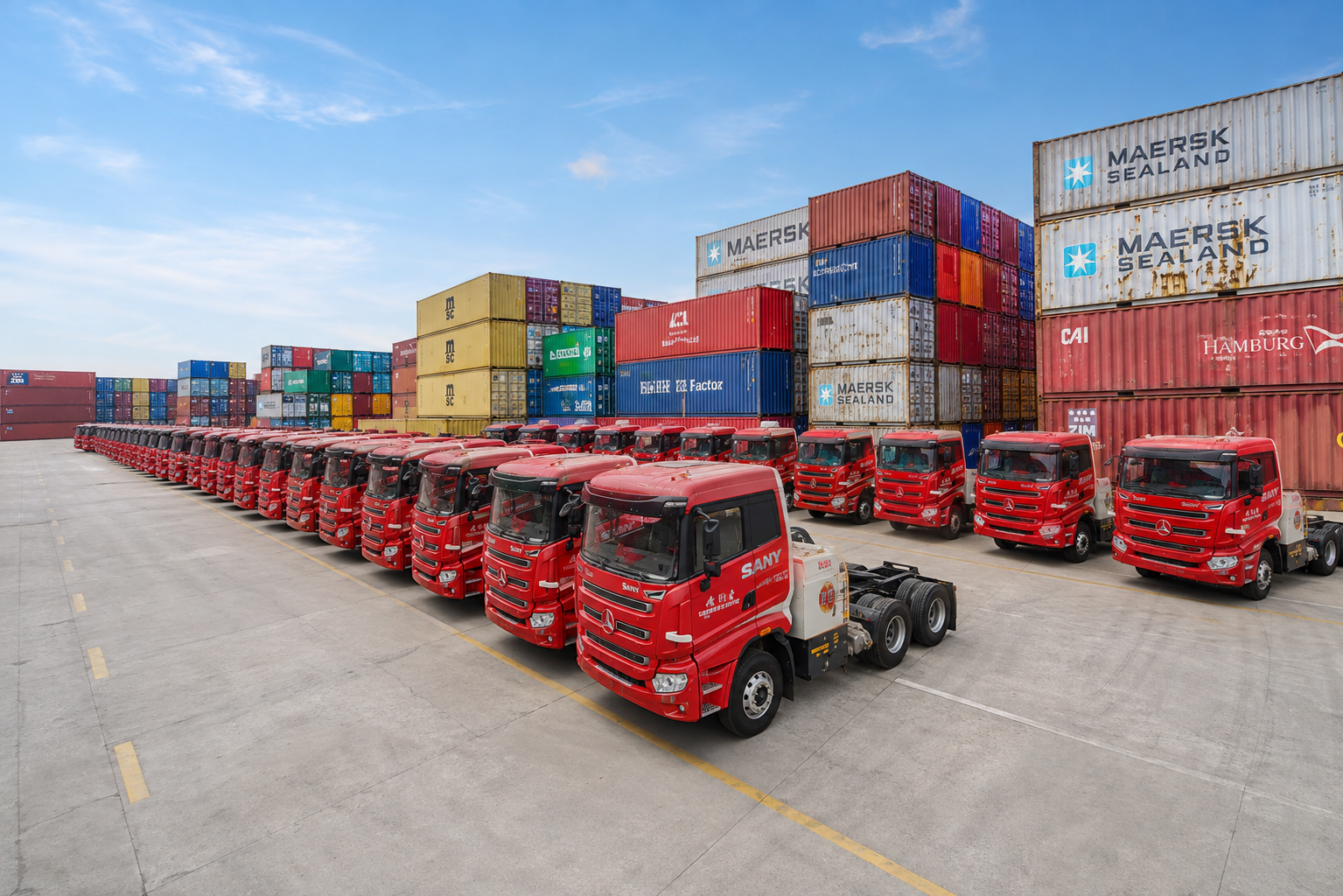
Exports More Than Double
China exported 16,823 heavy electric trucks in the four months following the outbreak of the Iran war, more than double the volume recorded during the same period a year earlier, according to Reuters.
Approximately half of the vehicles were shipped to South and Southeast Asia. Exports to South Asia increased more than fivefold, while deliveries to Southeast Asia nearly tripled.
The war began on February 28, 2026. Disruptions to oil transportation through the Strait of Hormuz have had a particularly strong impact on countries that rely heavily on Middle Eastern energy supplies.
Expensive Diesel Changes Fleet Economics
Diesel prices have increased by 48% in Sri Lanka and 57% in the Philippines since the start of the war, according to GlobalPetrolPrices.com. Chinese government data indicate that diesel prices in China have risen by approximately 15%.
The higher fuel costs have significantly shortened the estimated payback period for electric trucks. Sany Vice President for International Marketing Zhaoting Yue told Reuters that buyers in some Asian markets previously needed around 28 months to recover the higher purchase price through fuel savings. The estimated period has now fallen to 18 months.
The war did not create the electric truck market, but it strengthened an existing economic incentive. As diesel becomes more expensive, fleet operators increasingly evaluate vehicles according to total ownership costs, including energy, maintenance and downtime.
Sany Shifts Its Attention Toward Asia
Chinese manufacturer Sany, identified by Reuters as the world’s largest producer of heavy electric trucks, previously concentrated much of its export strategy on Europe. It is now focusing more heavily on Southeast Asia and developing lower-cost models for the region.
In June, the company shipped its largest single export order to date, consisting of 880 heavy trucks. The destination was not disclosed because the contract remains confidential.
Sany expects rapid export growth to continue for at least another year. In addition to Asia, the company sees opportunities in Africa and Latin America, where transport operators also face high fuel prices and dependence on imported petroleum products.
China’s Domestic Market Supports Export Growth
China benefits from an established manufacturing base, a large battery industry and extensive experience operating electric commercial vehicles.
Electric trucks accounted for almost none of the country’s truck sales in 2021. By 2025, their share had reached approximately 30%. China sold 140,000 electric trucks during the first half of 2026 alone.
Large-scale domestic production allows Chinese manufacturers to reduce costs, develop vehicles for different operating conditions and offer integrated systems to overseas customers. Sany, for example, supplies charging, power-generation and energy-storage equipment alongside its trucks.
Electrification Reduces Oil Dependence
The Centre for Research on Energy and Clean Air estimates that China’s electric truck fleet could reduce the country’s oil consumption by the equivalent of 141 million barrels in 2026. This represents more than 3% of China’s annual oil use.
Chinese electric trucks exported during the first half of the year are displacing petroleum products at an estimated annualised rate equivalent to approximately 1.6 million barrels.
The environmental impact still depends on how the electricity is produced. Electric trucks eliminate diesel combustion and tailpipe emissions during operation, but their full carbon footprint is influenced by the power-generation mix, battery manufacturing and vehicle utilisation.
Charging Infrastructure Remains a Major Barrier
Electric trucks generally have higher purchase prices than comparable diesel vehicles. Their deployment also requires high-capacity charging stations, reliable electricity supplies and specialised maintenance infrastructure.
Long-distance operations remain particularly challenging because carriers need high payload capacity, predictable range and minimal downtime.
Nevertheless, sharply higher diesel prices are changing freight economics. The Iran war demonstrates how a global energy crisis can both disrupt international trade and accelerate demand for transport technologies that reduce dependence on petroleum fuels.
Read also: Mongolia Completes First 1,400-Km Freight Run With a 40-Tonne Electric Truck