

Cargo Traffic Rises by 7%
The Port of Casablanca handled 17 million tonnes of cargo during the first half of 2026, representing a 7% increase compared with the same period in 2025, according to Morocco’s National Ports Agency, or ANP.
Maersk describes Casablanca as historically one of Africa’s busiest maritime hubs. The port plays an important role in supplying the Moroccan economy and supporting the country’s foreign trade.
Growth accelerated significantly in June. The port processed 3.53 million tonnes during the month, compared with 2.68 million tonnes a year earlier, representing a year-on-year increase of 32%.
Imports Account for 75% of Traffic
Imports formed the majority of Casablanca’s cargo traffic. The port received 12.82 million tonnes of imported goods during the six-month period, accounting for 75% of its total volume and representing an 8% annual increase.
Exports reached 4.19 million tonnes, or 25% of the total. Export volumes increased by 2% compared with the first half of 2025.
Agricultural commodities contributed significantly to the overall growth. Cereal imports increased by 13% to 3.3 million tonnes, while livestock feed traffic rose by 33% to 1.06 million tonnes.
Container throughput exceeded 762,500 TEU, an increase of 5%. Ro-Ro traffic recorded the strongest growth, rising by 35% from 69,318 to 93,824 units.
Rising Volumes Put Pressure on Casablanca
Higher cargo volumes are placing additional pressure on terminals, access infrastructure and the city’s transport network. The port must accommodate more vessel calls, process strategic imports and ensure that cargo is removed from terminals without excessive delays.
Casablanca also faced difficult weather conditions and a sharp increase in several categories of imports during the first half of the year. Despite these challenges, ANP reported that trade flows continued without interruption.
Port authorities, concession holders and terminal operators strengthened operational coordination, improved vessel-call management and adjusted terminal procedures to manage the higher volumes.
Maersk Uses Tangier as an Alternative Gateway
Maersk is developing an integrated Tangier–Casablanca transport solution to improve delivery predictability and reduce customer dependence on a single congested maritime gateway.
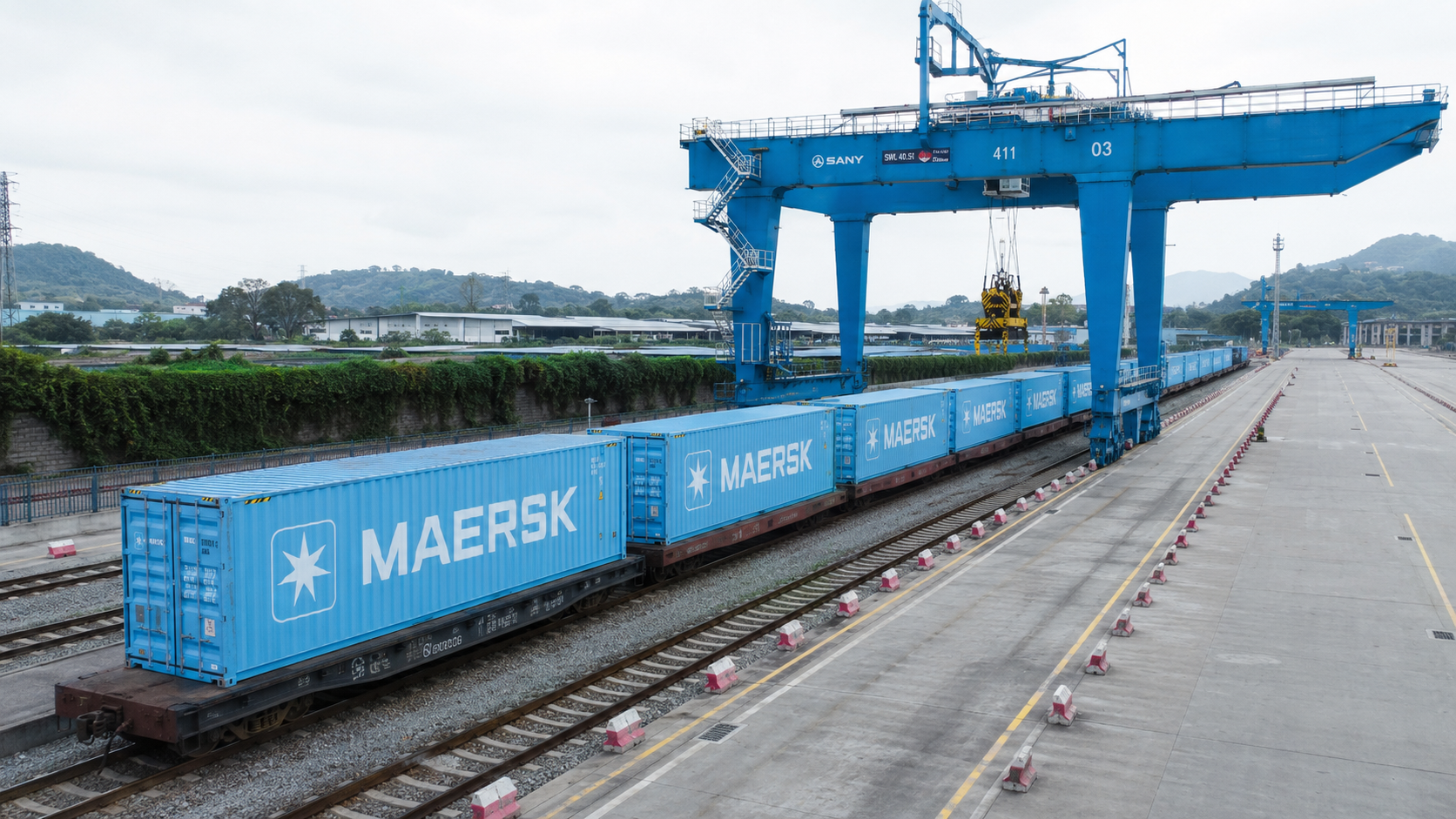
Under the model, containers arrive by sea in Tangier before travelling by rail to Casablanca. Maersk says the rail connection is already fully operational, offering regular departures and predictable transit times.
The company describes the service as high frequency, although its announcement does not specify the exact number of weekly trains or provide a detailed timetable.
Tangier offers extensive vessel connections to major international routes, while Casablanca remains Morocco’s primary industrial and commercial centre. Connecting the two locations allows businesses in Casablanca to access Tangier’s global maritime network.
Service Covers the Entire Logistics Chain
The rail connection forms part of a wider Maersk logistics product. In addition to ocean and rail transport, the service can include customs clearance, inland storage and final-mile delivery by truck.
Customers receive a single point of contact for several stages of the shipment. This arrangement can simplify inventory planning and help maintain cargo flows when individual parts of the supply chain face capacity constraints.
The service does not replace the Port of Casablanca or mean that all cargo will be redirected through Tangier. Instead, it provides an additional route that can distribute traffic between two of Morocco’s most important logistics hubs.
Morocco Strengthens Multimodal Logistics
Combining ocean shipping, rail transport, storage and final-mile trucking makes Moroccan supply chains more resilient. Importers gain an alternative to direct calls at Casablanca, while exporters receive additional access to Tangier’s international shipping network.
The corridor also strengthens Morocco’s transport links with European markets by connecting international maritime services with the country’s main industrial regions.
As port traffic continues to grow, the service’s long-term performance will depend on regular train departures, sufficient terminal capacity and close coordination between ocean, rail and road transport operations.
