

Investment Would Be Mobilised by 2035
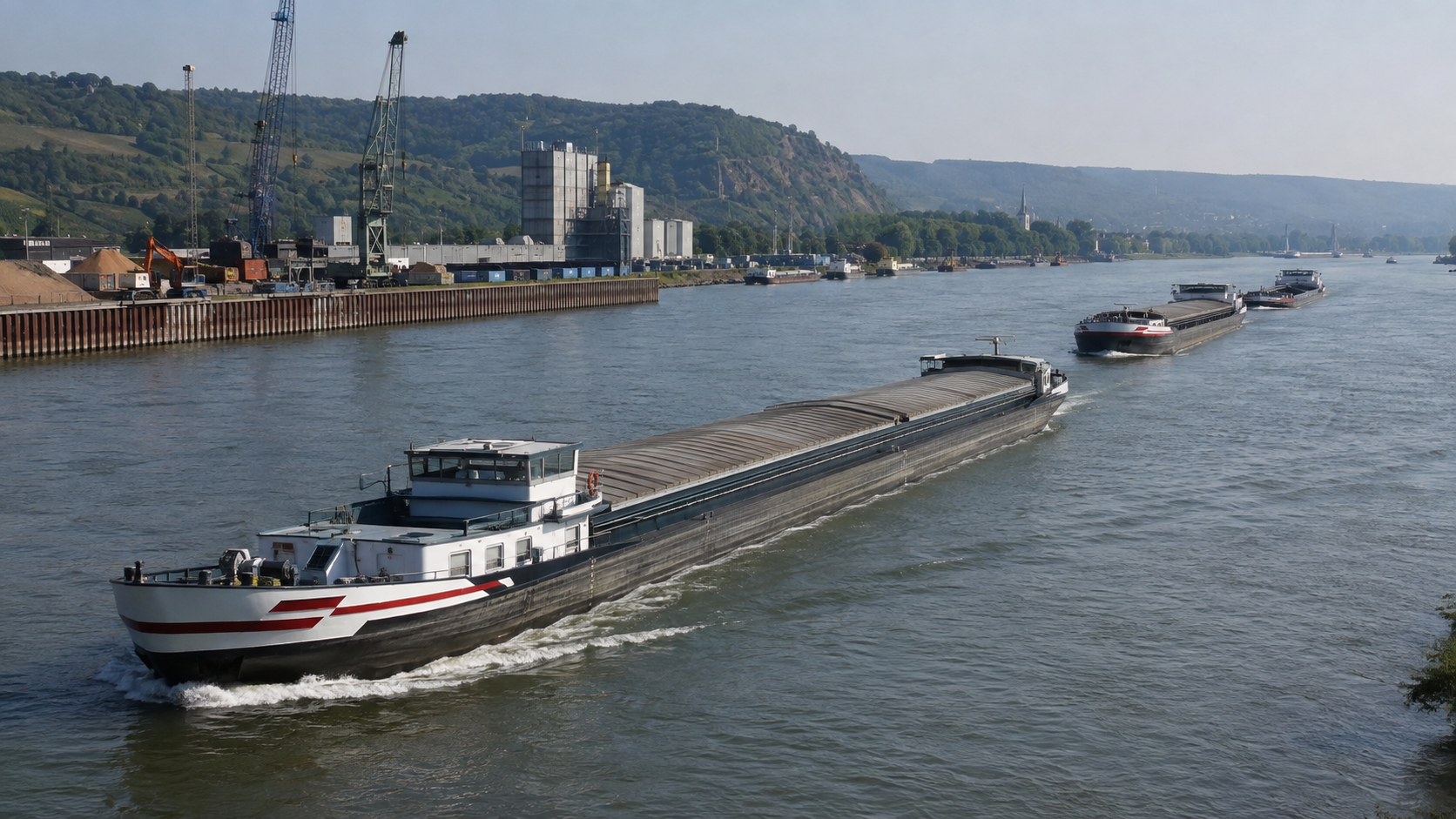
HGK Shipping has proposed a long-term renewal programme for Europe’s inland cargo fleet, with a target of building up to 1,000 modern vessels by 2035.
Using an illustrative average cost of approximately €12.5 million per new vessel, the initiative represents an investment potential of up to €12.5 billion, equivalent to about $14.4–14.5 billion. The figure is not HGK’s own capital expenditure commitment. It represents an industry-wide programme that would combine private investment with government support.
The company wants the German government to lead the creation of a stable funding framework, giving vessel operators sufficient certainty to place newbuilding orders over several years.
Low Water Is Restricting Barge Capacity
The proposal comes as exceptionally low water disrupts cargo traffic on the Rhine. Germany’s Federal Waterways and Shipping Administration said the navigation reference reading at Kaub fell to 12 centimetres on August 12, 2026.
The figure does not represent the Rhine’s total depth, as the actual navigable channel is approximately one metre deeper. However, the low reference reading sharply limits permissible vessel draught. Conventional barges can carry only a fraction of their normal cargo, while some voyages become technically or economically unviable.
Operators must divide shipments among several vessels, impose low-water surcharges or transfer cargo to rail and road. These measures increase the cost of transporting fuel, chemicals, coal, ore and other industrial commodities.
Shallow-Draught Vessels Retain More Capacity
HGK has highlighted its shallow-water-optimised tanker Synthese 18 as an example of the proposed fleet technology. The vessel was still able to carry 485 tonnes of cargo when the Kaub reference reading stood at 16 centimetres.
Such vessels are designed with a reduced draught, allowing them to maintain commercially useful capacity for longer during droughts. HGK also wants new ships to be more energy-efficient and ready to adopt future low-carbon fuels.
According to the company, the dry and liquid cargo fleet in the Rhine countries comprises around 7,800 vessels. Approximately 80% of dry cargo ships were built in the 20th century. Only 13 dry cargo vessels and 38 tankers entered service in 2024, indicating that the current renewal rate is insufficient to address growing climate and logistics risks.
Public Support Will Be Required
High construction costs and long repayment periods make fleet renewal particularly difficult for small and medium-sized operators. HGK argues that a dependable public funding framework could mobilise private capital while generating orders for European shipyards.
Shallow-draught vessels would not eliminate the consequences of drought. Investment in waterways, ports and cargo-handling infrastructure would still be required. Fleet renewal could nevertheless keep cargo moving for longer and reduce the escalation of transport costs during periods of extremely low water.
Read also: Rhine Navigation Gauge Falls to 12 cm as Cargo Traffic Nearly Stops