

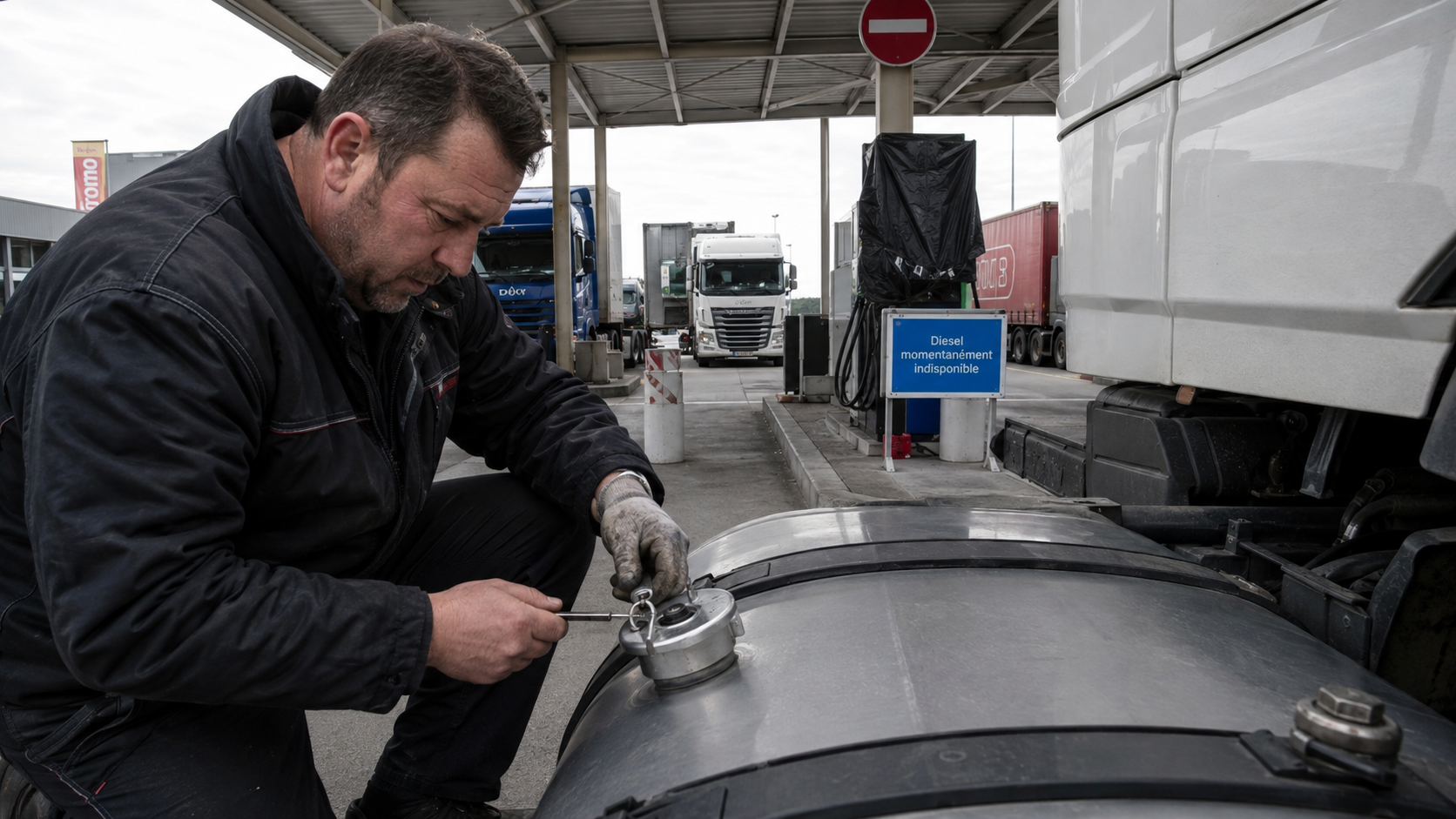
France’s Official Fuel Portal Reports the Disruption
The primary external source for fuel-availability information is the French government’s Prix des carburants portal, operated under the Ministry of Economy.
It monitors approximately 9,900 filling stations and records whether they have completely run out of diesel or all principal grades of petrol.
In the latest official snapshot available during preparation of this article, dated July 28, 2026, 95% of French stations were operating without difficulty. Around 5%, equivalent to approximately 500 sites, were experiencing disruption involving at least one principal fuel category.
The national figure had been 3% on July 22.
The increase confirms renewed local supply pressure, but it does not support claims of a nationwide shortage. This also explains why major queues have not developed across most of the country.
Eastern France Was the Most Affected Region
The official July 28 data showed the highest disruption rate in Grand Est, where 9% of filling stations were affected.
Centre-Val de Loire, Brittany and Normandy recorded rates of 7%, while Île-de-France stood at 6%.
Approximately 5% of stations were affected in Nouvelle-Aquitaine and Pays de la Loire. The rate was about 2% in Provence-Alpes-Côte d’Azur, while no disruption was recorded in Corsica.
The regional differences suggest that the issue is not simply the total volume of fuel available inside France.
Distance from depots, tanker availability, holiday traffic and the ability of individual retail networks to replenish stations all influence local supply.
Distribution Logistics Are the Main Weakness
French authorities have previously stressed that crude oil continued to reach the country and that there was no critical shortage at refineries or principal storage depots.
Earlier disruption was linked primarily to congestion within the distribution system.
When demand rises sharply, individual stations may require significantly more fuel than they normally order. Tanker and driver capacity cannot be expanded immediately to match a sudden increase.
On April 7, around 18% of French filling stations temporarily lacked at least one fuel. Government spokesperson Maud Bregeon said transport difficulties were responsible, while 83% of the affected sites belonged to the TotalEnergies network.
The current 5% level is therefore well below the spring peak, although the increase from 3% remains important for fuel distributors and road carriers.
France Allowed Fuel Tankers to Operate During Weekends
To prevent localised shortages, the French government temporarily lifted driving restrictions for vehicles above 7.5 tonnes delivering petroleum products to filling stations.
Fuel tankers were permitted to operate during weekends and public holidays, when heavy commercial vehicles would normally face restrictions. Empty return journeys were also authorised.
Further short-term exemptions were introduced during May to maintain deliveries during periods of heavy road traffic.
The measures demonstrate that the vulnerable point may not be national fuel inventories, but the final distribution stage between depots and individual forecourts.
Holiday Traffic Increases Pressure on Stations
Summer road traffic raises fuel consumption along French motorways and major tourism corridors.
Forecourts serving resorts, major cities and transit routes can use their planned inventory before the next tanker arrives.
The risk increases when reports of possible shortages circulate online. Drivers refuel earlier, fill their tanks completely or purchase additional fuel in approved containers.
Precautionary buying can temporarily empty a station even where national supplies remain adequate.
French industry representatives described this pattern during the spring, explaining that a station designed for stable daily demand may not be able to accommodate a sudden two- or threefold increase before its next delivery.
Reports About Warning Bollards Require Caution
Claims that special bollards warning about fuel siphoning have been installed widely across French car parks could not be confirmed through a national official source.
Warning signs, temporary barriers or local notices may be introduced by municipalities, parking operators, transport companies or shopping centres.
They should not currently be presented as part of a coordinated nationwide French programme.
The wider threat is nevertheless documented.
TF1 reported an increase in fuel siphoning as pump prices remained high and published advice on protecting vehicle tanks.
Trucks and Transport Companies Are Being Targeted
Heavy vehicles are attractive targets because their tanks can contain several hundred litres of diesel.
In April, the French Gendarmerie reported the arrest of a man who entered a transport company’s premises in Moselle and began stealing fuel from trucks.
Officers recovered filled jerrycans, siphoning equipment and additional empty containers.
During an attempted escape, the suspect struck a Gendarmerie vehicle, injuring three officers.
Transport and agricultural companies in western France have also reported repeated diesel thefts. One business was targeted three times within a month, while hundreds of litres were stolen during incidents across several towns.
Carrier losses extend beyond the value of the diesel. A damaged tank can remove a truck from service, cause a spill and prevent completion of a scheduled delivery.
Unsecured Parking Areas Create Additional Exposure
Thefts are more likely on poorly lit premises, industrial estates and parking areas where a vehicle remains unattended.
Trucks parked separately from other vehicles or close to an exit can be particularly vulnerable.
The shortage of secure truck parking sometimes forces drivers to stop at locations without surveillance or controlled access. This increases the risk of fuel, cargo, battery and equipment theft.
K2Cargo News previously reported how Spain dismantled a gang that robbed moving trucks. That case demonstrated that organised groups are not limited to conventional attacks on parked vehicles.
Carriers Need Alternative Refuelling Plans
When local disruption increases, international carriers cannot base refuelling decisions only on price.
Dispatchers need to monitor fuel availability, opening hours, card-network restrictions and whether a station can supply a large commercial tank in one transaction.
Several alternative refuelling points should be identified before a vehicle enters a region with above-average disruption.
Carrying additional fuel inside containers is not automatically a safe alternative. Container type, quantity, positioning and protection against leakage are regulated.
Companies should also avoid rapidly expanding private fuel storage without assessing fire safety, environmental controls and permit requirements.
Fuel-Tank Protection Is Becoming Part of Fleet Management
Carriers can use locking caps, anti-siphon inserts, protective neck screens and electronic fuel-level monitoring.
Telematics can alert a dispatcher when the fuel level falls sharply while the vehicle is stationary and its engine is switched off.
Transport depots require lighting, CCTV, controlled entry and parking layouts that make physical access to tanks more difficult.
Recording fuel quantity when a vehicle is handed over can also help distinguish theft from leakage, accounting errors or abnormal consumption.
Insurers may request telematics and surveillance records where thefts occur repeatedly at one location.
Siphoning Fuel by Mouth Is Dangerous
Attempting to start a siphon by sucking through a hose can cause petrol or diesel to enter the respiratory system.
French health agency ANSES reported that during the October 2022 fuel crisis, siphoning-related poisonings increased more than fivefold.
Even a small quantity can cause lung injury, coughing, breathing difficulty, nausea, dizziness and hospitalisation.
Drivers and depot employees should use purpose-built pumps and approved containers rather than attempting to siphon fuel manually.
UK Losses Are Estimated at £194,000 Per Day
The separate British figure was published by The Sun, citing analysis from fuel-crime prevention company Forecourt Eye.
The company estimated that UK forecourts were losing an average of approximately £194,000 per day through fuel supplied without subsequent payment.
Incidents increased by 20% during the five months following the start of the Middle East oil crisis, while their financial value rose by 48%.
The estimate covered the UK’s 8,359 forecourts and was extrapolated from a representative sample of 550 sites.
The Sun, citing Forecourt Eye, is therefore the external source of the widely reported figure of almost £200,000 per day.
It is not an official daily police statistic, but an estimate produced by a private loss-recovery and crime-prevention company.
Not All £194,000 Represents Proven Criminal Theft
Forecourt Eye’s methodology includes two principal categories.
The first is a drive-off, where a driver fills the vehicle and leaves without attempting to pay.
The second is a no-means-of-payment incident, where a customer reports after refuelling that payment cannot be made.
The latter may involve deliberate avoidance, but it may also become a civil debt following a genuine card or payment problem.
It is therefore not fully accurate to describe the entire £194,000 as proven criminal theft. It represents the combined value of unpaid fuel transactions reported through the Forecourt Eye system.
Separate ITV News data supports the broader increase. Recorded cases rose from 9,089 during January and February to 11,170 in March and April, with 432,409 litres taken during the latter period.
Higher Prices Increase the Value of Each Incident
Even where incident numbers rise moderately, financial losses grow more quickly when the price per litre increases.
At the beginning of August, average UK petrol prices were reported at approximately 160 pence per litre, while diesel stood at around 179 pence.
Forecourt Eye linked these increases to the 48% rise in the estimated value of unpaid fuel.
Independent forecourt operators are particularly exposed.
Many trade under major oil-company branding but are owned by smaller businesses that have already purchased the fuel and absorb the loss when a customer leaves without paying.
ANPR cameras, vehicle blacklists and staff alerts are increasingly used to limit exposure, although stolen or cloned registration plates reduce their effectiveness.
Local Shortages Can Raise Freight Costs
Even a small percentage of stations without diesel can disrupt a particular freight route.
A driver may have to leave the motorway, search for another forecourt or refuel earlier than planned at a more expensive location.
The additional mileage raises consumption and may interfere with working- and rest-time planning.
Small carriers are particularly exposed because they may not operate private fuel storage and may depend on a limited fuel-card network.
If disruption continues, higher operating costs are gradually reflected in freight rates and ultimately in product prices.
France Is Not Yet Facing a Nationwide Crisis
The latest available official figures showed that the overwhelming majority of French filling stations continued operating normally.
A 5% disruption rate represents local pressure rather than a breakdown of the national fuel system. No general sales rationing, nationwide filling restrictions or widespread queues have been announced.
The combination of summer demand, high prices, temporary supply disruption and rising theft nevertheless creates an additional challenge for road logistics.
Carriers need to monitor diesel availability, secure tanks, select safer parking areas and preserve reliable fuel-consumption records.
France demonstrates how a bottleneck at the final stage of distribution can affect hundreds of stations even where national inventories remain sufficient.
The UK figures illustrate a different effect of expensive fuel: rapidly increasing losses from transactions that are never paid.
Read also: France Closes Truck Rest Area on Laval–Mayenne Route