

GIZ Examines Routes Between Colombia and the EU
Colombia has favourable conditions for developing a green shipping corridor with Europe, according to the preliminary findings of a study assessing the potential to reduce greenhouse gas emissions on maritime routes between the country and the European Union.
The work is being implemented by Deutsche Gesellschaft für Internationale Zusammenarbeit (GIZ) under the H2-diplo programme on behalf of Germany’s Federal Foreign Office and is financed by the International Climate Initiative, or IKI.
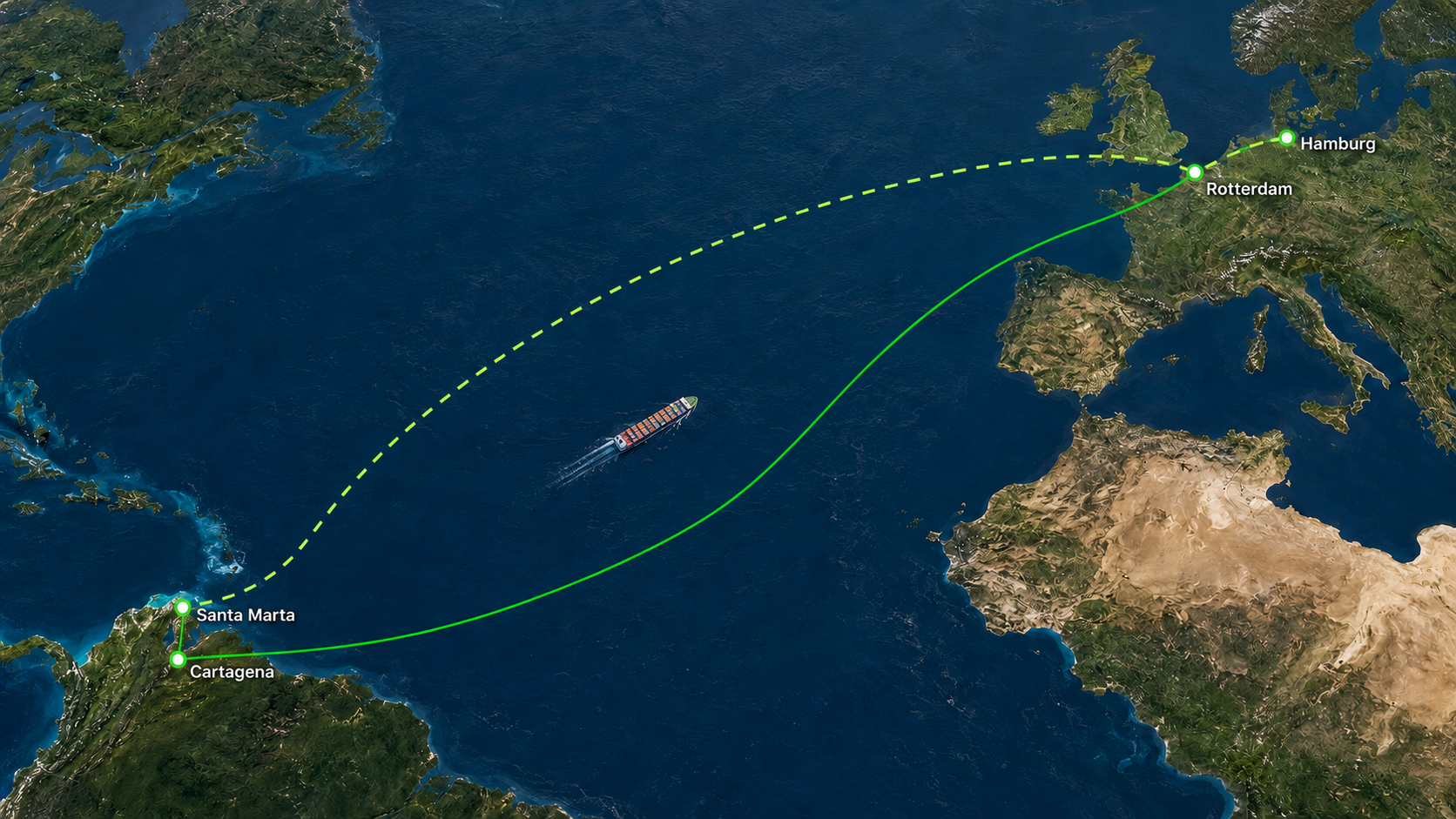
The study examines Colombia’s foreign trade flows, vessel characteristics, route distances, fuel consumption, emissions and port capabilities. Particular attention has been given to the Cartagena–Rotterdam and Santa Marta–Hamburg routes.
The Cartagena service has emerged as one of the most promising options for a future pilot project. Its development would combine vessel emission reductions with infrastructure for bunkering sustainable marine fuels.
Colombia’s Strategic Advantages
The study identifies Colombia’s position between the Caribbean and the Pacific, its port infrastructure, experience with biofuels and access to renewable energy resources as important advantages.
These conditions could allow the country to become both an origin point for lower-emission shipping services and a supplier of fuels to international vessels. Green methanol and ammonia are being discussed as part of the broader regional initiative to establish a green corridor between Latin America and Europe.
However, the preliminary findings do not select a single preferred fuel. The alternatives are being compared according to availability, technological maturity, emissions-abatement costs and their environmental performance across the entire lifecycle.
Colombia’s existing biofuel experience may offer opportunities in the short term. Large-scale use of synthetic methanol or green ammonia would require new production facilities, terminals, storage systems and safe bunkering infrastructure.
European Rules Are Changing Shipping Economics
The project is closely connected to tighter environmental requirements for ships calling at European ports.
The EU Emissions Trading System applies to ships of at least 5,000 gross tonnage. It covers 50% of the relevant emissions from voyages between EU and non-EU ports. From 2026, its maritime scope includes methane and nitrous oxide in addition to carbon dioxide.
FuelEU Maritime, which has applied since 2025, requires a gradual reduction in the average greenhouse gas intensity of energy used on board ships. The initial target is a 2% reduction from the 2020 reference level, rising to 6% in 2030. Emissions are assessed on a lifecycle, or well-to-wake, basis.
The International Maritime Organization is also targeting net-zero emissions from international shipping by or around 2050. However, as of August 14, 2026, the proposed global framework combining a marine fuel-intensity standard with emissions pricing has not received final adoption. The relevant IMO session is scheduled to resume on December 4, 2026.
For Colombian exporters, this means that the carbon performance of transportation is becoming part of a product’s competitiveness in the European market. Shipping companies must increasingly consider allowance costs, alternative-fuel availability and requirements for verifying fuel origin.
Infrastructure and Financing Remain Key Barriers
The study identifies regulatory, institutional and infrastructure gaps that must be addressed before the corridor can become operational. Other challenges include insufficient emissions data and limited access to financing.
The next stages are expected to examine emissions-reduction alternatives, sustainable fuels, project costs, financing mechanisms, governance and the actions required to prepare lower-emission routes between Colombia and Europe.
Colombia has therefore not yet launched a green shipping service to Europe. The GIZ study provides a foundation for a possible pilot project that will need to demonstrate both commercial viability and the ability of Colombian ports to supply sustainable marine fuels.
Read also: Eco-Friendly Vessels to Drive the Development of Offshore Wind Energy in South Korea
