

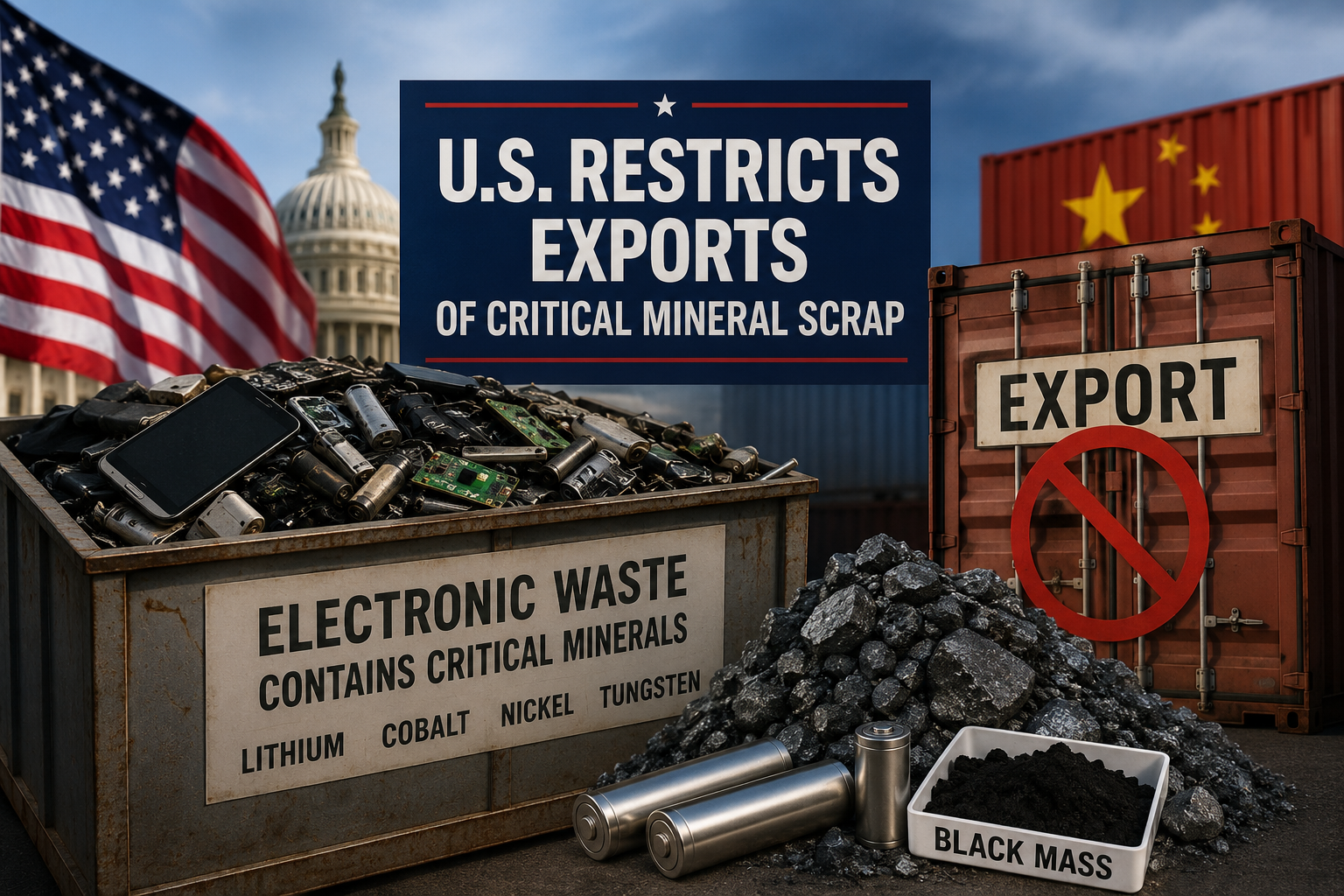
WASHINGTON — The Trump administration has taken another step to tighten control over strategic supply chains by signing an executive order that could restrict exports of electronic waste containing critical minerals.
The order gives the U.S. Department of Commerce authority to issue regulations blocking the overseas shipment of used lithium-ion batteries, electronic components and so-called “black mass” — processed battery material containing lithium, cobalt, nickel and other valuable metals.
Instead of being exported, those materials could be redirected to domestic recycling facilities, strengthening the United States’ internal supply of raw materials considered essential to the economy, defense industry and national security.
According to estimates from the environmental group Basel Action Network, the United States exported approximately 396,000 metric tons of electronic waste per year before the new restrictions were introduced — equivalent to about 33,000 metric tons per month.
A significant share of that waste contained lithium, tungsten, cobalt, nickel and other critical minerals that could potentially be recovered and reused. Washington now wants to keep more of those strategic materials inside the country, support the domestic recycling industry and reduce dependence on foreign suppliers, particularly China.
The decision is part of a broader U.S. strategy to reduce reliance on China, which dominates the global processing and supply of many critical minerals.
The challenge is especially serious for tungsten, a metal used in ammunition, precision weapons and other defense products. The United States has not commercially mined tungsten since 2015, leaving recycled scrap as one of the country’s few domestic sources of the strategically important material.
The executive order also reinforces other measures adopted by the Trump administration. Under federal requirements, U.S. defense contractors must stop purchasing certain critical minerals from Chinese sources beginning January 1, 2027.
For global logistics providers and the international scrap market, the policy could signal a broader shift toward localized recycling, tighter export controls and greater government oversight of strategic material flows.
Electronic waste is increasingly being viewed not simply as discarded material, but as a valuable domestic resource and a critical component of national security.