

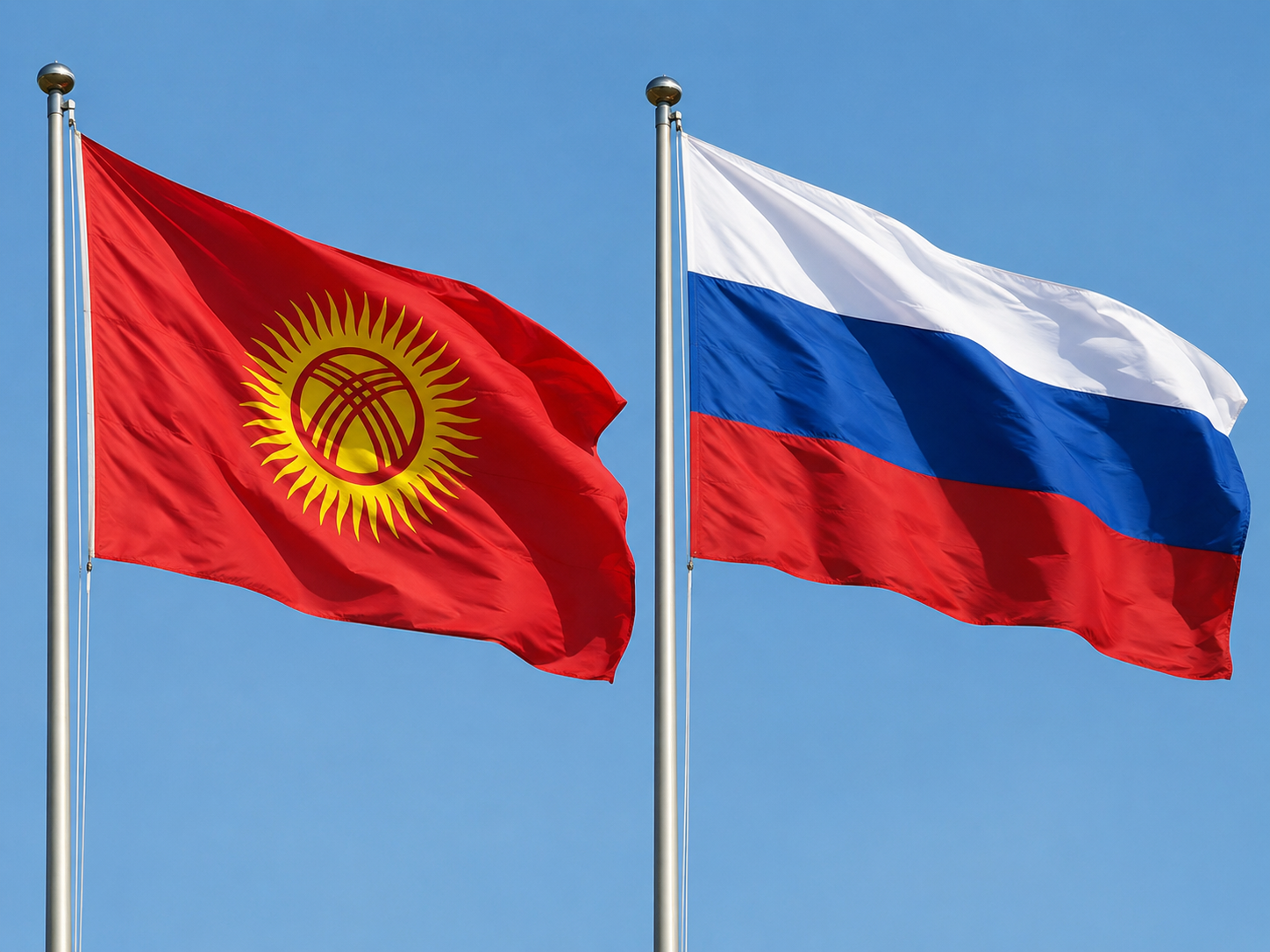
Kyrgyzstan Seeks Large Monthly Fuel Volumes
Kyrgyzstan is negotiating with Russia over monthly deliveries of approximately 100,000 tonnes of fuel and lubricants across several product categories.
First Deputy Chairman of the Cabinet of Ministers Daniyar Amangeldiev announced the talks as a Kyrgyz delegation discussed fuel supplies with the Russian side.
According to Amangeldiev, the proposed deliveries would be priced at market levels.
He also said Russia, despite difficulties in its own domestic fuel market, had expressed readiness to support Kyrgyzstan to the extent possible.
If 100,000 tonnes were supplied every month for a full year, the volume would reach approximately 1.2 million tonnes.
That is similar in scale to existing annual Russian fuel supply arrangements, but the two mechanisms should not automatically be treated as the same programme.
There Is No Final Contract Yet
The announcement concerns ongoing negotiations rather than a completed long-term supply agreement.
The sides have not publicly disclosed the exact product mix, shipment schedule, duration of deliveries or detailed pricing mechanism.
It is also not yet clear whether the proposed 100,000 tonnes per month would represent additional supply on top of existing intergovernmental arrangements or a commercial mechanism designed to maintain current import levels during a period of constrained availability.
The reference to market prices is important.
Russia and Kyrgyzstan already operate a separate intergovernmental mechanism under which indicative fuel balances are agreed annually, with certain petroleum products supplied without export duties.
The new talks may involve a separate commercial arrangement, meaning the two volumes should not be added together until final terms are published.
Kyrgyzstan Depends Heavily on Russian Fuel
The negotiations are strategically important for Bishkek.
Kyrgyzstan cannot cover domestic petroleum-product demand from its own refining industry and remains highly dependent on imports.
Kyrgyz officials have said that Russia has traditionally accounted for more than 90% of the country’s fuel imports, with some estimates putting the share close to 95%.
Annual consumption of different types of fuel and lubricants is around 2 million tonnes.
Any reduction in Russian deliveries can therefore quickly affect inventories, wholesale markets, filling stations and transport costs.
Diesel and gasoline availability is particularly important because fuel supports freight transport, agriculture, construction and retail distribution as well as private mobility.
Russia Is Managing Its Own Fuel Supply Pressure
The negotiations come at an unusual time because Russia is simultaneously trying to keep more petroleum products inside its domestic market.
Russian authorities introduced tighter fuel export restrictions during July as part of efforts to stabilise supplies.
K2Cargo.News previously reported that Russia restricted gasoline exports while maintaining exemptions for certain intergovernmental shipments.
Restrictions were also extended to diesel.
For Kyrgyzstan, the exemptions covering fuel supplied under international government agreements and agreed indicative balances are particularly important.
They allow strategic partner deliveries to be treated differently from ordinary commercial exports.
However, an exemption does not guarantee unlimited supply. Actual volumes still depend on refinery output, Russian domestic requirements and bilateral arrangements.
Kyrgyzstan Has Already Increased Its Fuel Reserves
Bishkek began strengthening inventories before the latest round of negotiations.
Amangeldiev said that when concerns about fuel availability became particularly acute, the country had only around two to three weeks of reserves.
By late July, this had been increased to approximately one and a half months of consumption.
The government’s longer-term target is to build reserves covering at least 2.5 months.
Such an inventory would provide a buffer against supplier disruptions, transport delays and abrupt changes in regional fuel markets.
For an economy highly dependent on imported petroleum products, strategic stocks effectively become part of national transport and economic security.
Bishkek Is Looking for Other Suppliers
Russia is only one part of Kyrgyzstan’s current fuel strategy.
The country has also intensified negotiations with Belarus, China, Kazakhstan, Azerbaijan, Iran, Turkmenistan and other potential suppliers.
Initial fuel shipments from Belarus have already been dispatched.
Arrangements have also been made with Chinese suppliers.
Separately, Kyrgyzstan and Russia agreed on the possibility of transit across Russian territory for fuel that Bishkek may purchase from third countries.
The policy therefore does not indicate an attempt to abandon Russian fuel.
Instead, Kyrgyzstan is trying to reduce the risk created by reliance on one dominant source.
Diversification Makes Logistics More Complex
Alternative suppliers improve resilience but usually make fuel logistics more complicated.
Russian petroleum products have long been integrated into established Kyrgyz supply chains.
Purchases from new origins require transport capacity, transit arrangements, tank wagons, border procedures, storage planning and compatibility with local fuel-quality requirements.
The further the source of supply, the larger the logistics component in the final cost.
Kyrgyzstan therefore cannot simply identify cheap gasoline or diesel on an international market.
The fuel must also reach domestic storage facilities at a delivered cost that does not create even greater pressure on consumers.
100,000 Tonnes a Month Is a Major Freight Flow
From a logistics perspective, the proposed volume is significant.
Moving 100,000 tonnes of petroleum products every month requires continuous transport capacity, storage infrastructure and coordinated regional distribution.
On an annualised basis, the flow would amount to approximately 1.2 million tonnes.
For rail-based fuel logistics, this creates sustained demand for specialised rolling stock and coordinated transit movements.
Infrastructure inside Kyrgyzstan is equally important.
Fuel must move from arrival terminals into storage tanks and then through tanker-truck networks to filling stations and commercial users.
A supply agreement of this scale therefore affects far more than petroleum traders. It creates a continuous transport and storage chain.
Kyrgyzstan Previously Requested 1.3 Million Tonnes for Next Year
Bishkek had already approached Moscow earlier this year about increasing preferential fuel supplies.
In April, Amangeldiev said Kyrgyzstan wanted its duty-free Russian fuel allocation for the following year increased to 1.3 million tonnes.
That would be 100,000 tonnes above the existing annual benchmark of around 1.2 million tonnes.
There are therefore currently at least two figures relevant to the negotiations.
One is the proposed increase in the annual indicative balance to 1.3 million tonnes.
The other is the latest discussion about receiving approximately 100,000 tonnes of different petroleum products every month at market prices.
Until final agreements are published, the second figure should not be interpreted as an extra 1.2 million tonnes on top of the first.
Russian Export Restrictions Raise the Stakes
The negotiations are taking place while Russia’s own export capacity is constrained by measures intended to support domestic fuel supply.
This provides important context for Amangeldiev’s statement that Moscow is prepared to help “as much as possible.”
For Kyrgyzstan, the issue is therefore no longer only the purchase price.
The country also needs to secure physical supply volumes at a time when the supplier is prioritising its own domestic market.
A reliable shipment schedule may consequently be more important to Kyrgyz fuel traders than a relatively small difference in wholesale price.
Market Prices Mean Supply Does Not Guarantee Cheap Fuel
Another important feature is that the proposed deliveries are not being described as fixed-price preferential supplies.
Amangeldiev specifically referred to market prices.
This means additional physical availability would not automatically translate into cheaper fuel at Kyrgyz filling stations.
Retail prices will continue to depend on wholesale petroleum prices, exchange rates, freight costs, contract terms and conditions in the Russian market.
The immediate government priority is therefore to prevent a physical shortage.
For road carriers, this distinction matters.
Fuel availability and fuel affordability are separate risks. Even if supply is secure, higher wholesale costs can still move into freight rates.
Fuel Supply Directly Affects Freight Costs
Stable petroleum-product supply is particularly important for Kyrgyzstan because road transport plays a major role in domestic distribution.
Fuel is one of the largest variable costs for trucking companies.
When diesel prices increase, carriers either absorb the additional expense or adjust transport rates.
The impact then spreads across the economy through food distribution, construction materials, industrial cargo and imported consumer goods.
The talks over 100,000 tonnes per month are therefore not simply an energy issue.
They are also an attempt to protect the cost and reliability of Kyrgyzstan’s wider logistics system.
A similar trend is visible elsewhere in Central Asia. K2Cargo.News recently reported that Uzbekistan increased petroleum-product imports as domestic energy output declined.
Domestic Refining Is Part of the Longer-Term Solution
Kyrgyzstan is also trying to increase its own refining capacity.
The government expects the modernisation of the Junda refinery to significantly increase production of K5-standard fuel.
A new Kyrgyzneftegaz facility is also planned for a later stage.
If these projects reach their intended production levels, import dependence could decline over time.
In the near term, however, Kyrgyzstan will remain heavily dependent on external petroleum supplies.
Its strategy is therefore developing along three parallel tracks: securing Russian volumes, diversifying import sources and expanding domestic production.
The Key Is Turning Talks Into a Predictable Schedule
The next important development will be the actual terms of any agreement.
A flow of 100,000 tonnes per month would cover a substantial share of Kyrgyzstan’s current fuel requirement.
But for traders and transport companies, regularity, product mix and predictable pricing will matter just as much as the headline tonnage.
If the two sides can establish a stable monthly schedule, Kyrgyzstan will be better positioned to rebuild reserves and reduce the risk of shortages.
If deliveries continue to depend heavily on fuel availability inside Russia, Bishkek will need to maintain active procurement from Belarus, China and other markets.
The negotiations illustrate a broader change in Central Asian energy logistics: security of physical supply is becoming almost as important as the price of the fuel itself.
Read also: Russia Bans Gasoline Exports Until July 31