

For six years, India has worked to keep Chinese automakers out of its domestic market. Investments have been restricted, acquisitions scrutinized, and political tensions following the 2020 border clashes reshaped one of Asia’s most important industrial relationships.
Yet while Chinese car brands remain largely absent from Indian showrooms, their technology is steadily becoming part of India’s automotive future.
The world’s third-largest automotive market is entering a new phase—one where geopolitical rivalry and economic necessity are no longer moving in the same direction.
A Ban on Chinese Automakers Doesn’t Mean a Ban on Chinese Technology
At first glance, India’s strategy appears straightforward: protect domestic manufacturing, reduce strategic dependence on China, and build a self-sufficient electric vehicle industry.
In practice, however, the picture is far more complex.
As Indian manufacturers race to develop competitive electric vehicles, many are discovering that years of Chinese investment in batteries, EV platforms and supply chains have created an ecosystem that is difficult—and expensive—to replace.
Instead of allowing Chinese brands to sell vehicles directly, India is increasingly seeing agreements focused on platforms, components and manufacturing support.
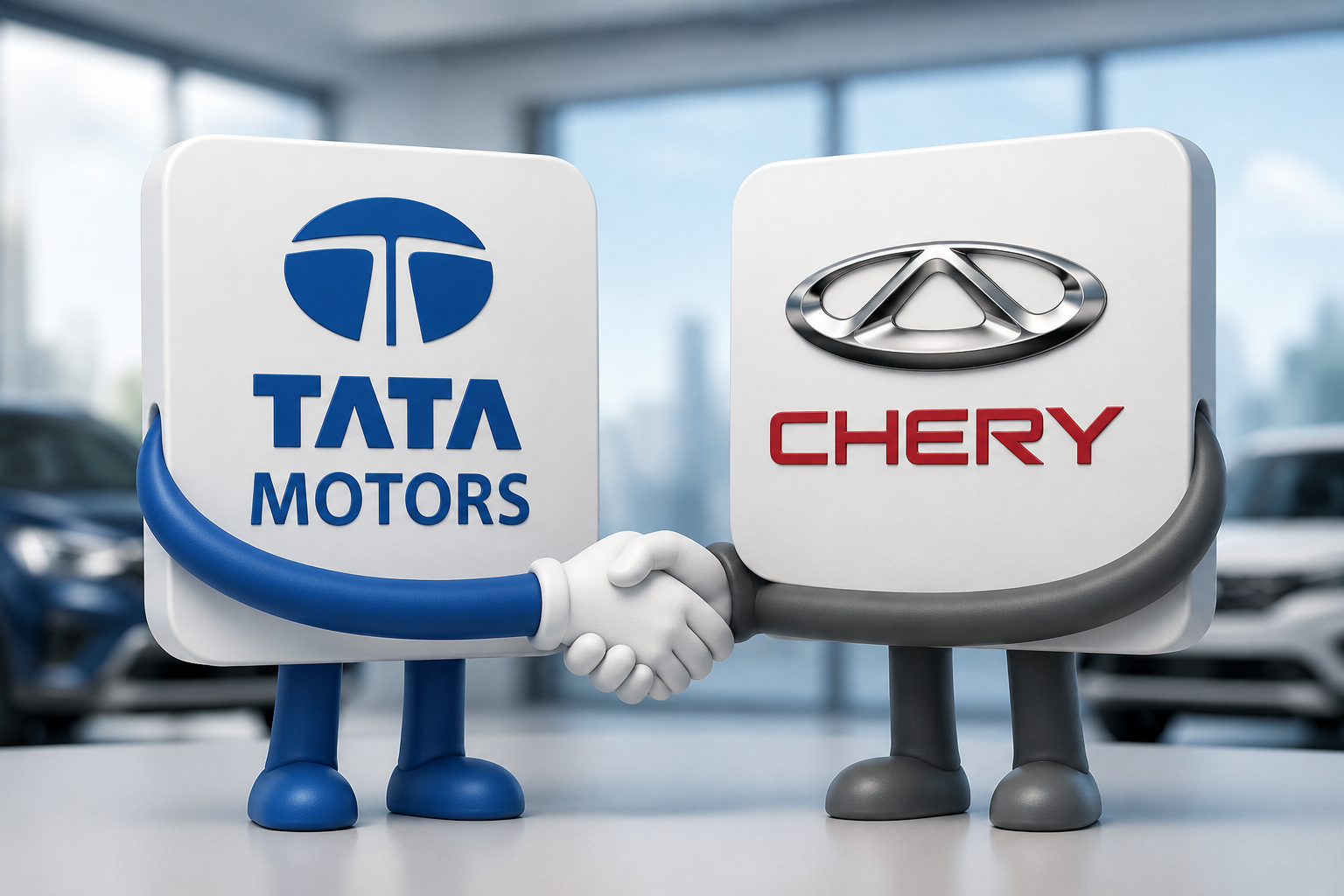
The latest example came in June, when Tata Motors announced that it will use an electric vehicle platform developed by Chery Automobile for its upcoming premium EV lineup.
Both companies emphasized that the agreement is structured as a supply partnership rather than a technology transfer or equity investment—a distinction that reflects the political sensitivity surrounding cooperation between the two countries.
Supply Chains Often Ignore Political Borders
The partnership illustrates a broader reality that extends far beyond India.
Modern automotive manufacturing is no longer defined by where a vehicle is assembled. It is defined by where the technology originates.
Electric vehicle platforms, battery chemistry, electronic control systems and software architectures increasingly determine competitiveness, and today China remains one of the world’s dominant suppliers in each of these areas.
For logistics providers, this means that even if Chinese-branded vehicles never enter the Indian market, Chinese-made components, production equipment and engineering expertise still will.
In many cases, supply chains adapt more quickly than politics.
Why Tata Is Taking This Route
For Tata Motors, time has become one of the industry’s most valuable commodities.
Developing an entirely new EV architecture requires years of engineering work and billions of dollars in investment.
Using an existing platform allows the company to accelerate product launches while continuing its long-term objective of localizing production inside India.
According to Indian government officials, such partnerships are viewed more favorably when they ultimately lead to domestic manufacturing, local suppliers and greater industrial independence rather than permanent reliance on imports.
The immediate result, however, is likely to be increased imports of components and production equipment before localization gradually expands.
A Growing Opportunity for Chinese Suppliers
For Chinese manufacturers, India represents one of the few major automotive markets where demand continues to grow rapidly.
Domestic competition in China has intensified, production capacity exceeds demand, and overseas expansion has become increasingly important.
Direct investment in India remains politically difficult.
Supplying technology instead offers an alternative path.
Industry analysts note that Chinese companies increasingly view licensing agreements, platform partnerships and component supply contracts as ways to establish long-term positions without triggering the political resistance associated with direct market entry.
The Ripple Effect Across the Supply Chain
The influence of Chinese technology is spreading beyond vehicle assembly.
Indian automotive supplier Uno Minda, for example, operates a joint venture with China’s Inovance to manufacture electric powertrain systems.
The partnership places Chinese suppliers in direct competition with long-established global companies including Bosch, Nidec and Aptiv, particularly in one of the fastest-growing segments of the automotive industry.
As India’s EV sector expands, logistics demand is expected to increase across multiple categories—from battery cells and power electronics to electric motors, manufacturing equipment and specialized warehousing.
When Geopolitics Interrupts Technology Transfer
Not every partnership has survived the changing geopolitical environment.
Battery manufacturer Amara Raja was forced to terminate its technology licensing agreement with China’s Gotion after Beijing introduced tighter export controls on sensitive technologies in 2025 amid escalating trade tensions with the United States.
Rather than abandoning its battery ambitions, the company shifted strategy.
Executives say the cooperation still provided valuable knowledge, including factory layouts, production planning and supplier relationships.
Today, Amara Raja is investing more heavily in research and development while importing production equipment and battery materials from Chinese suppliers.
The company also reports practical challenges beyond trade policy, including difficulties obtaining sufficient visas for Chinese engineers needed to support manufacturing operations inside India.
Another Major Bet on Chery
Tata is not the only Indian manufacturer building its future around Chinese technology.
Last year, JSW Motor signed a similar agreement with Chery.
According to sources familiar with the project, JSW obtained rights to adapt several Chery vehicle platforms for hybrid and electric vehicles designed specifically for the Indian market.
The project reportedly involves an investment of approximately $3 billion, with a production target of 300,000 vehicles annually by 2030.
Initially, many vehicles will rely on imported kits and components from China before local suppliers gradually replace imported content as India’s domestic supply chain expands.
The Bigger Picture
The story unfolding in India is not simply about electric vehicles.
It demonstrates how modern supply chains evolve when geopolitics and economics pull in opposite directions.
Governments may restrict investment.
Companies may redesign ownership structures.
Technology transfers may become more tightly controlled.
Yet manufacturers continue searching for the fastest, most efficient route to production.
In today’s automotive industry, supply chains are proving remarkably adaptable.
India may have closed its market to Chinese automakers.
But China’s technology—and the logistics networks supporting it—is finding another way in.
