

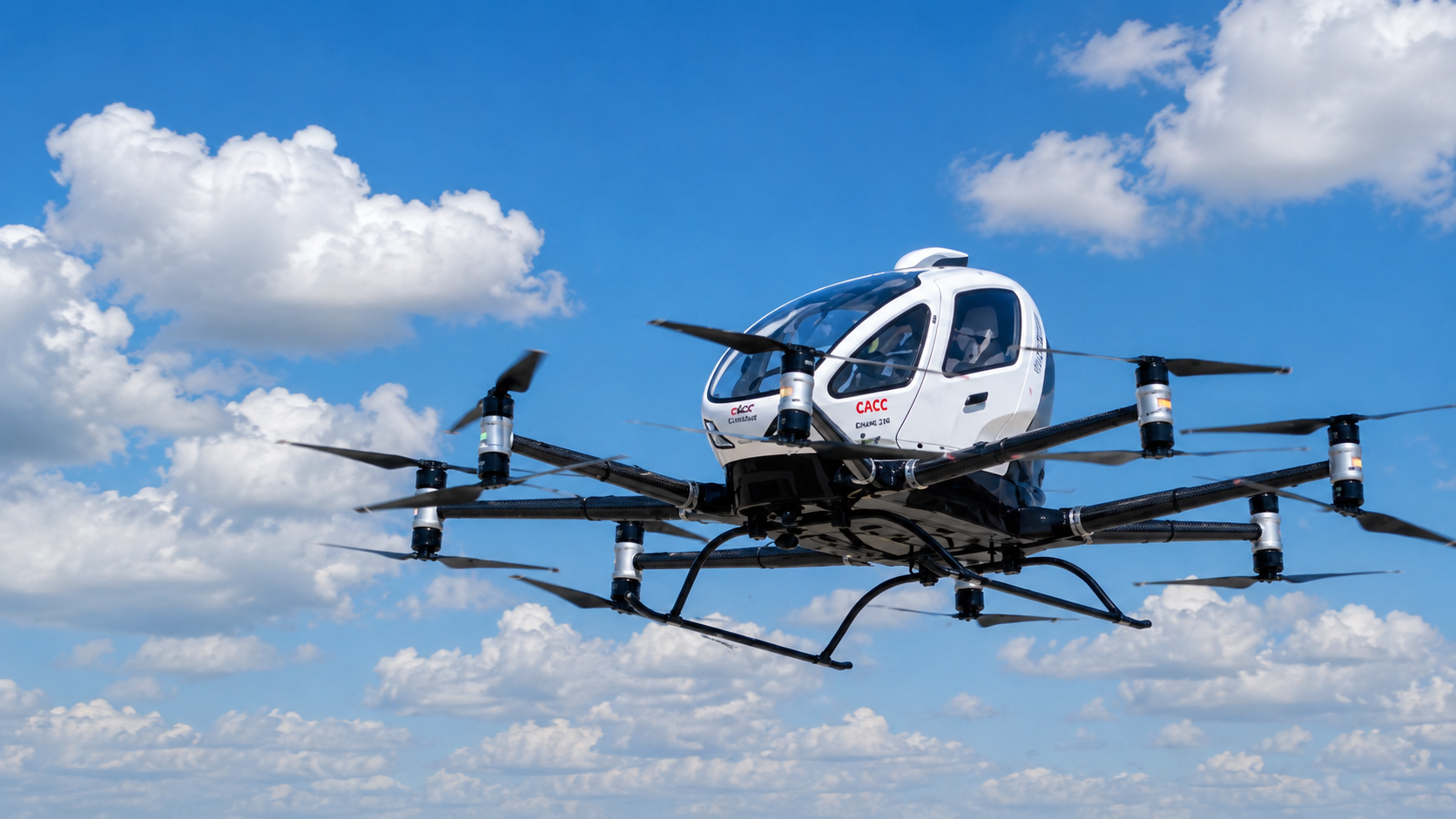
Pilotless Air Taxi Takes Off With a Passenger
A demonstration flight of the EH216-S pilotless passenger aircraft has taken place in Astana, with Kazakhstan’s Transport Minister Nurlan Sauranbayev becoming the first passenger aboard the aircraft.
The flight marked another step in the country’s development of urban air mobility. Unlike conventional airplanes and helicopters, the EH216-S belongs to the electric vertical takeoff and landing, or eVTOL, category and does not require a traditional runway.
The aircraft operates autonomously, allowing it to follow a predetermined route without a pilot on board.
EH216-S Can Reach 130 km/h
The EH216-S is designed to carry two passengers. Its maximum speed reaches 130 km/h, while its stated flight range is up to 35 km.
These characteristics make the aircraft primarily suitable for short-distance operations, including sightseeing flights, travel between individual urban areas and other relatively short passenger routes.
Vertical takeoff and landing also allow the aircraft to operate in locations where building a conventional airport or runway would be impractical.
Tourist Flights Will Come First
Kazakhstan initially plans to use the aircraft for demonstration and tourist routes lasting between 5 and 30 minutes.
Flights could take passengers over natural, historical and cultural attractions. This stage will allow operators to test pilotless passenger aircraft under real operating conditions while gradually developing the infrastructure required for wider deployment.
The next stage could see eVTOL aircraft introduced as part of the regular urban transportation system.
Kazakhstan Develops a New Urban Mobility System
Large-scale air taxi operations will require more than a fleet of aircraft. Dedicated infrastructure will be needed for takeoff, landing, charging and maintenance.
An unmanned air traffic management system will also be important to ensure that multiple aircraft can safely operate within urban airspace.
The transition from demonstration flights to regular passenger services will depend on testing results, infrastructure development and compliance with aviation safety requirements.
For Kazakhstan, the first passenger flight of the EH216-S represents a practical step toward moving pilotless air mobility from technology demonstrations into a potential new segment of urban transportation.
Read also: Russia & Kazakhstan Launch First Driverless Truck Route