

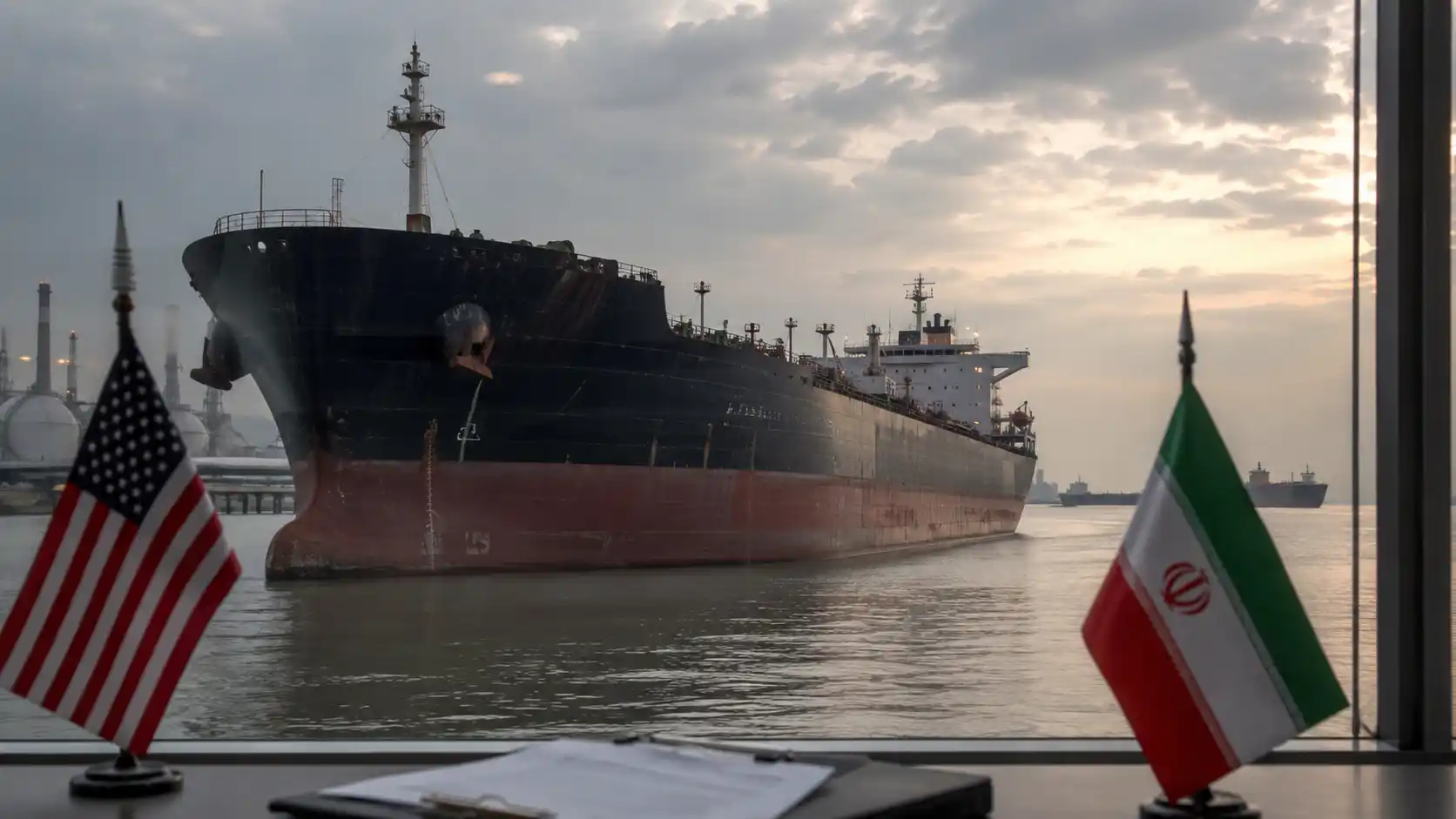
The new measures target Iranian oil revenues, maritime networks, technology procurement, cyber operations and international financial channels
Washington Expands Pressure on Tehran
The United States has announced sanctions against more than 60 individuals, entities and vessels linked to Iran. The measures form part of Operation Economic Outcast, a campaign intended to restrict Tehran’s revenue and increase pressure on foreign companies continuing to work with Iranian state-linked networks.
Treasury Secretary Scott Bessent said the Office of Foreign Assets Control is targeting actors that allegedly help Iran acquire nuclear and missile technology, conduct cyber operations and generate revenue from petroleum exports.
“Our objective is to sever every economic lifeline that sustains this tyrannical regime until Tehran stands alone,” Bessent said
The U.S. Treasury’s official announcement describes the measures as the beginning of a sustained campaign against Iran’s financial, technological and logistics networks.
In his remarks on Operation Economic Outcast, Bessent referred to more than 60 targets and vessels. The Treasury release describes the OFAC package as covering nearly 60 targets, while separately noting State Department measures against seven members of Iran’s defense leadership and two entities.
Oil Traders and Shipping Networks Targeted
A significant part of the package concerns companies, brokers and tankers involved in transporting Iranian petroleum. U.S. authorities allege that the networks use third-country jurisdictions, intermediaries and shadow-fleet vessels to deliver oil to East Asia and channel revenue to state-linked organizations.
The measures cover shipping and trading companies operating across the UAE, Hong Kong, China, Singapore, the United Kingdom, Switzerland and other jurisdictions. The tankers SIFRA, G SILVER, QUANTUM HOPE, VOYAGE ELITE and TELA were identified as blocked property.
The action also targets vessel brokers, bunker suppliers and financial intermediaries. Shipping companies will consequently face increased pressure to verify beneficial ownership, vessel managers, cargo origins, port-call histories and ship-to-ship transfers.
Secondary-Sanctions Exposure Expands to Five Sectors
Washington has expanded its sectoral sanctions authority to five additional areas of the Iranian economy:
- shipping;
- aviation;
- technology;
- digital assets;
- gold.
The determinations give the United States broader authority to sanction foreign persons operating in or supporting these sectors. Potential consequences include restrictions on access to the U.S. financial system, dollar-denominated transactions and property under U.S. jurisdiction.
The measures do not automatically prohibit every transaction involving a foreign company. Exposure depends on the counterparty, ownership structure, services provided and applicable sanctions authority.
Property belonging to designated persons that is located in the United States or controlled by U.S. persons must be blocked. The restrictions also cover companies owned 50% or more, directly or indirectly, by one or more blocked persons.
IRGC Funding Is a Central Target
The administration says its objective is to interrupt revenue that could finance the Islamic Revolutionary Guard Corps and related organizations.
OFAC also targeted a network of more than 20 individuals and entities in the Middle East and East Asia. According to the Treasury, it helped procure laser equipment, actuators, accelerometers and other dual-use products for Iranian military and research institutions.
A separate group of designations concerns cyber actors allegedly directed by Iran’s Ministry of Intelligence and Security. U.S. authorities accuse the group of compromising American critical infrastructure and conducting financially motivated cyber theft.
Implications for Global Trade
The measures will increase compliance costs for carriers, banks, insurers, ports and commodity traders. Companies may need to conduct more extensive checks on beneficial owners, IMO numbers, vessel registries, routes, payment intermediaries and petroleum-origin documents.
The strongest impact could be felt in the tanker market. Restricted access to insurance, finance, bunkering and port services may increase the cost of transporting Iranian oil and encourage further changes of flags, vessel names and management companies.
Washington has indicated that the campaign will continue. Foreign companies maintaining commercial links with Iranian state institutions or oil networks therefore face both reputational risks and potential restrictions on access to the U.S. financial system.
Read also: UAE Suspends All Trade and Financial Transactions with Iran