

While much of the world is focused on Washington’s next round of tariffs, something far more revealing is taking place behind the scenes.
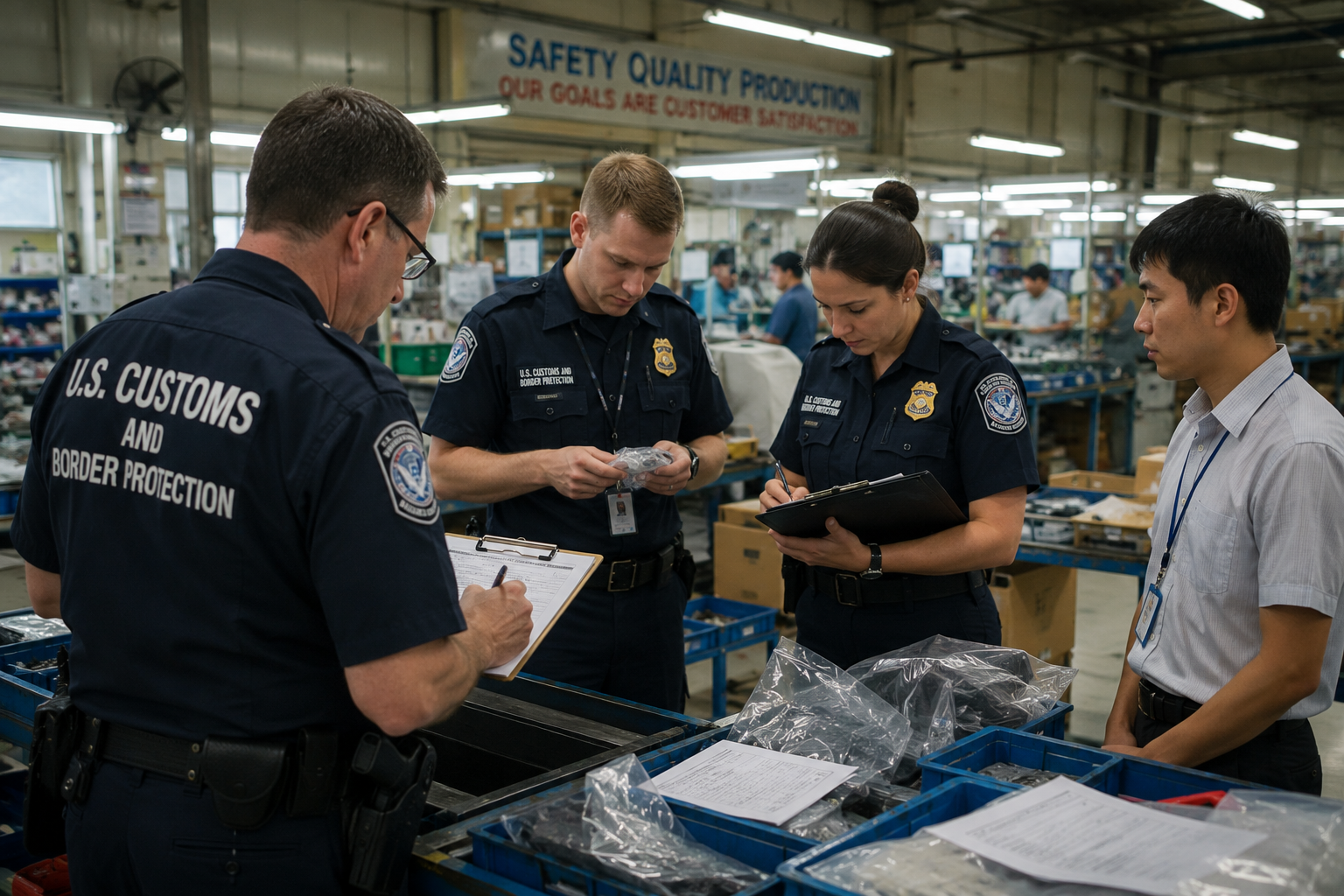
According to Bloomberg (https://www.bloomberg.com), U.S. customs officials have begun conducting spot inspections at factories in Vietnam with ties to Chinese companies.
And this is not just another routine customs procedure.
According to the report, inspectors from U.S. Customs and Border Protection examined company records, raw-material sources, production processes, and the amount of value added in Vietnam before finished goods were exported to the United States.
In other words, Washington is trying to answer one central question:
Are these products genuinely being manufactured in Vietnam, or is the country becoming a transit platform for Chinese exports seeking easier access to the U.S. market?
The Investigation Goes Beyond Country of Origin
There is another important detail.
Bloomberg reported that inspectors were also examining possible violations involving software intellectual property rights.
That suggests the inspections extend well beyond determining where a product was assembled. U.S. officials may now be reviewing the broader manufacturing ecosystem, including the technology, documentation, and digital tools used inside these factories.
This is no longer simply about a label that says “Made in Vietnam.”
It is about who controls the factory, where the components originate, what production actually takes place locally, and whether the technology being used complies with U.S. intellectual property standards.
Where Is the Evidence?
Here is where the story becomes more complicated.
Despite repeated concerns that Chinese goods may be illegally routed through Vietnam to avoid U.S. trade restrictions, Bloomberg said there is currently no substantial evidence of widespread unlawful transshipment through the country.
That distinction matters.
Washington is not merely responding to a proven large-scale violation. It appears to be trying to determine whether such a system is developing before it becomes deeply embedded in global supply chains.
In effect, this is preventive enforcement.
A Warning for Global Manufacturers
For international companies, the message is difficult to ignore.
If this inspection model becomes standard practice, manufacturers may be required to provide far more detailed proof of origin than they have in the past.
A certificate of origin or a “Made in Vietnam” label may no longer be enough.
Companies could be expected to document where raw materials were sourced, which components were produced locally, how much value was created inside Vietnam, and whether the production process is genuinely independent from China.
The Next Stage of the Supply Chain Conflict
The deeper the United States investigates product origin, the more difficult it becomes for multinational companies to use third countries to restructure exports or reduce exposure to U.S. tariffs.
Vietnam has become one of the world’s most important alternative manufacturing hubs as companies diversify production beyond China.
But diversification does not necessarily mean complete separation.
Many Vietnamese factories still depend on Chinese investment, machinery, components, raw materials, and management networks.
That is precisely why these inspections matter.
Washington is no longer looking only at where a shipment departs from. It is beginning to examine the entire chain behind the product.
And this may be only the beginning of a new phase in the global struggle over manufacturing, trade enforcement, and control of international supply chains.
Source:
Bloomberg — https://www.bloomberg.com
