

Uzbekistan Expands Its Middle East Logistics Network
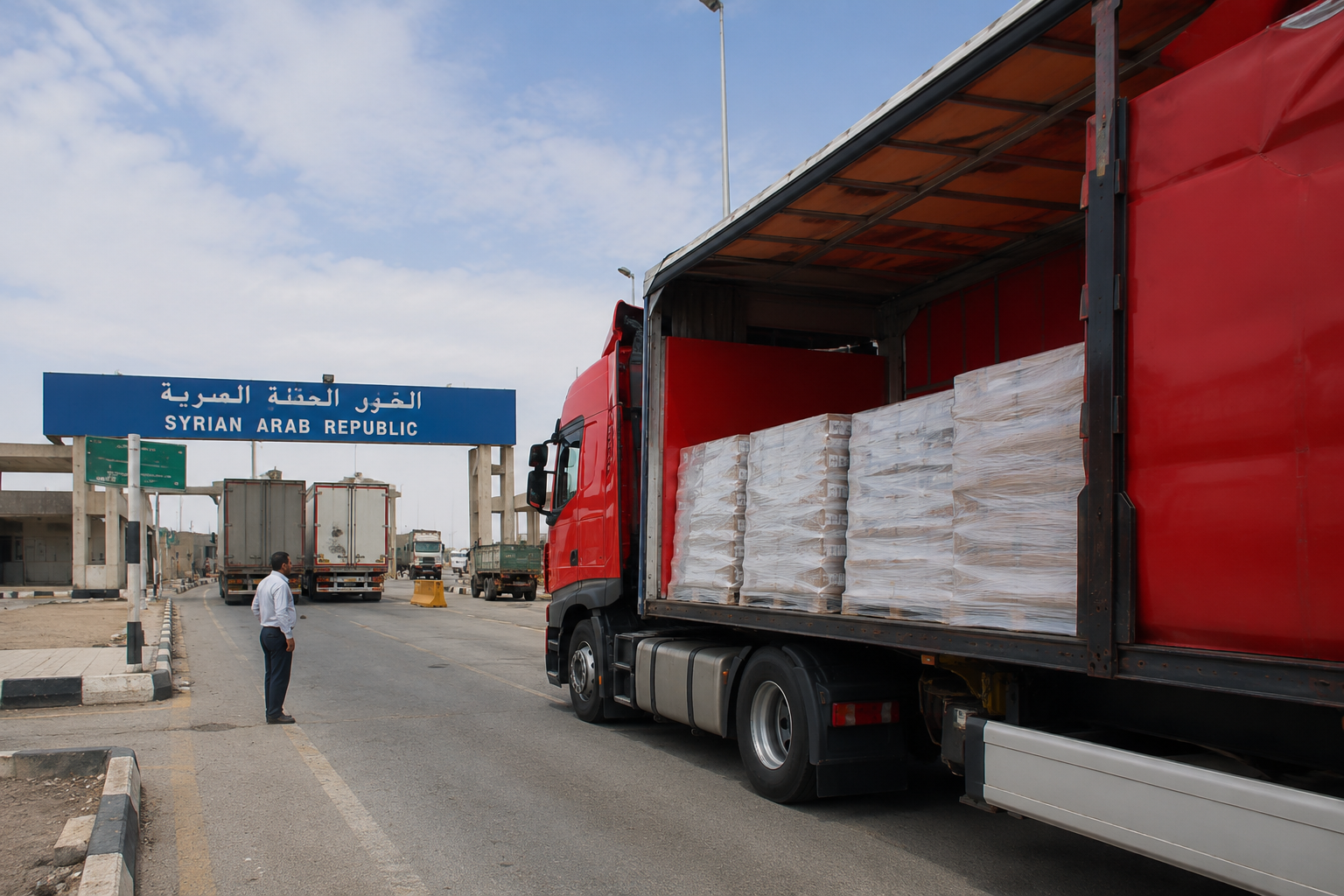
Uzbekistan has begun practical development of new international transport and logistics routes for exports to Kuwait and Syria.
The work involves Uzbekistan’s Embassy in Kuwait, which is helping expand economic relations across the Middle East and testing alternative delivery schemes for domestic manufacturers.
The objective is to establish more resilient corridors allowing Uzbek exporters to move goods by road and multimodal transport without excessive dependence on long maritime supply chains or expensive air freight.
For a double-landlocked country, such corridors are strategically important. The competitiveness of Uzbek exports depends not only on production costs but also on border crossings, transit times and the cost of the final delivery leg.
First Carpet Shipment Reaches Kuwait
One of the first practical results has been a shipment of carpets from Samarkand-based YEC Gilam to Kuwait’s Montreal House Wholesale Co.
YEC Gilam manufactures carpets and polypropylene yarn in Samarkand and already exports its products to several overseas markets, including Kuwait.
The latest shipment is being used as an early test of the new logistics corridor.
According to an assessment by logistics operator Gulf Cargo, cargo can be delivered from Uzbekistan to Kuwait in approximately 15–20 days using the new routing.
If such transit times can be maintained consistently during regular operations, the corridor could become a viable alternative to more complicated multimodal chains involving additional maritime handling.
This is particularly relevant for medium- and higher-value goods where delivery time matters more than achieving the absolute lowest freight rate.
Iraq Could Become a Transit Link
Uzbekistan is simultaneously studying another transport scheme through Iraq.
Uzbek and Kuwaiti officials previously discussed an overland corridor running through Turkmenistan and Iran, or alternatively through Türkiye, before continuing via Iraq.
Iraq could therefore become an important connecting point between Central Asia and Gulf markets.
Talks have already taken place with relevant government agencies and representatives of the Iraqi business community.
Iraq’s Ministry of Transport has expressed readiness to hold practical consultations involving interested organisations from both countries.
The next stage will require detailed work on border crossings, customs transit, trucking permits, insurance and the possibility of moving cargo under simplified international transit procedures.
Overland Transport Reduces Exposure to Maritime Disruption
For Kuwait, the new corridor has additional strategic value because of the country’s geography.
Gulf economies traditionally rely heavily on maritime transport and access through the Strait of Hormuz.
Periods of regional instability can increase insurance costs, create delays and force shipping companies to adopt alternative routings.
This was one reason Uzbekistan and Kuwait discussed corridors through Turkmenistan, Iran, Türkiye and Iraq earlier this year.
An overland route cannot replace ocean shipping for large volumes of bulk cargo, but it can provide more resilient transport for food, textiles, consumer products and relatively high-value goods.
Kuwait could also serve as more than the final destination.
In the longer term, its logistics infrastructure could support onward distribution of Uzbek goods to Saudi Arabia, Qatar, Bahrain, the UAE and Oman.
The Syrian Corridor Is Already Handling Commercial Cargo
Uzbekistan is developing a separate route through Türkiye to Syria.
An Uzbekistan–Syria Trade House and distribution centre officially opened in Aleppo on May 21, 2026.
The facility was established by the Chamber of Commerce and Industry of Uzbekistan together with Syria’s Ahmad Kalash Ltd.
Its functions include promoting Uzbek products, storing goods, finding local buyers and organising distribution inside Syria.
At the time of its opening, officials said a container could travel from Uzbekistan to Aleppo in approximately ten days.
Current export routing through Türkiye is estimated at around 10–15 days.
Syria is therefore moving from being a potential market to a destination with functioning Uzbek trade and logistics infrastructure.
New Product Categories Are Entering Syria
Following the opening of the trade house, Uzbek and Syrian companies began signing new supply contracts.
Initial discussions involved ten truckloads of household appliances, oil and fat products, automotive spare parts and motor oils.
The range is now expanding.
According to information from the Uzbek side, initial shipments of vegetable oil, detergents and household electrical equipment have also entered the Syrian market.
This is an important step for the Aleppo project.
A trade house becomes commercially useful only when it develops from a promotional platform into a functioning distribution centre handling regular cargo flows.
A broader product range also makes it easier to consolidate full truckloads and reduce transport costs per unit of cargo.
Türkiye Becomes a Key Transit Hub
Türkiye plays a central logistics role in the Syrian corridor.
It has an extensive motorway network, a large international trucking industry and direct overland border crossings into Syria.
For Uzbekistan, the Turkish route is also useful because it can connect with existing Eurasian corridors through Turkmenistan, the Caspian region, Azerbaijan or Iran.
The same western transport network can therefore potentially serve several markets, including Türkiye, Syria and other Middle Eastern destinations.
Regular commercial exports will nevertheless depend on predictable border procedures and customs clearance.
Syria Still Presents Operational Risks
The 10–15 day delivery period should be viewed as an operational estimate under normal conditions rather than a guaranteed transit time for every shipment.
International logistics organisations have reported customs delays in Syria, periodic restrictions at land crossings and additional documentation requirements during 2026.
Commercial cargo will depend particularly on certificates of origin, import permissions, product documentation and payment procedures.
The Aleppo distribution centre gives Uzbekistan an advantage in this environment.
Holding inventory locally can reduce the dependence of Syrian buyers on the timing of every individual international truck movement.
Uzbekistan Is Also Modernising Its Truck Fleet
Expansion into Middle Eastern road freight markets coincides with efforts to modernise Uzbekistan’s domestic transport fleet.
In July, the country waived import duties on selected modern trucks and semi-trailers.
The measure is designed to improve the competitiveness of Uzbek carriers operating on international routes.
The connection between the two policies is clear.
Creating a corridor does not automatically increase exports if local operators lack suitable tractors, trailers and international transport permits.
The greater the share of traffic handled by Uzbek carriers, the more transport revenue can remain within the country’s own logistics sector.
The Middle East Is Becoming a New Export Direction
Kuwait and Syria form part of a broader Uzbek strategy to diversify foreign trade.
Middle Eastern markets offer significant import demand for food products, textiles, construction materials, electrical goods and everyday consumer products.
The main obstacle for Central Asian manufacturers has often been logistics.
Uzbekistan’s lack of direct maritime access means exporters depend on transit through several countries.
Developing several parallel corridors changes that equation.
If one route faces political, border or infrastructure restrictions, cargo can potentially be redirected through another.
This is why Tashkent is simultaneously developing transport links through Türkiye, Iran, Iraq, Afghanistan and the Caspian region.
Trans-Afghan Railway Could Add Another Route
Over the longer term, the Trans-Afghan Railway could further change Uzbekistan’s southbound logistics.
The project, currently estimated at around $7 billion, is designed to connect Uzbekistan through Afghanistan with Pakistan and provide Central Asian economies with more direct access to Arabian Sea ports.
If completed, it would give Uzbek exporters another option for reaching Middle Eastern and South Asian markets.
It would not replace Turkish or Iranian corridors but complement them, creating a more diversified transport network.
For a country without direct access to the sea, such route diversification is one of the main foundations of resilient foreign trade.
The Next Challenge Is Moving From Tests to Regular Services
The carpet shipment to Kuwait and initial cargoes entering Syria show that the strategy is moving beyond negotiations.
The harder stage is turning experimental movements into scheduled commercial services.
Exporters need predictable tariffs, stable border transit times, return cargo and consistent customs procedures.
If trucks travel loaded only toward the Middle East, transport costs will remain relatively high. If operators can generate import flows back toward Uzbekistan and Central Asia, the economics of the corridor improve significantly.
The new routes therefore matter as more than transport projects.
They provide the infrastructure foundation for Uzbekistan to build permanent trade flows with Kuwait, Syria and other Middle Eastern markets.
Read also: Trans-Afghan Railway Project Estimated at $7 Billion