

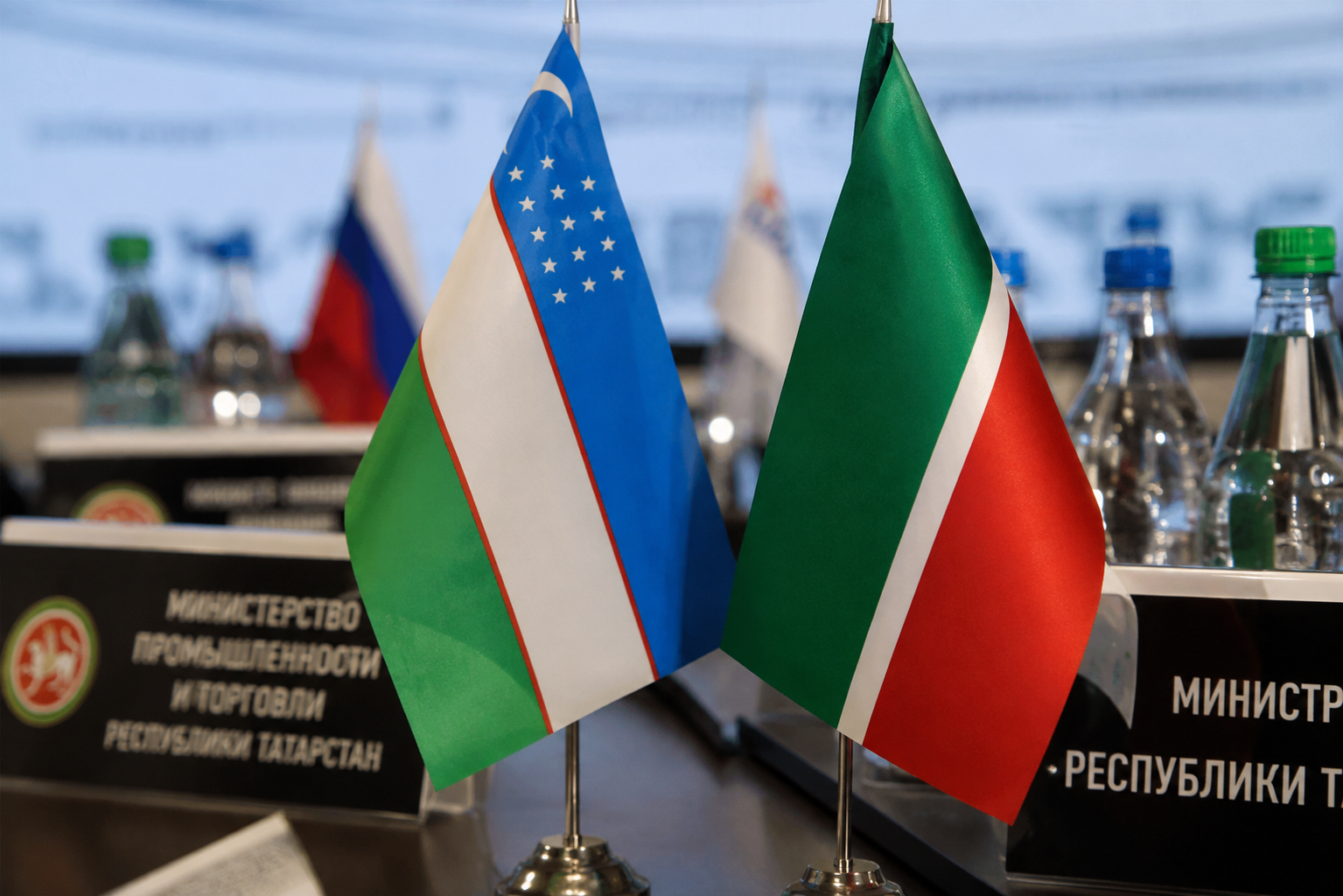
Trade Turnover Could Reach a New Record
Trade between Tatarstan and Uzbekistan is expected to exceed $500 million by the end of 2026.
The forecast was announced by Tatarstan Deputy Prime Minister and Minister of Industry and Trade Oleg Korobchenko during the Tatarstan–Uzbekistan business forum in Kazan.
According to Korobchenko, nearly all major Tatarstan enterprises interact with Uzbek partners in some form, supply products to the Uzbek market, participate in joint ventures or are considering local manufacturing.
Bilateral trade exceeded $427 million in 2025, representing growth of 13.5%. Reaching more than $500 million would therefore require an increase of at least approximately 17% in 2026.
Trade Has Nearly Tripled in Five Years
Economic relations between Tatarstan and Uzbekistan have shown sustained long-term growth.
Trade stood at $156.5 million in 2020. It exceeded $290 million in 2022 and reached $376 million in 2024 after increasing by 21% during that year.
If the 2026 forecast is achieved, bilateral trade will be more than three times higher than in 2020.
The increase is not driven only by larger shipments. Tatarstan and Uzbekistan are gradually moving from conventional trade toward industrial cooperation, joint ventures and the establishment of Tatarstan-backed companies at industrial sites across Uzbekistan.
Forum Attracted Around 200 Companies
The business forum in Kazan brought together representatives of approximately 200 companies and organisations.
Following the plenary session, businesses held a series of bilateral B2B meetings covering supply contracts, joint manufacturing, investment, distribution and access to new regional markets.
The practical value of such events lies in creating a pipeline of commercial orders. Governments can establish favourable conditions, but actual trade growth depends on contracts between manufacturers, suppliers, retailers, carriers and logistics operators.
B2B negotiations do not necessarily appear immediately in official trade statistics. Several months may pass between an initial meeting and regular shipments, particularly where certification, warehousing, transport selection or local manufacturing is required.
Uzbekistan Sets a $5 Billion Target
Uzbekistan Chamber of Commerce and Industry Deputy Chairman Odilkhon Rustamov outlined an objective of increasing bilateral trade to $5 billion.
That would be ten times the expected 2026 level. No deadline has been announced, meaning the figure should be treated as a long-term strategic objective rather than a near-term forecast.
Reaching the target through larger volumes of existing products alone would be difficult. New joint ventures, major investment projects, a wider product range and access to third-country markets would be required.
Cooperation would effectively have to develop from bilateral trade into an integrated industrial and logistics system. Tatarstan could provide technology, equipment and components, while Uzbekistan offers manufacturing locations, labour and access to Central Asia’s expanding consumer market.
Industrial Cooperation Is Becoming the Foundation
Tatarstan and Uzbekistan already cooperate in mechanical engineering, petrochemicals, energy, medical manufacturing, construction materials and consumer products.
In April 2026, the joint Piton Factory enterprise opened at the Chirchiq Technopark. It manufactures busbar systems and power take-off units used in energy and industrial infrastructure. Initial investment amounted to $300,000.
Arnest Unigroup Navoi has also launched production at an industrial site in Navoi, with plans to manufacture up to 85 million units of household chemicals and cosmetics annually.
Each factory creates permanent cargo flows. Equipment, raw materials, packaging and spare parts must be delivered, while finished products require distribution across domestic and export markets.
Industrial Parks Are Becoming Trade Hubs
The Chirchiq and Jizzakh industrial sites operate in Uzbekistan with Tatarstan participation, while further projects are being developed in the Navoi and Bukhara regions.
Chirchiq had registered 27 resident companies with total investment of $147 million. By spring 2025, 19 companies had started production. They manufactured $16.7 million worth of goods in 2024, with 52% exported.
The first manufacturing building at the joint Navoi site entered service in April 2026, while construction continues at the Bukhara industrial development complex.
These facilities allow Tatarstan companies to manufacture closer to the final customer rather than only exporting finished goods.
Localisation reduces the delivery cost of completed products but creates new demand for components, industrial machinery and specialised raw materials.
Products Create Different Logistics Requirements
Tatarstan has traditionally supplied Uzbekistan with transport equipment, machinery, plastics, rubber, petroleum products, wood and other manufactured goods.
Uzbek exports include textiles, clothing, plastic products, food and agricultural commodities. The structure creates cargo flows ranging from heavy machinery and chemicals to garments and perishables.
Engineering shipments require the movement of oversized components and spare parts. Petrochemical cargo may need specialised wagons, tanks, containers and dangerous-goods procedures.
Textiles and consumer products depend on frequent deliveries and distribution warehouses. Agricultural goods require refrigerated transport, temperature monitoring and faster border processing.
Kazakhstan Is the Main Transit Link
Tatarstan and Uzbekistan do not share a border, meaning most surface routes pass through Kazakhstan.
Road freight is suitable for small and medium-sized consignments, finished products, equipment and urgent orders. Its main advantage is direct delivery between the shipper’s site and the consignee’s warehouse or factory.
Rail is more efficient for high-volume and heavy cargo such as petrochemicals, metals, construction materials, machinery and containerised shipments.
Growth beyond $500 million will place additional pressure on border crossings connecting Russia, Kazakhstan and Uzbekistan. Carriers will require predictable permit procedures, sufficient terminal capacity and coordinated customs operations.
Delays at one point can affect the entire chain. A truck or wagon held at the border can leave a factory without components or prevent a warehouse from receiving goods on schedule.
Joint Factories Change Freight Patterns
Under a conventional export model, a product is manufactured entirely in Tatarstan and shipped to a customer in Uzbekistan.
Local production creates a more complex structure. Tatarstan may supply selected components, technology, moulds, machinery and specialised materials, while final assembly takes place in Uzbekistan.
Individual shipments may become smaller, but their frequency increases.
New return flows can also develop. Finished goods produced in Uzbekistan may be shipped to Tatarstan, other Russian regions, Kazakhstan, Kyrgyzstan, Tajikistan or Afghanistan.
This model can be more attractive to carriers than occasional export orders because it supports regular schedules and creates opportunities for backhaul cargo.
More Warehouses and Distribution Centres Will Be Needed
Trade of $500 million — and particularly $5 billion — cannot be supported without additional warehousing.
Companies need facilities for components, finished products, packaging and spare parts. Customs warehouses will be important for storing imported cargo before clearance is completed.
Demand may increase for class A and B warehouses, container yards and groupage centres near Chirchiq, Jizzakh, Navoi and Bukhara.
Uzbek textiles and consumer goods will require distribution facilities in Tatarstan before being supplied to retailers in Kazan, Naberezhnye Chelny and other cities.
Agricultural cargo will need cold stores, sorting and packing areas, and continuous temperature monitoring throughout the journey.
Automotive Cooperation Remains Important
Cooperation involving KAMAZ has been one of the most visible examples of the relationship.
Truck assembly was previously established at UzAuto Trailer in the Samarkand Region, creating demand for chassis, components, gas equipment and spare parts.
Automotive cooperation has a multiplier effect. Vehicles generate further exports of service equipment, spare parts, tyres, oils and technical support.
A separate after-sales logistics network develops around production. Dealers and service centres must maintain sufficient parts inventories because waiting several weeks for a single component can remove a commercial truck from operation.
B2B Meetings Can Open the Market to Smaller Companies
Large manufacturers already operate international trade departments, representative offices and established logistics partnerships.
Access is more difficult for small and medium-sized enterprises. They must find customers, verify counterparties, adapt documents, obtain certification and calculate transport costs.
A forum can shorten the first stage by allowing companies to meet potential partners directly.
Opportunities for smaller businesses may include food-processing equipment, packaging, building materials, medical products, software and industrial components.
Rather than entering an entire market independently, a company may work through a local distributor, trading house or industrial-park resident.
Regional Cooperation Is Expanding Across Russia
Tatarstan is one of the most active Russian regions in Uzbekistan, although other regions are developing similar links.
K2Cargo News previously reported how Uzbekistan and Russia’s Kaliningrad Region expanded trade and investment cooperation. Their discussions covered food, textiles, agricultural goods and potential joint industrial projects.
The regional format demonstrates that economic relations are increasingly moving beyond central governments. Contracts are being developed directly between regions, industrial zones and private businesses.
For logistics operators, this creates a wider network of routes connecting Uzbekistan with different parts of Russia.
Reaching $5 Billion Will Require Third-Country Markets
Tatarstan and Uzbekistan are unlikely to reach $5 billion through domestic consumption alone.
A more realistic model involves joint factories manufacturing goods for export to other countries.
Uzbekistan can support distribution to Kazakhstan, Kyrgyzstan, Tajikistan, Afghanistan and other Central and South Asian markets. Tatarstan companies gain a manufacturing base closer to those destinations.
Uzbek producers can use Tatarstan to expand across Russia and connect with existing distribution networks.
Bilateral trade would therefore be supplemented by investment, services, technology licensing and supply flows within joint production chains.
What Could Limit Further Growth
The principal constraints remain transport costs, border delays, rolling-stock availability and unbalanced cargo flows.
Certification may also be a challenge for some goods. Technical, sanitary and veterinary requirements need to be considered before a contract is signed.
Manufacturers must also calculate backhaul economics. Where a truck or container returns empty, the full transport cost must be carried by the shipment moving in one direction.
Another risk is cargo growth without matching warehouse capacity. When shipments expand faster than terminals and distribution centres, goods begin accumulating at open yards and railway stations.
Trade Is Becoming an Integrated Production Chain
The forecast of more than $500 million demonstrates that Tatarstan–Uzbekistan relations are entering a new stage.
The two sides have increased trade more than threefold within several years, opened industrial sites and launched joint factories.
The $5 billion target remains extremely ambitious. Achieving it will require more than additional export contracts. Manufacturing, transport, storage and distribution will have to operate as an integrated system.
The main result of the Kazan forum will depend on how many B2B discussions become binding contracts, regular freight services and new industrial projects.
Successful localisation and access to third-country markets could create one of the most developed regional industrial partnerships between Russia and Central Asia.
Read also: Uzbekistan Waives Duties on Imported Trucks