

Kyiv and Its Surrounding Region Were the Main Targets
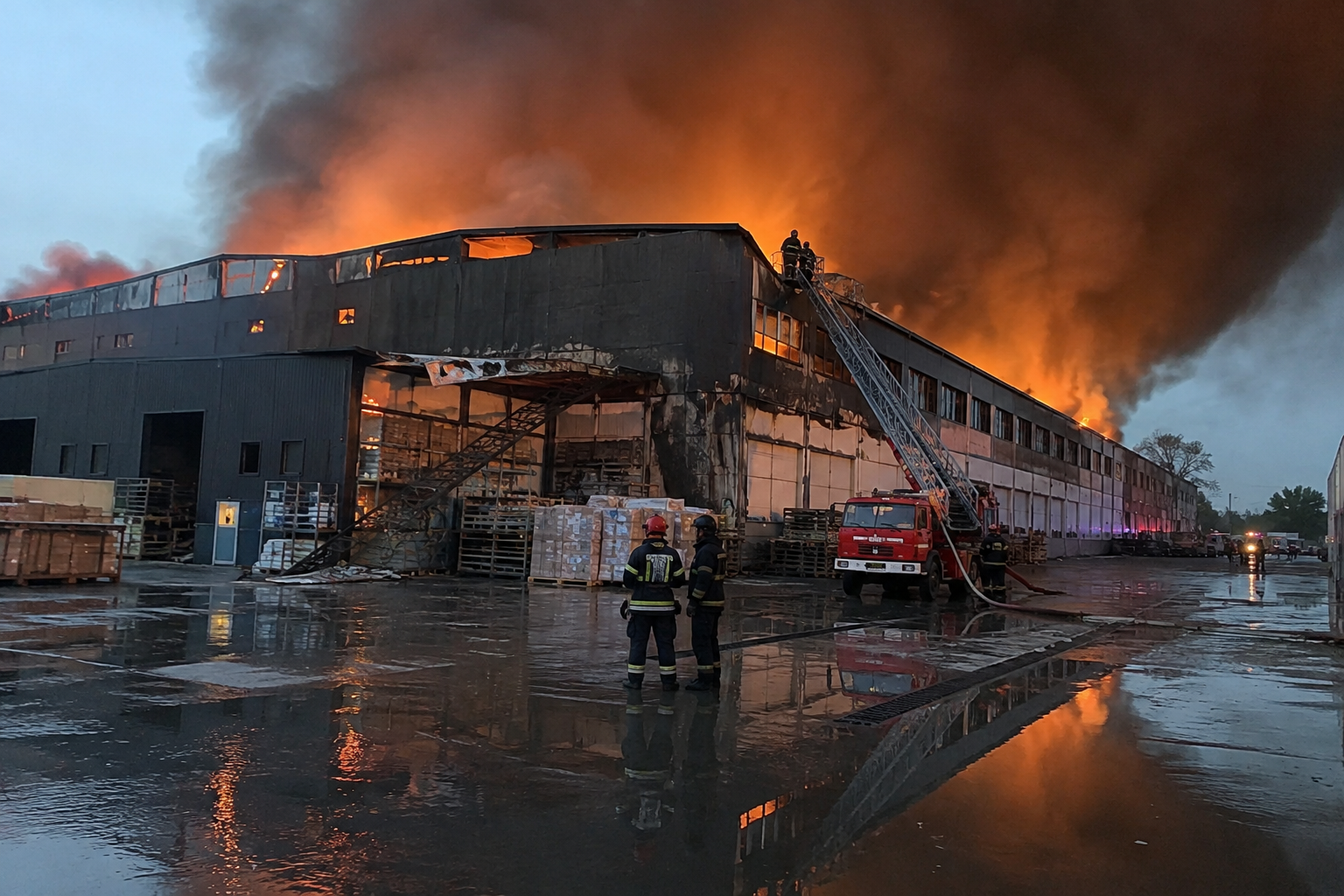
Russia launched a large combined missile and drone attack against Kyiv and the Kyiv region overnight into August 5, 2026.
Warehouses, distribution centres, manufacturing facilities and other civilian infrastructure suffered extensive destruction.
According to the latest information available from Reuters and the Associated Press, at least 17 people were killed and 44 were injured. Kyiv declared Thursday, August 6, a day of mourning.
Ukraine’s Air Force reported that Russia used 115 drones, 24 ballistic missiles and four Zircon hypersonic cruise missiles.
Ukrainian air defences destroyed most of the drones but failed to intercept any of the ballistic or Zircon missiles.
President Volodymyr Zelenskyy linked the consequences to Ukraine’s shortage of Patriot interceptor missiles. He said air-defence deliveries during 2026 had fallen to approximately one-third of their 2025 level.
Novyny.Live Described It as the Largest Strike on Ukrainian Business
Novyny.Live described the assault as the most extensive simultaneous attack on Ukrainian businesses since the beginning of the full-scale war.
That is an editorial assessment rather than an official statistical classification. Ukraine does not currently operate a comprehensive real-time system comparing every attack by the total value of commercial assets destroyed.
The scale was nevertheless exceptional. Several major warehouses and production sites belonging to different companies were hit during the same attack.
The Kyiv Regional Military Administration reported that 13 warehouse buildings, one manufacturing facility, four private homes and dozens of vehicles were damaged. Five logistics warehouses were struck in the Brovary district alone, according to Reuters.
The figures of “13 warehouses” and “13 affected businesses” should not automatically be treated as identical. One company may occupy several buildings, while several brands may belong to one corporate group.
Companies Reporting Losses
The list compiled by Novyny.Live includes businesses operating in grocery retail, e-commerce, parcel delivery, construction, automotive supply and fashion.
NOVUS
NOVUS reported several direct missile impacts at its logistics centre, forcing the facility to stop operating.
No NOVUS employees were reported killed.
The company will have to redirect deliveries through alternative sites and direct supplier-to-store routes.
The shutdown may increase delivery times for individual supermarkets but does not by itself indicate a nationwide food shortage.
Nova Poshta
The Kyiv Innovation Terminal, one of Nova Poshta’s main sorting facilities, was destroyed.
According to Nova Poshta’s official statement, all employees were inside shelters during the attack. No workers were killed or injured at this particular site.
Earlier reports suggesting that three people were killed at the Kyiv terminal are not supported by the company’s statement regarding this attack.
Part of the building, sorting equipment and shipments inside the facility were destroyed. Nova Poshta activated backup terminals and alternative logistics routes and said deliveries were continuing without systemic disruption.
Customers will receive compensation for damaged or destroyed shipments.
ROZETKA
Online retailer ROZETKA confirmed the destruction of a warehouse complex in Brovary.
The company said no employees were injured and that its website and retail network remain operational.
ROZETKA co-founder Iryna Chechotkina said three ballistic missiles struck the facility. The company began redirecting orders through remaining warehouse and store capacity.
Fozzy Group and Silpo
Fozzy Group expressed condolences to the families of those killed and support for everyone affected by the attack.
Silpo, part of the group, confirmed fires at two distribution centres. At least six employees were killed.
The simultaneous loss of two sites makes contingency operations more difficult because one distribution centre cannot quickly absorb the full workload of the other.
Epicentr
Epicentr said two major logistics facilities and production capacity belonging to Epicentr Ceramic Corporation were destroyed.
The company reported that one employee was killed. The full value of the lost buildings, equipment, inventory and unfinished products is still being assessed.
Epicentr described the strikes as an attack on Ukrainian manufacturing, logistics, employment and the country’s ability to rebuild.
INTERTOP
INTERTOP reported the complete destruction of its primary logistics warehouse.
The company remains operational and is redirecting supplies through stores, partners and remaining logistics capacity.
Restoring the full product range may take time, particularly where the destroyed site held most of the company’s central inventory.
PUMA
PUMA’s Ukrainian operation reported that its warehouse had been completely destroyed.
The company warned that some products, models and sizes could become temporarily unavailable in Ukraine.
LIQUI MOLY Ukraine
LIQUI MOLY Ukraine said its central product warehouse was destroyed by fire.
All employees survived without injury. The company is reorganising supply routes, although service centres and distributors may experience temporary delays involving oils, additives and automotive chemicals.
Toyota Ukraine
Toyota Ukraine lost its warehouse for spare parts and related products.
The company warned that some dealers may face delays in receiving individual parts and accessories.
Products that are rarely held locally and normally move through the central warehouse will be the most vulnerable.
The Number of Affected Companies May Change
Novyny.Live reported 13 affected businesses, although the widely circulated list publicly identified ten companies and brands.
Fozzy Group and Silpo may be counted either as one corporate group or as separate businesses. A similar issue applies to individual Epicentr companies and facilities.
The final count will become clearer after property inspections are completed and all warehouse owners publish official statements.
Some companies may also avoid immediately disclosing the location or identity of damaged facilities for security reasons.
The Main Damage Was Inflicted on Distribution Systems
Destroying a warehouse does not automatically stop an entire company.
Large retailers usually maintain stock inside stores, operate regional facilities, use direct supplier deliveries and have agreements with third-party logistics providers.
The simultaneous loss of several facilities nevertheless creates a cumulative effect.
Goods originally intended for the destroyed sites must be redirected. Remaining warehouses face higher workloads, while carriers need to change routes and schedules.
Likely short-term consequences include delivery delays, a narrower range of certain products, greater truck mileage, pressure on surviving warehouses, temporary storage costs and slower returns processing.
There is currently no confirmed evidence that the attack will cause a nationwide shortage of food or essential goods. Most affected companies have already activated contingency procedures.
Grocery Distribution Faces the Greatest Pressure
Grocery distribution centres operate continuously and handle chilled, frozen and ambient products.
Many goods cannot be transferred to an ordinary warehouse. They require refrigeration, backup electricity and strict sanitary controls.
After a warehouse fire, operators must also inspect products for heat, smoke, water and chemical exposure. Goods may be unsafe even when their packaging appears intact.
The deaths of Silpo employees make the consequences a human tragedy before they become a logistics problem.
Infrastructure can eventually be rebuilt. The lives lost cannot be replaced.
Online Retailers Will Redirect Orders Through Stores
ROZETKA, INTERTOP and other omnichannel retailers can temporarily fulfil some online orders using inventory held in retail stores.
This model supports continued sales but is less efficient than centralised fulfilment.
Stores must serve walk-in customers, assemble online orders and hand parcels to carriers at the same time.
Customers may experience split shipments, changes to pickup locations or longer delivery periods.
Automotive Businesses May Face Parts Delays
The destruction of Toyota Ukraine and LIQUI MOLY warehouses could affect dealers and repair workshops.
Common consumables are normally available at regional warehouses and workshops. The greatest risk concerns body panels, electronic modules, rare transmission parts, specialist fluids and accessories.
Where an item is no longer available in Ukraine, it must be reordered from abroad, adding international transport, customs processing and domestic distribution time.
For commercial vehicles, one unavailable component can keep a truck out of operation and remove revenue from the carrier.
The Attack Demonstrated Inventory-Concentration Risk
A large central warehouse provides automation, economies of scale and efficient inventory control.
During wartime, that concentration also becomes a vulnerability. A single strike can destroy regional inventory and complex sorting equipment.
Ukrainian companies are likely to accelerate the transition toward distributed logistics by separating critical inventory among several regions, contracting alternative 3PL operators, duplicating IT systems and preparing transport-diversion plans in advance.
Such a model costs more under normal conditions but provides much greater resilience when one site is destroyed.
Government Plans an Emergency Business Meeting
Prime Minister Serhii Koretskyi announced an emergency meeting with companies involved in trade and logistics.
The immediate objective is to maintain supplies and prevent systemically important businesses from stopping operations. The government needs information on destroyed inventory, equipment, vehicles and replacement-space requirements.
Possible measures may include emergency credit, state guarantees, temporary tax arrangements and faster imports of replacement equipment.
No complete support package had been published when this article was prepared.
Assistance to the families of those killed, restoration of food logistics and access to working capital are likely to be the most urgent priorities.
The Strike Coincided With an Air-Defence Shortage
The attack relied heavily on ballistic missiles, against which Ukraine depends on a limited number of Patriot systems and PAC-3 interceptors.
According to Reuters, air-defence missile deliveries to Ukraine in 2026 were approximately three times lower than in 2025.
Ukraine intercepted almost 90% of the drones but failed to stop the missiles responsible for most of the destruction.
Russia claimed that the operation targeted facilities linked to transport and military production.
Ukraine, the affected companies and photographs published by international agencies documented damage to food warehouses, a postal terminal, retail logistics and civilian manufacturing sites.
Russia has not produced independently verifiable evidence demonstrating military use of most of the named facilities.
Full Economic Losses Will Take Months to Calculate
Initial assessments will cover buildings, machinery, vehicles and destroyed inventory.
Indirect losses could be considerably larger. They include interrupted sales, contract penalties, emergency warehouse rental, additional transport, lost seasonal collections and production delays.
A warehouse building may be reconstructed more quickly than specialised sorting, refrigeration or ceramic-manufacturing equipment can be replaced.
Some equipment will need to be ordered, manufactured and imported, meaning the consequences will extend beyond August.
Ukrainian Businesses Remain Operational
None of the largest affected companies has announced a complete termination of operations.
Nova Poshta redirected freight through reserve terminals. ROZETKA continues accepting orders. INTERTOP is rebuilding supplies. LIQUI MOLY and Toyota are establishing alternative channels.
Delays and temporary product gaps remain possible, but store-level inventory, regional stocks, partner warehouses and foreign suppliers should allow most core operations to continue.
The final scale of the attack is still being established. Search-and-rescue operations, structural inspections and inventory assessments remain under way.
The greatest loss is human life. As of 2:50 a.m. on August 6, at least 17 people had been confirmed killed, and the number could change as work continues at the destroyed sites.
Read also: New Ship Strike Reported off Odesa