

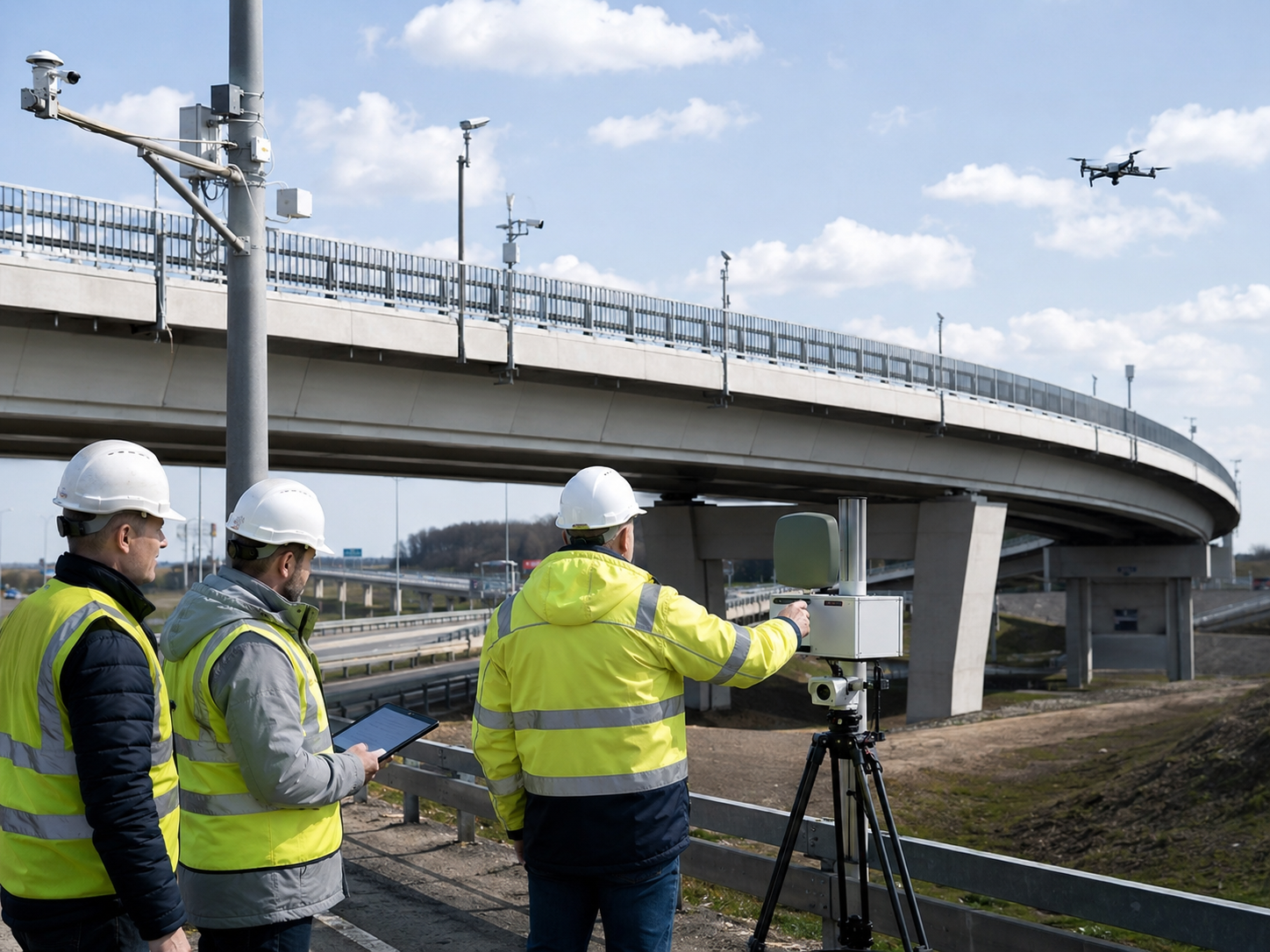
Transport Ministry Proposes Changes to Road Work Rules
Russia’s Ministry of Transport has prepared a draft order expanding the list of activities that can be financed as part of road maintenance and repair programs.
The changes would allow regional authorities and road owners to use funding allocated for road works to install, replace and restore structures designed to protect highways, bridges and other engineering structures from unmanned aircraft.
The draft would also add work required to eliminate damage caused by such attacks.
The measure remains a regulatory proposal, meaning its final provisions may change during the approval process.
Current Rules Do Not Specifically Cover the New Threat
Russia’s classification of road construction, repair and maintenance activities determines which types of work can be included in relevant road programs.
The Ministry of Transport already updated the classification in 2026. Changes effective from June 30 cover intelligent transport systems, video surveillance, automated weight and dimension control, road lighting and maintenance of engineering structures.
However, dedicated anti-drone structures and repairs following UAV attacks are not specifically identified in the current classification.
According to Kommersant and Forbes, the new proposal is intended to close this regulatory gap and give infrastructure owners a clearer mechanism for financing protective measures.
Bridges Could Be Equipped With Protective Structures
Russia already has a separate regulatory framework covering protection of transport infrastructure from unmanned systems.
A government resolution adopted on April 30, 2025 lists passive protection measures including mesh barriers, screens, canopies and gabions, along with shelters for people and other engineering structures.
If the road-work classification is amended, such structures could be incorporated directly into road and bridge repair and maintenance planning.
This could be particularly important for bridges, overpasses and other structures where serious damage can completely interrupt traffic along a transport corridor.
Regions Want the List of Eligible Work Expanded
Regional transport authorities have also highlighted the need for more flexible funding mechanisms.
According to Kommersant, the Transport Ministry of Russia’s Krasnodar region pointed to experience in other regions where metal netting is being used to reduce the risk of critical damage to bridge structures and backup traffic arrangements are prepared in advance.
The regional ministry proposed allowing temporary access roads to pontoon crossings to be included in the new rules where bridges become unavailable.
Such infrastructure could help preserve freight traffic as well as local mobility while a damaged bridge is out of service.
Anti-Drone Road Protection Is Already Being Used
Some Russian regions introduced physical protective structures along roads before the proposed funding changes were drafted.
So-called anti-drone corridors have been installed in border areas, using rows of supports with protective netting stretched between them.
The purpose of these structures is to reduce the risk posed by smaller unmanned aircraft to vehicles traveling along exposed road sections.
The Transport Ministry proposal would create a clearer mechanism for financing the installation, repair and maintenance of such infrastructure through road programs.
Freight Transport Depends on Resilient Roads and Bridges
For road logistics, the consequences of damage to a bridge or major highway structure can extend far beyond the immediate location of an attack.
Closing a single section can force trucks onto longer routes, increase fuel consumption and mileage, create congestion on alternative roads and delay deliveries.
The impact is particularly significant on corridors where no alternative route offers comparable capacity.
Adding protection and recovery measures to the road-work classification could allow infrastructure owners to respond more quickly to emerging risks. The practical impact, however, will depend on the final wording of the regulation, available funding and which roads and bridges regional authorities prioritize.
Read also: Russian Strike Hits 13 Ukrainian Businesses as Warehouses and Logistics Hubs Are Destroyed
