

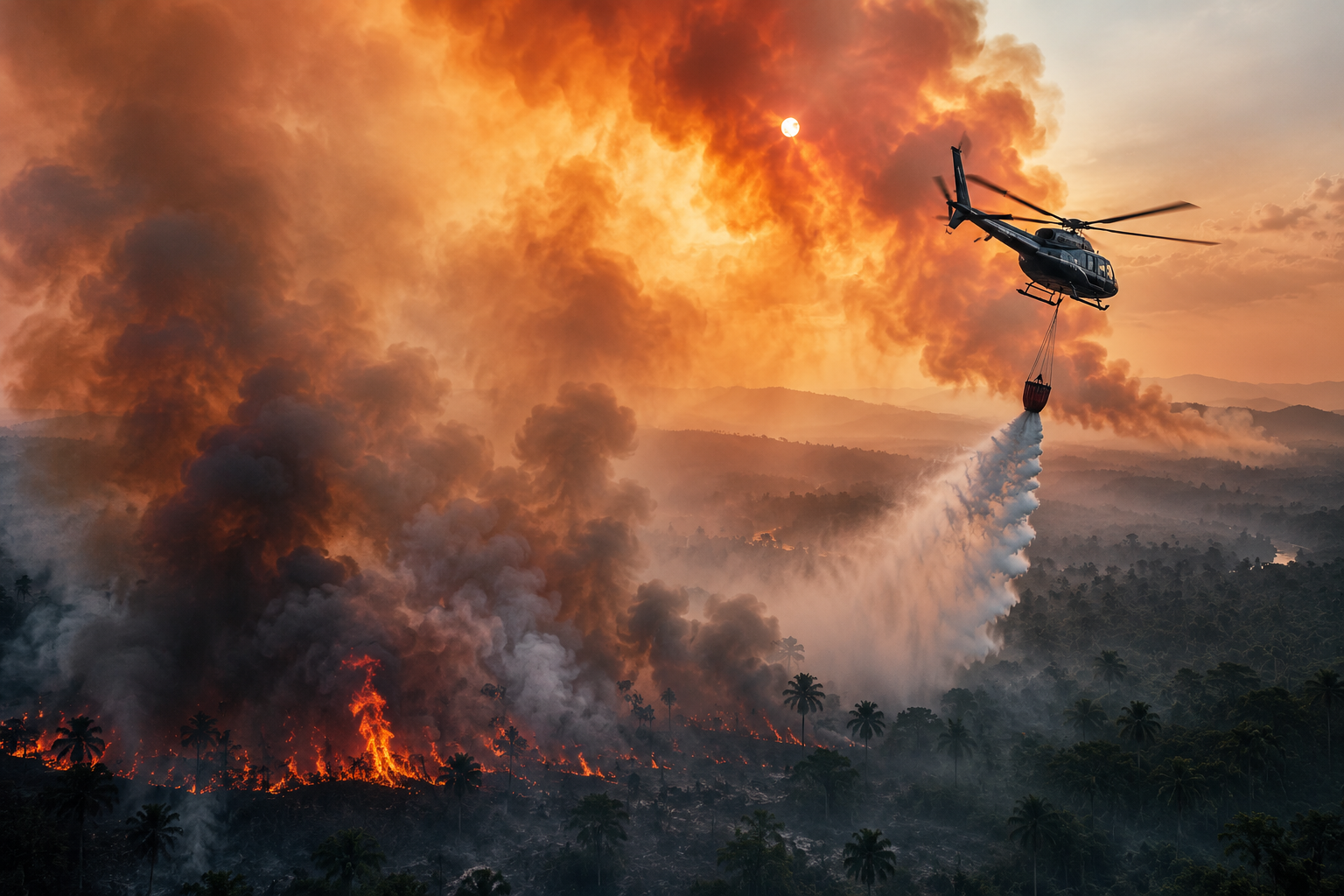
Fires Spread Beyond Forests
From January through June 2026, fires affected 107,465 hectares of land across Indonesia. That is more than double the area affected during the same period in 2023, when the country was also dealing with the effects of El Niño.
The most difficult situation is unfolding in six provinces — Riau, Jambi and South Sumatra, as well as West, Central and South Kalimantan. Fires have also been reported elsewhere, including Java, Papua and Nusa Tenggara.
Authorities have already placed firefighting efforts on a heightened alert footing. A total of 43 helicopters and 15 aircraft are being used to combat the fires.
El Niño Is Helping the Fires Spread
Indonesia is expecting a longer and more severe dry season this year. One of the factors behind the worsening conditions is the strengthening El Niño phenomenon, which increases the risk of drought and creates conditions in which fires can spread rapidly.
Indonesian authorities stress, however, that the climate phenomenon itself does not start fires. Instead, it makes the consequences of fires far more severe.
According to Suharyanto, head of Indonesia’s national disaster management agency, human activity remains the main cause, whether intentional or accidental. He cited the use of fire and the burning of peatlands among the contributing factors.
Environmental groups point to another part of the problem. They argue that the expansion of palm oil plantations and mining operations contributes to deforestation, dries out the land and leaves it more vulnerable to fires.
Authorities Try to Bring on Rain
One of the tools being used to fight the fires is weather modification. Aircraft are releasing substances into clouds in an attempt to stimulate rainfall over areas affected by the fires.
The method has an obvious limitation: suitable cloud formations are required. When there are not enough rain clouds, the effectiveness of such operations is severely restricted.
Authorities are therefore monitoring even minor changes in weather conditions so they can act during short periods when cloud seeding is possible.
Smoke Has Already Reached Neighboring Countries
The consequences of the fires are gradually turning from a domestic problem into a regional one. Smoke has spread across populated areas, worsening air quality.
In Pontianak, the capital of West Kalimantan, authorities have moved school classes online. In neighboring Malaysia, unhealthy air quality was recorded in 11 districts of Sarawak state.
Against this backdrop, fighting the fires is becoming an issue that goes beyond forest protection. The longer the dry season lasts and the more land is affected by fires, the greater the impact on cities, communities and neighboring countries.
The current crisis is notable because it is being driven by several factors at once — extreme dryness, climate conditions, economic activity and human negligence. It is precisely this combination that is making Indonesia’s fire season particularly difficult to control.
Read also: China’s Antarctic Station Runs on 50% Green Energy Even During the Polar Night