

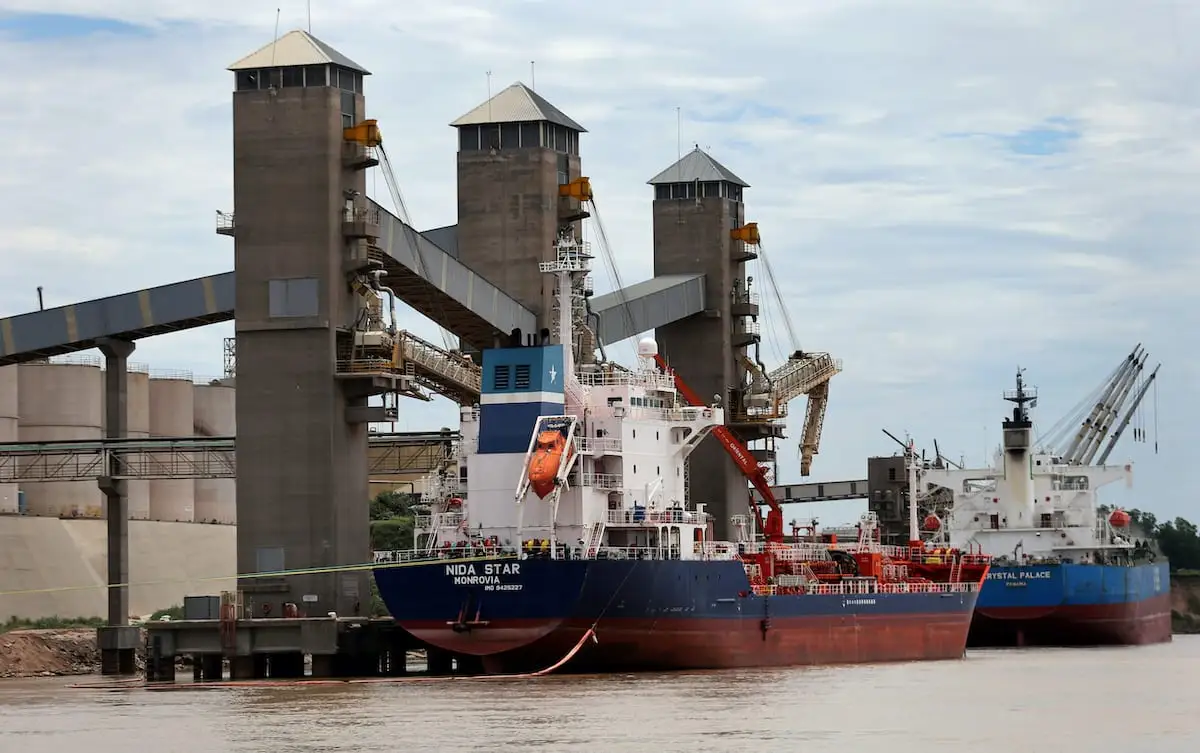
Asian importers have purchased at least 500,000 tonnes of Argentine and Australian wheat to replace delayed supplies from Russia and Ukraine
Argentina is strengthening its position in the Asian wheat market as buyers seek more reliable alternatives to Black Sea supplies. Attacks on commercial vessels and Ukrainian port infrastructure are causing delays, increasing insurance costs and creating uncertainty over the arrival of previously contracted cargoes.
Importers have purchased at least 500,000 tonnes of wheat from Argentina and Australia in recent deals. The figure represents combined purchases from both alternative origins rather than Argentine exports alone. Buyers in Indonesia, Bangladesh, Vietnam, Malaysia, Thailand and Sri Lanka are among those seeking replacement supplies.
The shift demonstrates that delivery reliability is becoming more important than securing the lowest possible price. Asian millers are prepared to pay a premium to prevent production stoppages and disruptions to domestic food supplies.
Black Sea Wheat Is No Longer Arriving Reliably
Asian processors had previously booked between 2 million and 2.5 million tonnes of Black Sea wheat for delivery between July and September 2026. These volumes represented approximately 30–50% of the import requirements of some buyers in the region.
The deterioration in maritime security has created uncertainty over whether all those cargoes will arrive on time. Even when ports remain officially open, shipowners may postpone calls, withdraw vessels or demand additional compensation for operating in a high-risk area.
The disruption extends beyond loading operations. It affects vessel deployment, bulker schedules, insurance cover, passage through the maritime corridor and onward delivery to Asian ports.
According to Reuters, some importers are also considering smaller containerised wheat shipments. Although this option is more expensive than using bulk carriers, it can provide immediate access to limited quantities and reduce dependence on a single large cargo.
Argentine Wheat Is Cheaper Than Australian Supply
Replacing Black Sea grain is significantly increasing procurement costs. Australian Premium White wheat has been sold at approximately $315–330 per tonne on a cost-and-freight basis.
Argentine wheat has traded at around $310–315 per tonne. Argentina is therefore slightly more affordable than Australia, although its wheat remains considerably more expensive than Black Sea cargoes booked earlier.
Black Sea wheat scheduled for August and September delivery was largely sold at $260–280 per tonne. Switching to Argentine or Australian supply consequently adds approximately $30–70 to the cost of each tonne.
For a standard 50,000-tonne shipment, the additional expenditure could range from $1.5 million to $3.5 million, excluding differences in grain quality, financing and port-handling terms.
Argentina Gains an Opportunity in Asia
Argentina traditionally supplies substantial volumes of wheat to Brazil and other Latin American markets. Black Sea disruption is now creating an opportunity for the country to compete more actively in Asia.
Distance remains an important disadvantage. Shipping Argentine wheat to Southeast Asia requires a longer voyage than sourcing grain from Australia, while final competitiveness depends on freight rates, bulker availability and export-terminal capacity.
In an unstable market, however, geographic proximity can become less important than delivery reliability. If Argentine exporters can guarantee timely loading, Asian buyers may continue diversifying their supply base even after Black Sea conditions improve.
For Argentina, this creates an opportunity to increase export revenue and establish a stronger presence in new markets. For Asian importers, diversification reduces dependence on a single region but also raises procurement costs and makes supply-chain management more complex.
Russia Attacked 52 Civilian Vessels in Six Weeks
Ukraine’s Ministry for Communities and Territories Development reported that Russia attacked 52 civilian vessels during July and the first half of August 2026. The affected ships were carrying cargo to or from Ukrainian ports or were located inside the ports at the time of the strikes.
The total included 39 merchant vessels and two search-and-rescue units. Ukrainian authorities reported deaths and injuries among crew members, as well as damage that left some vessels unable to continue operating.
The intensity of the attacks is affecting the Temporary Maritime Corridor used by civilian vessels entering and leaving Ukraine’s deep-water ports.
Some initial material incorrectly referred to exports “since the beginning of 2016.” The correct period is since the beginning of 2026. More than 27 million tonnes of food cargo were exported through the corridor during that period. Grain accounted for over half of the volume and was delivered to more than 55 countries, according to Shipping Telegraph.
Ukraine Brings the Issue to the IMO
Ukraine has submitted an appeal to the International Maritime Organization requesting consideration of the threats facing civilian shipping and the maritime corridor. The IMO Secretariat circulated the document among member states and international and non-governmental organizations holding consultative status.
The Ukrainian government argues that the attacks are not isolated incidents but part of sustained pressure on commercial shipping and port infrastructure. Prolonged disruption could affect maritime supply chains and food availability in import-dependent countries.
The IMO has previously stated that the armed conflict in the Black Sea and Sea of Azov creates an immediate threat to vessels and their crews. The organization has also condemned attacks on civilian merchant shipping.
Buyers Are Paying for Supply Security
The shift toward Argentine and Australian wheat does not yet mean that Asian buyers are abandoning Black Sea grain. The price difference remains substantial, while Russia and Ukraine continue to play major roles in the global wheat trade.
Importers must nevertheless consider both the price of the commodity and the probability that a contracted shipment will actually arrive. A lower purchase price becomes less attractive when a vessel cannot reach a terminal on schedule or safely leave the port.
Further escalation could push war-risk insurance premiums, freight rates and food prices higher. Under these conditions, Argentina has an opportunity to gain a larger share of the Asian market, while importers are building a more diversified but more expensive supply system.
As K2Cargo.News previously reported, attacks have already reshaped Black Sea logistics, prompting carriers to reconsider calls at Ukrainian ports and redirect some cargo through Romania and other alternative routes.
Read also: 57 Ships Hit Since June 20 as Attacks Reshape Black Sea Logistics