

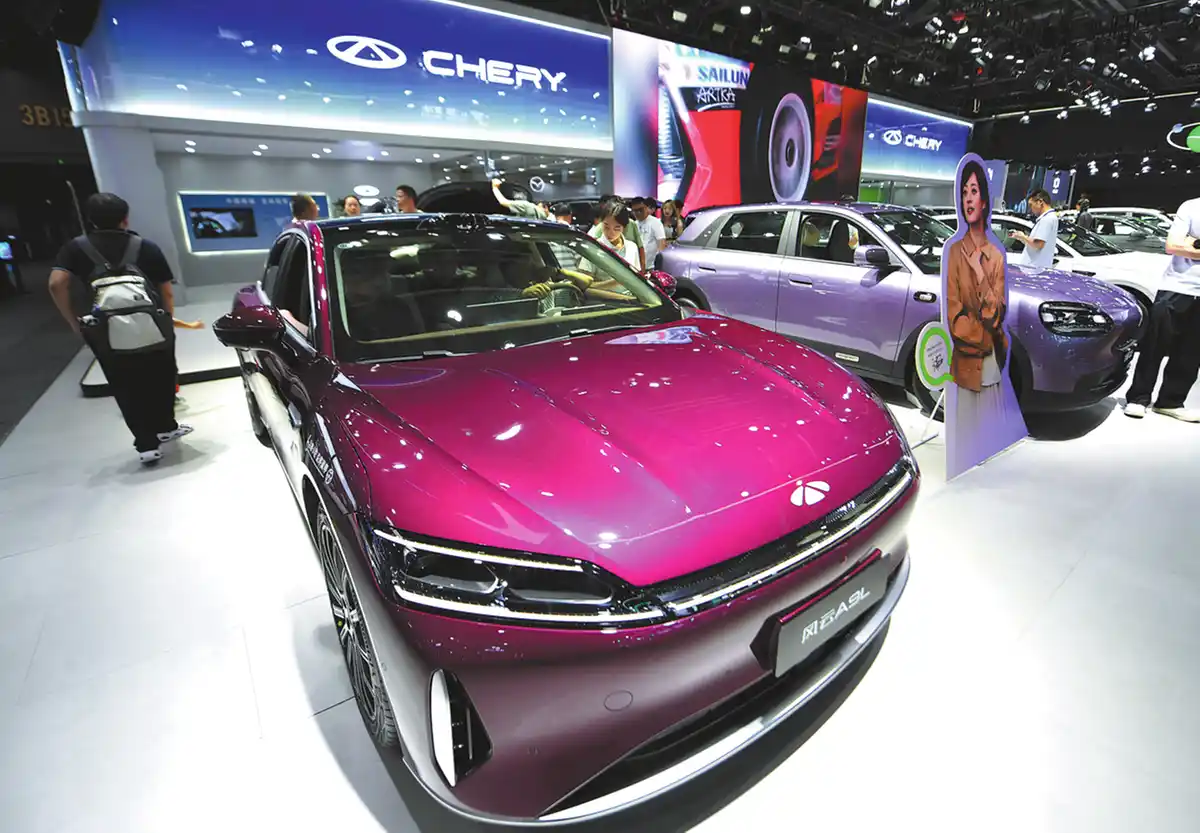
China’s electric vehicle market is entering a new phase, with nearly two-thirds of all passenger cars sold now being new energy vehicles. Manufacturers are competing on more than just price.
According to China Daily, China’s automotive industry has entered a period of rapid change, with the speed of technological adoption becoming as important a competitive advantage as vehicle prices. Manufacturers are able to bring new models to market faster thanks to the country’s developed industrial ecosystem and the scale of domestic demand.
According to industry experts, lower battery material costs and the adoption of new manufacturing technologies are helping reduce the cost of electric vehicles. As a result, some models can now compete with internal combustion engine vehicles on price.
At the same time, consumer expectations are changing. Increasingly important features include:
- voice-controlled vehicle functions;
- large in-car displays;
- driver assistance systems and other smart features.
The expansion of charging infrastructure is also reducing one of the key barriers to the transition to electric transport. By the end of July, China had 23.68 million EV charging facilities.
Experts also point to the speed at which new models are being developed. Chinese automakers have managed to reduce vehicle development cycles from three to five years to around 18 months. This allows companies to introduce new technologies more quickly and respond faster to changes in consumer demand.
A similar trend can be seen in the battery industry. CATL, for example, has continued to release new generations of batteries with improved performance. According to the manufacturer, the latest version of its Shenxing battery can charge from 10% to 80% in 3 minutes and 44 seconds while retaining more than 90% of its capacity after 1,000 full charge cycles.
Automotive industry experts believe that the combination of industrial scale, a developed supply chain and rapid technological iteration is becoming one of the key factors behind the competitiveness of China’s automotive industry.
Read also: Icelanders vote against reopening EU membership talks
