

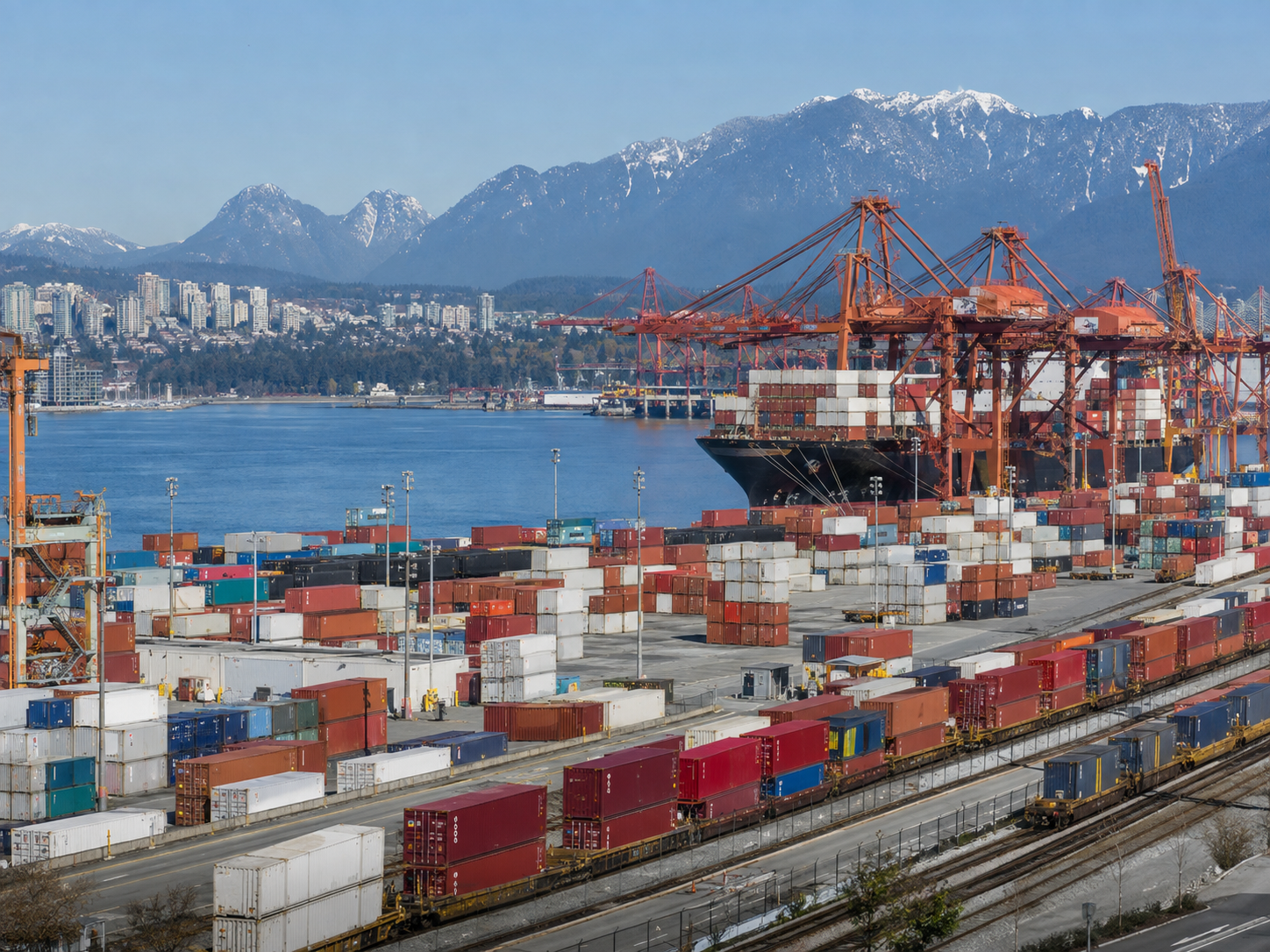
International Ships Carried 366 Million Tonnes
International vessels transported 366 million tonnes of cargo to and from Canada in 2025, representing $429 billion in trade. The figures come from a new study commissioned by the Shipping Federation of Canada and conducted by transportation consultancy CPCS.
Canadian exports accounted for 264 million tonnes valued at $150 billion, while international ships delivered 80 million tonnes of imports worth $198 billion. The analysis also captures transshipment and land-bridge cargo moving through Canadian ports and inland corridors, giving it a broader scope than conventional national import and export statistics.
The cargo includes containerized products, grain, coal, iron ore, crude oil, petroleum products and other bulk commodities. According to the Federation, vessels serving Canada’s international trade make approximately 6,500–7,000 port calls in the country each year.
New Methodology Provides a Broader Trade Picture
Information about Canadian maritime cargo flows was previously dispersed across databases using different collection methods and measurements. CPCS combined data from the United Nations, Statistics Canada, the U.S. Census Bureau, Canadian port authorities and other organizations.
The resulting dataset identifies cargo volumes and values as well as leading commodities, origins, destinations and directional flows. This information can support decisions on port capacity, road and rail infrastructure, and policies designed to diversify Canadian exports.
Successful USMCA Talks Could Add 235,000 Jobs
A separate study commissioned by the Canadian American Business Council and prepared by Oxford Economics examines three possible outcomes: the continuation of current tariffs, a successful USMCA extension accompanied by the removal of most duties, and a complete breakdown of the agreement.
Compared with the current tariff regime, successful negotiations could support an additional 137,000 U.S. jobs and 98,000 Canadian jobs in 2027.
The model estimates cumulative GDP gains over 2026–2035 of US$432 billion for the United States and C$253 billion for Canada. By 2035, U.S. exports could be US$103 billion higher than under the status quo, while Canadian exports could increase by C$51 billion.
Agreement Breakdown Could Cost 316,000 Jobs
The adverse scenario assumes that one or more members withdraw from USMCA and broad tariffs return. Oxford Economics estimates that this could result in 214,000 fewer U.S. jobs and 102,000 fewer Canadian jobs in 2027 compared with the status quo.
Under this scenario, the effective U.S. tariff rate on Canadian goods would rise from 6.5% to 10.5%, while Canada’s effective rate on U.S. imports would increase from 1.9% to 5.9%. By 2035, U.S. exports could be 4.5% below the baseline, with Canadian exports down 6.2%.
As of August 13, 2026, USMCA remains in force. The July 1 deadline passed without a formal extension, moving the parties into a period of annual reviews. A complete breakdown is therefore a modelled scenario rather than an event that has already occurred.
Integrated Supply Chains Face the Greatest Exposure
Total U.S.–Canada trade reached US$917.3 billion in 2024. Approximately 65% of bilateral goods trade consists of raw materials, components and other intermediate inputs that may cross the border several times during production.
Oxford Economics estimates that almost 248,000 Canadian transportation and warehousing jobs are directly or indirectly supported by exports to the United States. This figure describes existing employment linked to U.S. demand; it is not a forecast that all of those positions would disappear.
Together, the studies highlight two distinct parts of Canada’s trading system. International shipping connects exporters and importers with global markets, while USMCA supports deeply integrated North American manufacturing and logistics networks. The stability of both systems affects ports, terminals, railways, trucking companies and warehouse operators.
Read also: Hanwha Ocean may join construction of $15.7bn FLNG project
