

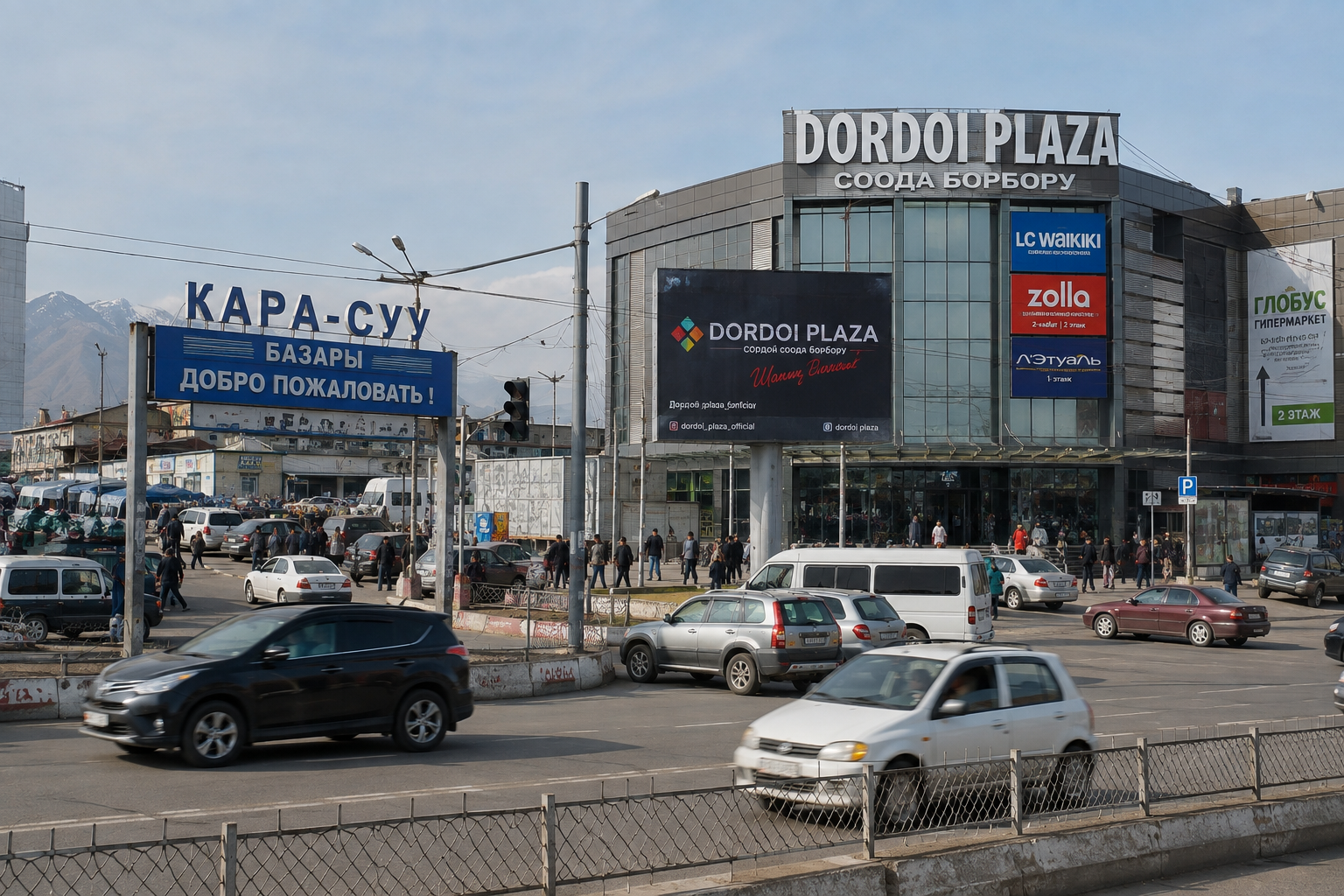
Traditional Markets Retain a Leading Role
Kyrgyzstan had 317 traditional markets operating at the end of the second quarter of 2026, according to the National Statistical Committee of the Kyrgyz Republic.
Mixed markets remain the most common format, accounting for 178 facilities. Another 64 markets primarily specialize in clothing, footwear, and other non-food goods. Together, these two categories represent more than 76% of all markets in the country.
The remaining facilities focus on food, vehicles and spare parts, livestock, poultry, and animal feed.
Almost 96% of Sales Spaces Are in Use
Traditional markets across Kyrgyzstan provide 86,546 sales spaces. Businesses actively use 82,734 of them, representing an occupancy rate of approximately 95.6%.
This leaves 3,812 spaces vacant or temporarily unused. On average, each market provides about 273 designated spaces, of which approximately 261 are actively operating.
The number of spaces at traditional markets is more than ten times higher than the number of stores and units inside shopping centers. The figures demonstrate the continuing importance of bazaars to physical retail and small-business employment.
The Country Has 94 Shopping Centers
Kyrgyzstan’s modern retail segment consists of 94 shopping centers with a combined floor area of 455,892 square meters. These complexes contain 8,094 stores, kiosks, and other commercial units.
The average shopping center has approximately 4,900 square meters of floor space and 86 commercial units. Actual figures vary considerably because the statistics include both large urban malls and smaller regional shopping facilities.
Bishkek Dominates Modern Retail
Bishkek retains the leading position in the number of shopping centers, total retail floor space, and commercial units. The concentration of modern retail in the capital reflects its population, purchasing power, and more developed commercial infrastructure.
However, describing Bishkek as having an absolute monopoly would be inaccurate. Shopping centers also operate in other parts of Kyrgyzstan, although regional facilities remain considerably smaller than the capital’s retail sector.
Traditional markets are distributed more evenly across the country. They remain important sales channels for agricultural products, clothing, consumer goods, automotive parts, and locally manufactured products.
Rental Revenue Approaches KGS 2 Billion
According to the National Statistical Committee, rental revenue generated by markets and shopping centers reached KGS 906 million in the first quarter of 2026. In the second quarter, the figure increased by 18.4% to KGS 1.073 billion.
Combined revenue for the first half of the year amounted to approximately KGS 1.98 billion. The average daily rental rate for one sales space increased from KGS 202 to KGS 204.
High occupancy and rising rental income demonstrate that traditional retail remains economically important despite the expansion of shopping centers and e-commerce. For suppliers and logistics operators, this supports continued demand for wholesale transportation, warehousing, and regional distribution services.
Read also: Kyrgyzstan and Uzbekistan Sign Allied Relations Treaty, Target $3 Billion in Trade