

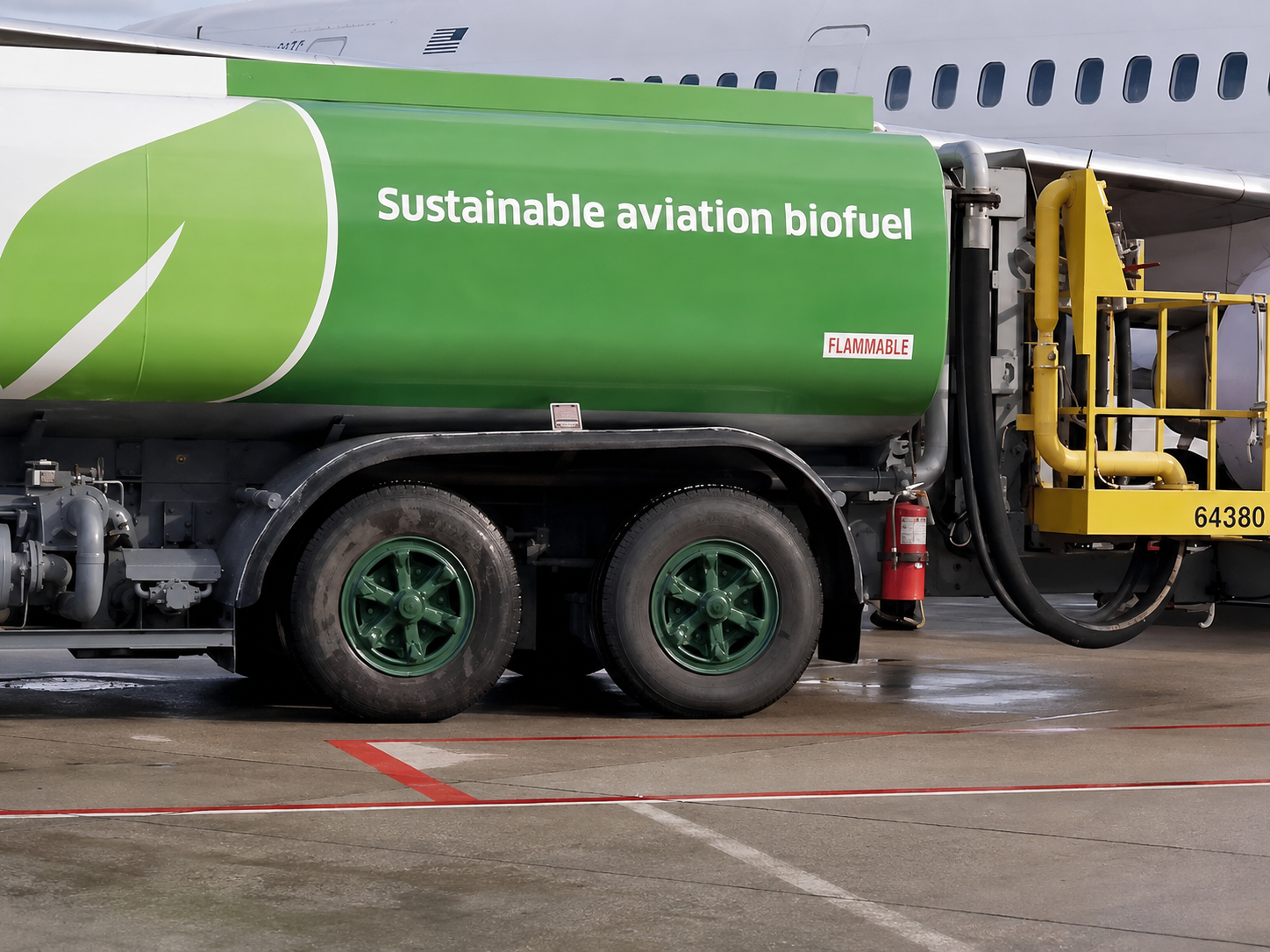
Alatau Is Planned as an Integrated SAF Hub
A memorandum has been signed within the Government of Kazakhstan to establish an integrated sustainable aviation fuel ecosystem in the city of Alatau.
The Government of Kazakhstan is the principal source of the announcement.
The project is intended to cover the complete production cycle, beginning with agricultural feedstock cultivation and continuing through processing and the production of finished aviation fuel.
The parties will also study smart-energy solutions and electricity-storage systems. Such technologies could help manage industrial demand, integrate renewable generation and improve the reliability of the future facility’s power supply.
The announcement does not yet provide the expected investment, production capacity, construction schedule or selected SAF conversion technology.
The Memorandum Is Not Yet a Construction Decision
Signing the document creates an organisational framework but does not represent a final investment decision.
Before construction can begin, the participants will have to determine the available feedstocks, conversion technology, plant capacity, energy and water requirements, location, financing structure, certification process and potential buyers.
The project will require a feasibility study, environmental assessment, engineering design and long-term feedstock arrangements.
A particularly important issue will be whether Kazakhstan can provide sufficient raw material throughout the year rather than only during the harvest period.
The Project Will Connect Agriculture and Aviation
The proposed supply chain will begin in the agricultural sector rather than at a conventional oil refinery.
Farms could grow industrial crops under long-term contracts. After harvesting, the material would have to be collected, cleaned, dried, stored and delivered to a processing facility.
In July 2026, Kazakhstan’s Ministry of Agriculture discussed an oilseed-based SAF project with Full Vision Capital, Towngas and EcoCeres. The parties also considered agricultural and food waste that would not require the use of edible oils.
The ministry said such projects could bring unused land into production, expand industrial oilseed cultivation and provide farmers with a guaranteed customer.
The final feedstock list for the Alatau ecosystem has not yet been approved publicly.
Producers Will Need Guaranteed Demand
Growing dedicated feedstock creates a separate commercial risk for farmers.
Producers need to know who will purchase the crop, how prices will be calculated and which requirements will apply to moisture, oil content, origin and environmental performance.
Without long-term contracts, farms may be unwilling to change crop structures or invest in specialised machinery.
The SAF facility will face the opposite risk. It needs a predictable supply volume because low utilisation can seriously weaken the economics of a capital-intensive plant.
The project may therefore require contract-farming arrangements defining volumes, quality standards and purchasing conditions before planting begins.
Feedstock Must Meet Sustainability Criteria
A fuel produced from biological material is not automatically considered sustainable.
The International Civil Aviation Organization evaluates SAF emissions across the full lifecycle, including cultivation, harvesting, processing, transport, fuel production, distribution and aircraft combustion.
Land-use change can also affect the result. The environmental benefit may be undermined if natural areas are converted or food production is displaced.
ICAO’s sustainability framework covers emissions, environmental impacts and socio-economic considerations while seeking to avoid excessive competition with food and water.
The Kazakhstan ecosystem will consequently require traceability from individual fields or waste sources through to each batch of finished fuel.
Certification Will Be Essential
Producing SAF is not sufficient for access to international aviation markets.
The fuel must meet aviation technical standards and obtain recognised sustainability certification.
ICAO defines SAF as renewable or waste-derived aviation fuel that complies with sustainability criteria and identifies it as one of the options with the greatest potential to reduce international aviation emissions.
Under CORSIA, airlines can claim emissions reductions only for eligible fuel batches whose origin and lifecycle performance have been verified under approved certification systems.
The ecosystem will therefore need independent auditors, digital batch records, laboratories and systems for transferring environmental attributes to airlines.
SAF Can Be Used by Existing Aircraft
One of SAF’s principal advantages is compatibility with the current aviation fleet.
Once produced and certified, it can be blended with conventional jet fuel and used without replacing aircraft engines or completely rebuilding airport fuel systems.
The International Air Transport Association describes SAF as a drop-in fuel and says lifecycle carbon reductions can typically reach around 80%, depending on feedstock and production technology.
The exact performance of a future Kazakhstan product will only become clear once the technology and supply chain are selected.
Cultivation methods, electricity generation, transport distances, hydrogen production and plant efficiency will all influence the final result.
Kazakhstan Is Already Developing Another SAF Project
The Alatau initiative is emerging alongside a separate SAF plant project involving KazMunayGas, KazFoodProducts and US engineering company KBR.
The companies signed a term sheet in April 2026 covering development of a production project based on Alcohol-to-Jet technology.
KazMunayGas expects the Process Design Package to be completed by the end of the first quarter of 2027. A final investment decision is expected after that stage.
KazFoodProducts, KazMunayGas-Aero and KBR signed further agreements in July covering the design package and licensing of the Alcohol-to-Jet process. Bioethanol from advanced grain processing could provide the feedstock.
It has not been officially established whether the Alatau ecosystem will become part of that development, operate separately or complement it.
Kazakhstan Could Use Several Technology Pathways
SAF can be produced through different processes.
HEFA uses waste oils, animal fats and other lipid feedstocks. Alcohol-to-Jet converts bioethanol or other alcohols into hydrocarbons meeting aviation-fuel specifications.
Further pathways can use solid waste, biomass gasification, renewable electricity, hydrogen and captured carbon dioxide.
The optimum choice depends on feedstock availability, energy costs, water requirements, logistics and the intended customer market.
Using several pathways could reduce dependence on one raw material, but every technology requires separate equipment, certification and supply arrangements.
Alatau Is Intended as a Green-Technology Platform
Alatau’s selection is connected with the city’s special legal and investment status.
In May 2026, Kazakhstan’s president signed the Constitutional Law on the Special Legal Regime of the City of Alatau. It is intended to accelerate development, attract investment and introduce new regulatory and management models.
During talks with Towngas and Full Vision Capital, the government identified Alatau as a priority location for green energy, SAF and electricity-storage investments. The city offers a special legal regime, project support and separate tax and customs incentives.
It is intended to function as a test environment where fuel production can be combined with digital energy systems, new transport technologies and modern industrial infrastructure.
Energy Storage Could Manage Industrial Demand
SAF production may require substantial and variable electricity consumption.
Power can be needed for processing, pumping, compression, heating, cooling, hydrogen production and product purification.
A storage system can absorb energy during low-demand periods or when renewable generation is high and release it during production peaks.
It could reduce pressure on the external grid, provide emergency backup, improve renewable-energy utilisation and reduce dependence on diesel reserve generators.
The economic case will depend on electricity tariffs, the plant’s production schedule and grid-connection costs.
Smart Energy Will Combine Production and Data
An intelligent energy-management platform could forecast electricity demand, renewable generation and available storage capacity.
The system would determine when to draw from the grid, use stored energy or postpone non-critical loads.
For SAF, the carbon intensity of electricity is particularly important. Large-scale use of high-carbon power could weaken the fuel’s lifecycle emissions performance.
Digital management will therefore need to optimise both electricity price and associated emissions.
The final architecture remains under study.
A New Agricultural Logistics Chain Will Be Required
The full-cycle project will create permanent flows of agricultural materials.
Feedstock will arrive seasonally, while the production facility should operate for most of the year. Warehouses, silos, drying equipment and several months of inventory may be required to balance supply.
The logistics chain could include regional collection points, laboratories, intermediate warehouses, road and rail transport, digital traceability and finished-fuel distribution.
Distance will be a major factor. Moving low-density biomass over long distances can increase both production costs and lifecycle emissions.
Aviation Fuel Needs Specialised Distribution
After production, SAF must be transported to a blending, storage or aircraft-refuelling location.
Depending on the project configuration, it could move by rail tank wagon, road tanker or dedicated pipeline.
Airports will require accurate accounting of conventional fuel and SAF, quality control, documentation and verification of the sustainable component in each blend.
Aviation fuel is subject to particularly strict purity and technical requirements because contamination or an incorrect specification can affect flight safety.
The project must therefore extend beyond the plant to a certified storage, blending and distribution system.
Demand May Come From International Markets
Kazakhstan’s domestic aviation market could become an initial customer, but the strongest structural SAF demand is emerging in regulated markets.
ReFuelEU Aviation requires SAF to account for at least 2% of fuel supplied at EU airports from 2025, 6% from 2030 and progressively 70% by 2050.
Kazakhstan is not directly subject to these airport-supply obligations. European policy nevertheless creates a market for producers capable of supplying certified fuel at a competitive price.
Potential customers could include international airlines, overseas fuel suppliers and airports seeking to meet environmental targets.
Export economics will depend on whether the fuel can be transported over long distances without losing its price and emissions advantages.
Kazakhstan Has Joined ICAO’s ACT-SAF Programme
Kazakhstan previously became the first CIS country to join ICAO’s ACT-SAF programme.
The programme covers knowledge exchange, training, technical assistance, national planning and support for specific SAF projects. The principal source is Kazakhstan’s Ministry of Transport.
Participation can help the country prepare regulations, assess feedstock potential and align national systems with international requirements.
ICAO describes ACT-SAF as a platform helping countries move from initial interest toward feasibility studies and implementation.
Cost Will Be the Main Commercial Barrier
SAF’s main challenge is not whether it can be used in aircraft, but whether it can be produced economically.
The industry requires new plants, feedstock networks, certification and long-term purchasing agreements. Limited production volumes also prevent the economies of scale available to conventional jet fuel.
Producers need guaranteed demand to attract finance. Airlines need to understand the effect of more expensive fuel on operating costs and passenger fares.
Possible support instruments include investment incentives, guarantees, long-term offtake agreements, preferential finance and emissions-accounting mechanisms.
No specific support package for the Alatau project has yet been announced.
Competition With Food Production Must Be Avoided
Agricultural feedstock can provide additional revenue for farmers but requires safeguards against disruption of food markets.
If fuel producers encourage a large-scale shift away from food crops, the project could contribute to higher prices or greater import dependence.
Risk can be reduced by using industrial crops on suitable unused land, processing residues, agricultural waste and non-food raw materials.
Soil protection must also be considered. Removing too much crop residue can reduce organic matter and long-term fertility.
Environmental assessment should therefore cover land, water, biodiversity and rural communities as well as aviation emissions.
SAF Could Create Higher-Value Production
A substantial share of Kazakhstan’s agricultural exports consists of grain, oilseeds and products with limited processing.
SAF would convert agricultural inputs into a technologically advanced product serving the international aviation market.
The country could develop new expertise in biochemistry, fuel engineering, certification, energy management and industrial automation.
The project would also create demand for laboratories, carriers, agronomic services, engineering companies and energy-infrastructure operators.
The economic effect will depend on localisation. If most equipment, technology and maintenance services are imported, a smaller share of value will remain in Kazakhstan.
SAF Complements Kazakhstan’s Transport Strategy
Kazakhstan is seeking to strengthen its role as a transport hub connecting China, Central Asia, the Caspian region and Europe.
Domestic sustainable aviation fuel could add an energy dimension to its railway, road, port and aviation infrastructure projects.
As K2Cargo News previously explained in “Expert Opinion: Why Kazakhstan and Georgia Are Becoming Key Hubs of Eurasia’s New Logistics Network”, transport-hub competitiveness increasingly depends on technology, energy and supply-chain resilience as well as geography.
SAF availability could make Kazakhstan’s airports more attractive to international carriers seeking to reduce their carbon footprint.
That advantage will emerge only if the country can provide reliable volumes, recognised certification and competitive pricing.
The Next Stage Must Define the Project’s Parameters
The memorandum creates a framework for further work, but the project’s central indicators remain undecided.
The market will need information about capacity, investment, technology, feedstock demand, construction dates and potential customers.
It will also be important to clarify how the initiative relates to the KazMunayGas, KazFoodProducts and KBR project.
Several projects using different technologies and feedstocks could create a more resilient national SAF industry. Competition for one feedstock and a limited customer base would instead require careful coordination.
The ultimate result will not be measured by the memorandum itself, but by whether Kazakhstan can establish a functioning chain from the farm to the aircraft fuel tank.
Read also: AD Ports Confirms Strategic Interest in Kazakhstan