

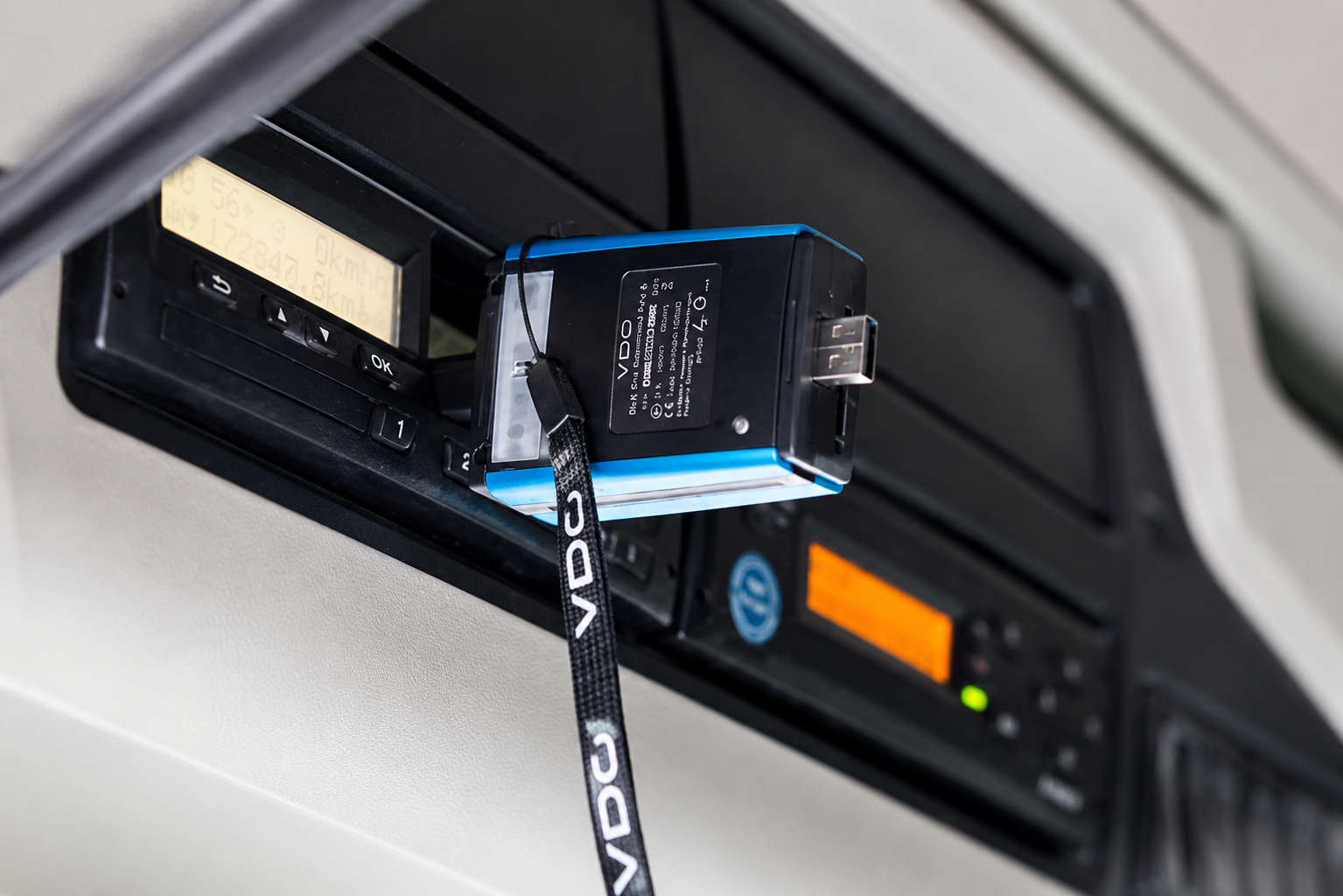
Tachograph Check Reveals Numerous Violations
A roadside inspection by the Nuremberg Traffic Police uncovered serious breaches of European drivers’ hours regulations involving a Greek-registered articulated truck.
According to the Police Headquarters of Middle Franconia, the driver continued traveling after reaching the permitted driving-time limit without inserting his driver card into the digital tachograph. A subsequent analysis revealed numerous significant violations relating to driving time, mandatory breaks and daily rest.
The case reflects the broader enforcement problems described in a recent K2Cargo News report on Europe’s international road transport sector. That analysis highlighted manipulated tachograph records, excessive working hours and insufficient oversight within complex subcontracting chains.
Driver and Carrier Face More Than €97,000 in Penalties
Authorities calculated penalties of €15,023.75 for the driver and €82,874.75 for the transport company, including fees and procedural costs. The combined amount reached €97,898.50.
Police also collected security deposits to guarantee the continuation of the proceedings. The driver paid €2,000, while the company was required to provide €5,900.
The size of the expected penalties indicates that inspectors identified multiple infringements rather than a single failure to insert the driver card. Digital tachograph records allow officers to examine activity over an extended period and reconstruct previous driving, work and rest times.
European authorities are paying increasing attention to these rules. In France, almost half of the transport operators checked during a major enforcement campaign violated driver-rest requirements.
Truck Immobilized Until Rest Was Completed
Police established that the driver had already been traveling for approximately 12 hours. Officers ordered him to take an 11-hour daily rest period.
The truck was immobilized in Nuremberg with a wheel clamp and could not continue until the required rest had been completed.
For carriers, such measures create costs beyond the administrative penalty. An immobilized vehicle can miss a delivery slot, disrupt the next assignment and generate additional parking, labor and contractual expenses.
Finding a legal place to stop can also be difficult on German transit routes. K2Cargo News previously reported that Germany launched the SID parking-availability system to help drivers plan rest stops and reduce the risk of exceeding their permitted hours while searching for parking.
Compliance Requires Control at Company Level
The Nuremberg case shows that responsibility does not rest solely with the driver. The expected fine for the transport company was more than five times higher than the amount calculated for the person behind the wheel.
Carriers operating internationally need to download and review tachograph data regularly, investigate missing-card periods and ensure that dispatch schedules can be completed within legal limits. Instructions that force drivers to continue despite expired hours can expose the company to substantial sanctions.
The issue is becoming more important as European authorities expand digital enforcement and introduce smart tachographs across a wider range of commercial vehicles. Safety requirements are also tightening in other areas, as shown by Euro NCAP’s call for stronger rear protection on truck trailers.
The financial consequences in Nuremberg send a clear message to international carriers: unrealistic schedules and weak tachograph controls can turn one roadside inspection into a six-figure operational problem.
Read also: New Report Reveals Problems in Europe’s Road Transport Sector