

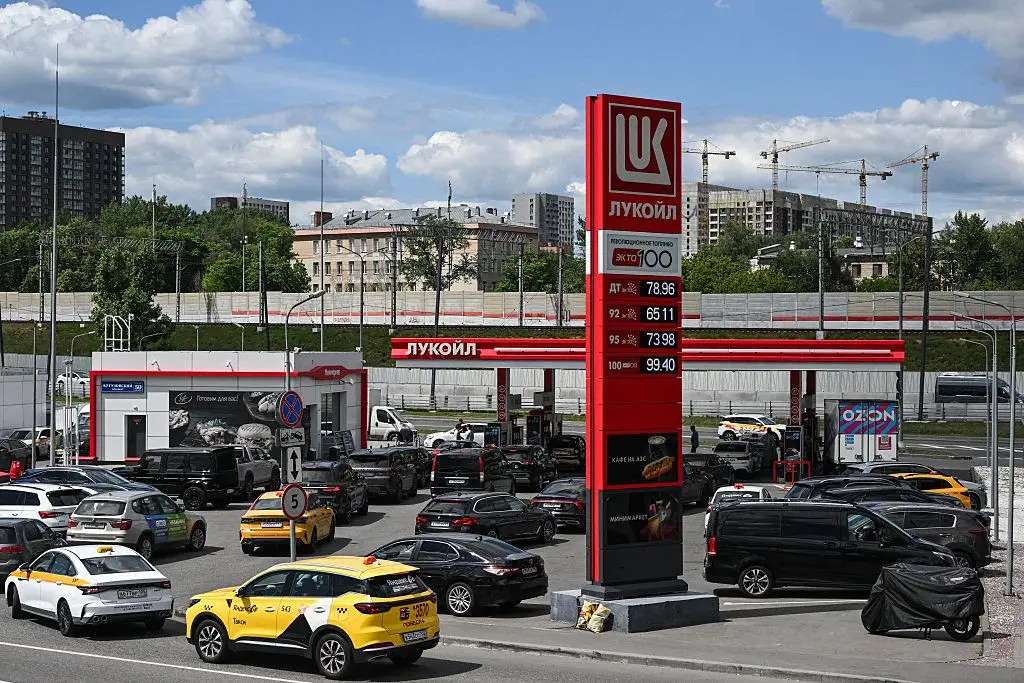
Fuel Limits Introduced at Moscow Stations
At least two filling-station networks in Moscow have restricted the amount of fuel available to individual customers. The measures were introduced amid higher demand and shortages of certain fuel grades.
Gazprom Neft’s customer service initially reported a limit of 40 litres per vehicle. The company later clarified that customers could purchase up to 60 litres of petrol at conventional stations, while diesel sales remained unrestricted.
According to Reuters, the 40-litre limit may still apply at the company’s automated filling stations.
Tatneft stations in Moscow are selling no more than 50 litres of petrol and 60 litres of diesel to each customer.
AI-95 Petrol Unavailable at Many Stations
Neftmagistral reported a shortage of AI-95 petrol in the Russian capital. According to the company’s customer service, this fuel grade was available at only one of its Moscow stations on the evening of August 18. Customers were advised to check diesel availability directly with individual stations before travelling.
The restrictions do not constitute a citywide government ban. Sales conditions vary depending on the operator, station format and available fuel stocks.
Shortages Return After Temporary Improvement
The first wave of fuel restrictions spread across Russian regions in early summer 2026. Supplies partially stabilised toward the end of July, but disruptions returned in August.
Reuters linked the renewed pressure to seasonal demand, unplanned refinery shutdowns and the effects of further drone attacks on Russian oil-processing facilities.
Russian authorities previously introduced export restrictions and other measures intended to increase domestic supplies. These included Russia’s temporary ban on petrol exports until July 31.
During a meeting on June 28, Vladimir Putin called for higher fuel production and economically justified prices. He said the country’s largest refineries were operating close to maximum capacity and that some scheduled maintenance had been postponed.
The government also established a round-the-clock group to monitor the fuel market.
Fuel Availability Declines
Data from the private GdeBenz application, cited by Izvestia, showed fuel availability at 28.1% of the stations covered by the service on August 16. The figure stood at 41% one week earlier.
The estimate is based on a private monitoring platform and should not be interpreted as official data covering every filling station in Russia. It nevertheless indicates a substantial deterioration in fuel availability across several regions.
For transport operators, supply disruptions can result in additional refuelling stops, queues and less predictable schedules. Small carriers and urban delivery fleets without contracts guaranteeing fuel supplies are likely to face the greatest operational difficulties.
Read also: Fuel Crisis Drives Up Road Freight Costs in Russia