

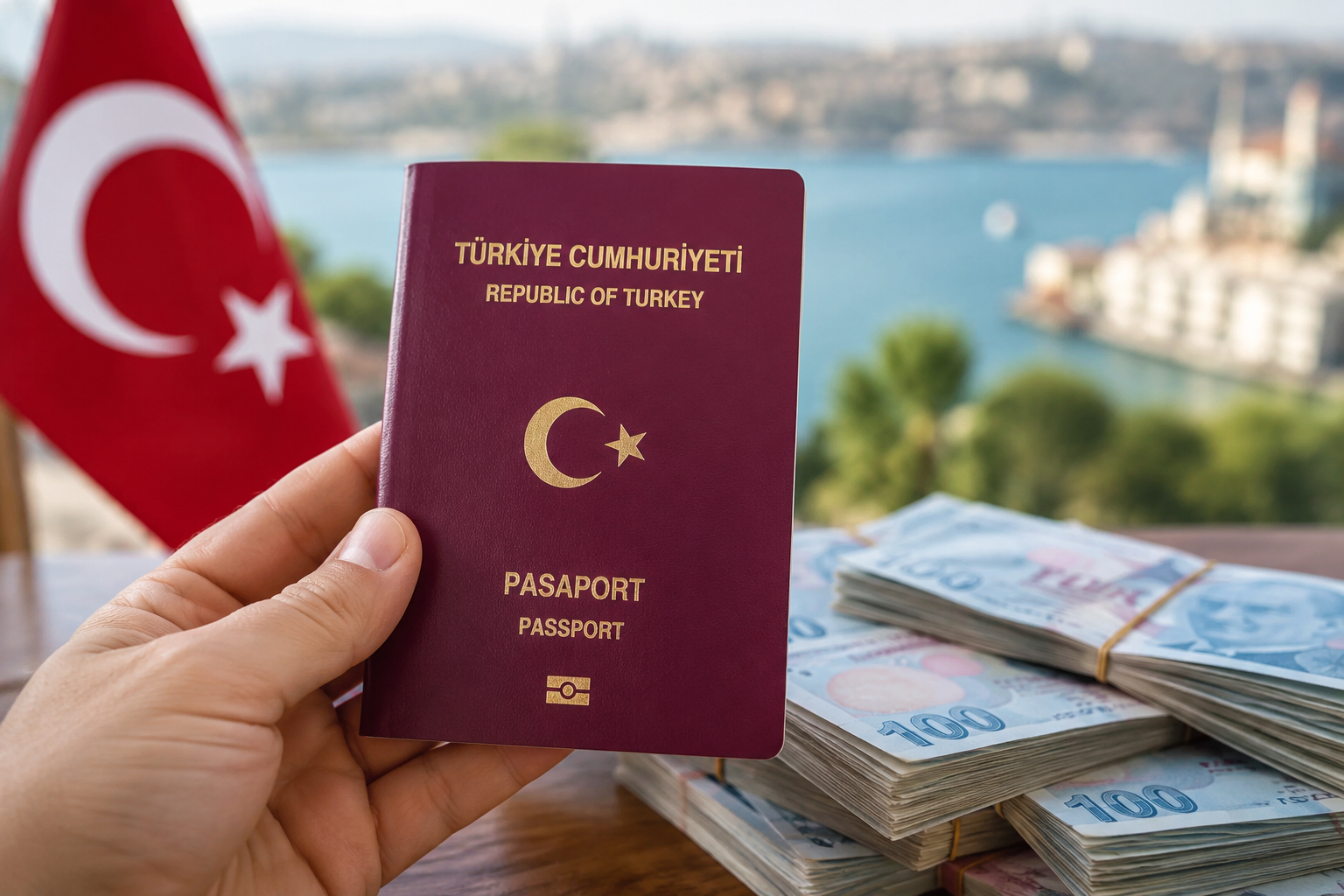
More Than 174,000 People Have Received Turkish Citizenship
Türkiye’s citizenship-by-investment programme has developed into one of the largest active schemes of its kind.
According to figures disclosed by Interior Minister Mustafa Çiftçi on May 29, 2026, 174,567 people have obtained Turkish citizenship under the investment route since the first citizenship grants began in 2018.
The total includes two very different groups. 51,762 people were principal investors, while another 122,805 were their family members.
The Interior Minister said the programme had attracted approximately $16.074 billion in investment over the period. This does not mean each of the 174,567 new citizens made a qualifying investment: the principal applicant makes the investment, while eligible spouses and minor or dependent children can also obtain citizenship through the same process.
The Programme Began Operating in 2017
The legal framework for granting citizenship to qualifying foreign investors predates the first large wave of approvals.
Changes to Turkish law created an exceptional citizenship route for foreigners meeting investment requirements. The programme began operating in practice in 2017, with the first citizenship acquisitions recorded from 2018.
The original requirements were considerably higher. Foreign buyers initially needed to acquire at least $1 million worth of real estate.
In September 2018, the property threshold was reduced to $250,000, significantly widening access to the programme and contributing to a rapid increase in applications.
The threshold was raised again in 2022 and currently stands at $400,000.
Real Estate Remains the Lowest-Cost Route
Under current rules, a foreign investor can qualify by purchasing at least $400,000 in eligible real estate and committing not to sell it for at least three years.
Real estate is not the only option.
Applicants can alternatively make at least $500,000 in fixed-capital investment, deposit $500,000 in a Turkish bank for at least three years, acquire qualifying government bonds or investment-fund shares worth at least $500,000, or place the required amount into an eligible private pension arrangement.
Another route involves creating at least 50 jobs in Türkiye.
The programme therefore channels foreign capital into property, banking, financial markets and businesses.
$16 Billion Shows the Programme’s Economic Scale
The $16.074 billion in investment reported by the Interior Ministry demonstrates the financial scale the scheme has achieved.
The figure, however, spans several different versions of the programme. Many applicants entered when the qualifying property threshold was $250,000, making it misleading to assess historical inflows solely against today’s $400,000 requirement.
For Türkiye, the scheme has created an additional channel for foreign capital, particularly into real estate. Alternative investment options can also direct funds toward banks, government securities, investment funds and operating businesses.
The programme forms part of a broader effort to attract international capital and strengthen Turkish business. K2Cargo.News has previously reported on the growing international value of Turkish companies in Turkish Airlines Once Again Named Turkey’s Most Valuable Brand.
Investment Does Not Automatically Guarantee Citizenship
Purchasing property or committing capital does not automatically result in a Turkish passport.
The relevant public authority must first certify that the investment complies with the applicable requirements. The investor then proceeds through the residence-permit and citizenship-application stages.
Applicants are also subject to checks concerning national security and public order before the citizenship process can be completed.
The investment therefore provides access to an exceptional naturalisation procedure rather than replacing government vetting.
Authorities Are Tightening Oversight
The size of the programme has also increased scrutiny of property valuations and application procedures.
The scheme returned to public attention in August 2026 following an Istanbul investigation into alleged sham property transactions and fraudulent valuation reports. Investigators said 687 people had obtained citizenship through the suspected irregular scheme.
Turkish media citing the Interior Ministry also reported that citizenship decisions covering 6,134 people, including investors and family members, had been revoked following broader reviews. Some cases involved the cancellation of investment eligibility certificates, while others were linked to public-order and national-security concerns.
These cases do not mean that all 174,567 citizenship grants are under question. They illustrate the increasing importance of asset valuation, verification of genuine investment and security screening as the programme grows.
Real Estate Has Been Central to the Programme’s Growth
The reduction of the qualifying property threshold from $1 million to $250,000 in 2018 was one of the principal reasons the programme became significantly more accessible.
Türkiye subsequently increased the minimum to $400,000 while retaining the three-year holding requirement.
The model effectively links migration policy with capital and property markets. Investors retain ownership of an asset while Türkiye receives foreign capital and additional domestic property demand.
The $500,000 alternatives broaden the mechanism beyond real estate by directing funds toward financial instruments, banks and productive investment.
More Than 70% of Recipients Are Investors’ Family Members
The Interior Ministry figures also clarify how the headline number should be interpreted.
Out of 174,567 people who received citizenship, only 51,762 were principal investors, while more than 122,000 were family members.
The headline figure is therefore sometimes misleading when described as the number of individual investors. The actual number of people who made qualifying investments is less than one-third of all citizenship recipients.
For that reason, the programme’s economic impact is more meaningfully compared with the number of principal investors rather than the combined number of investors and dependants.
Investment Citizenship Has Become a Significant Capital Channel
Almost a decade after its launch, Türkiye’s citizenship-by-investment mechanism has evolved from a relatively limited policy instrument into a substantial source of foreign investment.
More than 51,000 investors, $16.074 billion in reported investment and 174,567 citizenship recipients demonstrate the scale it has reached.
At the same time, Türkiye faces the challenge of balancing capital inflows with effective oversight. As the programme grows, accurate property valuation, verification of genuine investments and security screening become increasingly important.
For now, the investment route remains available, with a minimum threshold of $400,000 for qualifying property or $500,000 for most alternative financial investment options.
Read also: Turkish Airlines Once Again Named Turkey’s Most Valuable Brand