

Italy Temporarily Restores Border Checks
Italy’s Ministry of the Interior has ordered the temporary reintroduction of border controls on air and maritime connections with Spain.
The measure took effect on August 1, 2026 and will initially remain in force for one month. It may be extended if necessary under European Union rules.
The decision followed an assessment by Italy’s Immigration and Border Security Analysis Committee, chaired by Interior Minister Matteo Piantedosi.
Transport Links Have Not Been Closed
The official wording referring to the closure of maritime and air borders does not mean that transport connections between Italy and Spain have been suspended.
Airlines may continue operating passenger and cargo flights, while maritime companies can maintain ferry and freight services. Italy has also introduced no ban on the movement of goods between the two countries.
In practice, Italy has temporarily suspended the border-free Schengen regime on selected routes and restored document checks for certain travellers arriving from Spain.
Who Will Be Subject to Checks
Italian authorities said the measure should not change travel arrangements for Spanish nationals or citizens of other European Union countries.
Border checks will primarily target third-country nationals arriving from Spain by air or sea.
Italian border police will verify whether these travellers are legally present in the Schengen Area and hold a valid passport, visa, residence permit or other documentation authorising entry and movement within the EU.
Checks will take place at Italian airports and seaports. Travellers should carry a valid identity document or passport even where routine document inspections are not normally conducted.
What Changes for Maritime Carriers
Passenger and freight ferries between Spain and Italy will continue operating, although additional checks may be required for drivers, accompanying persons and crew members at ports.
The greatest operational effect may be felt by RoRo services carrying trucks, trailers and other commercial vehicles between the two countries.
Drivers who are not EU nationals should confirm that they hold a valid passport, visa or residence permit before departure. Missing or invalid documentation could result in additional inspections or refusal of entry.
Cargo and customs procedures for goods are not directly affected by the restored border regime. However, checks on people could increase vehicle processing times at some ports.
Air Cargo Operations Will Continue
The measures do not suspend cargo flights between Spain and Italy.
Airports, airlines, freight forwarders and ground-handling companies can continue processing shipments under the existing rules. Any additional procedures will mainly concern crew members, couriers and accompanying personnel who are third-country nationals.
Shippers handling urgent or time-sensitive cargo should allow for possible additional waiting times at airports, although Italian authorities have said they intend to minimise disruption to tourist and transport flows.
Road Freight Travels Through France
Italy and Spain do not share a land border. Most road freight between the two countries travels through France.
Alongside the new checks on Spanish air and sea connections, Italian and French authorities agreed to strengthen cooperation at the Franco-Italian border.
This does not amount to a separate ban on trucks arriving from Spain. Carriers should nevertheless be prepared for more frequent checks of vehicles and driver documentation on routes through France.
Additional procedures could affect transit times, drivers’ hours, ferry reservations and distribution-centre schedules.
Decision Follows the Ceuta Migration Crisis
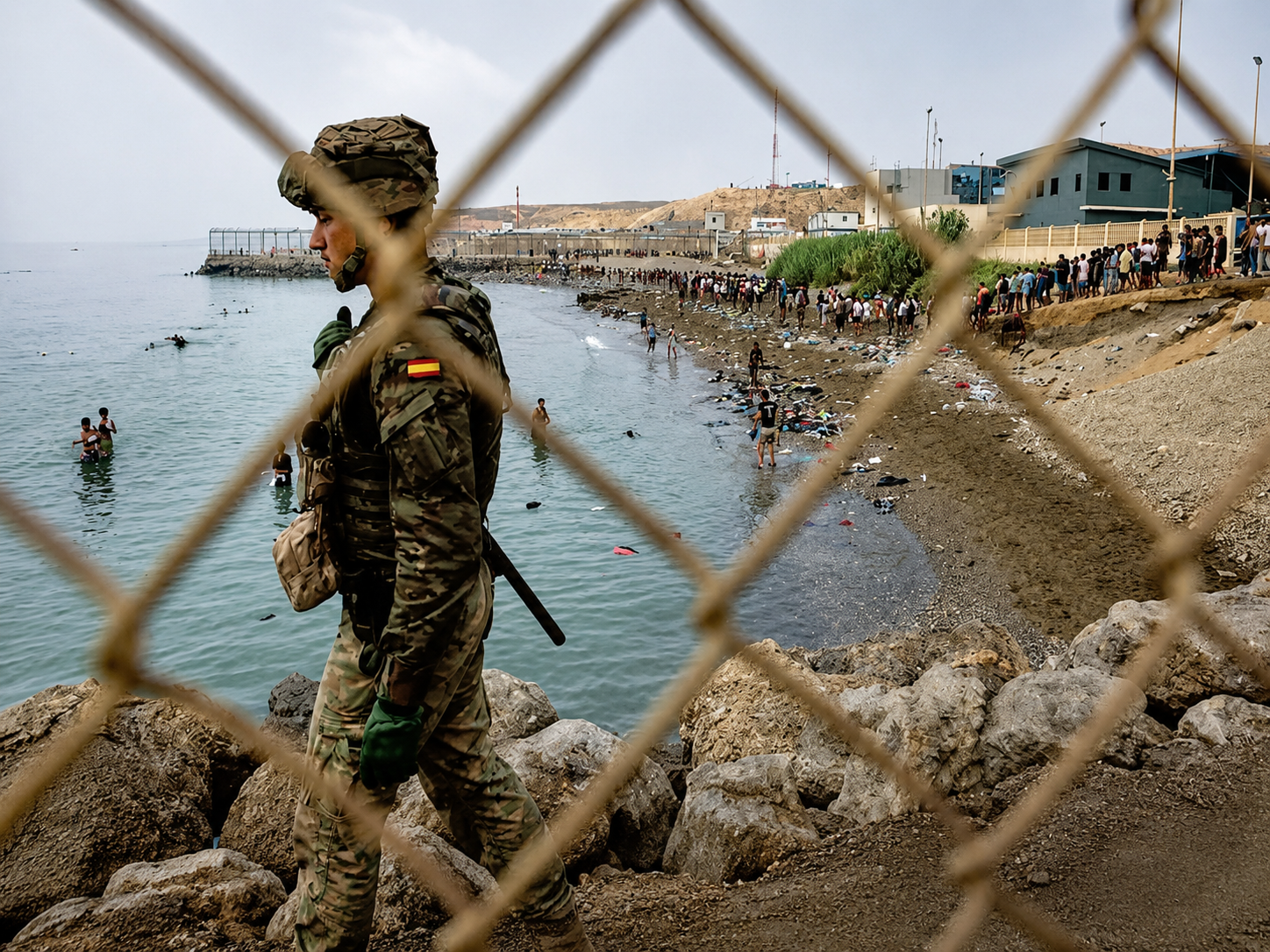
Italy introduced the measure following a mass influx of migrants into Ceuta, the Spanish autonomous city on the North African coast bordering Morocco.
The Italian government said the controls were needed to protect national security and prevent possible secondary movements from Spain to other Schengen countries.
Schengen rules allow member states to temporarily restore internal border controls when there is a serious threat to public order or internal security. Such measures must remain limited in duration and scope.
Carriers Should Allow Additional Time
Transport companies operating between Spain and Italy do not need to cancel planned shipments as a result of the decision.
Maritime, air and road operators should nevertheless allow for possible delays, verify the documents of drivers and crew members and check the requirements applied at individual ports and airports.
The principal change is the restoration of targeted checks for people arriving from Spain—not the closure of borders or the suspension of trade. Freight movements between the two countries continue.
Read also: European Commission Urges Nine Schengen Countries to End Border Controls