

Trump Orders Reform of Navy Shipbuilding
US President Donald Trump signed a memorandum on August 13 directing major changes to the construction and repair system used by the United States Navy. The White House expects the initiative to reduce delays, control cost growth and increase competition in an industry struggling with limited capacity and large order backlogs.
Under the White House memorandum, foreign shipyards could be used for up to three ship classes. The document does not itself award any contracts: the Pentagon has 90 days to prepare new competitive acquisition procedures.
Three Types of Ships Could Be Included
The Finland Model may be applied to three programmes. The first would cover surface combatants with sufficient capabilities for anti-submarine warfare, surface warfare and convoy escort missions.
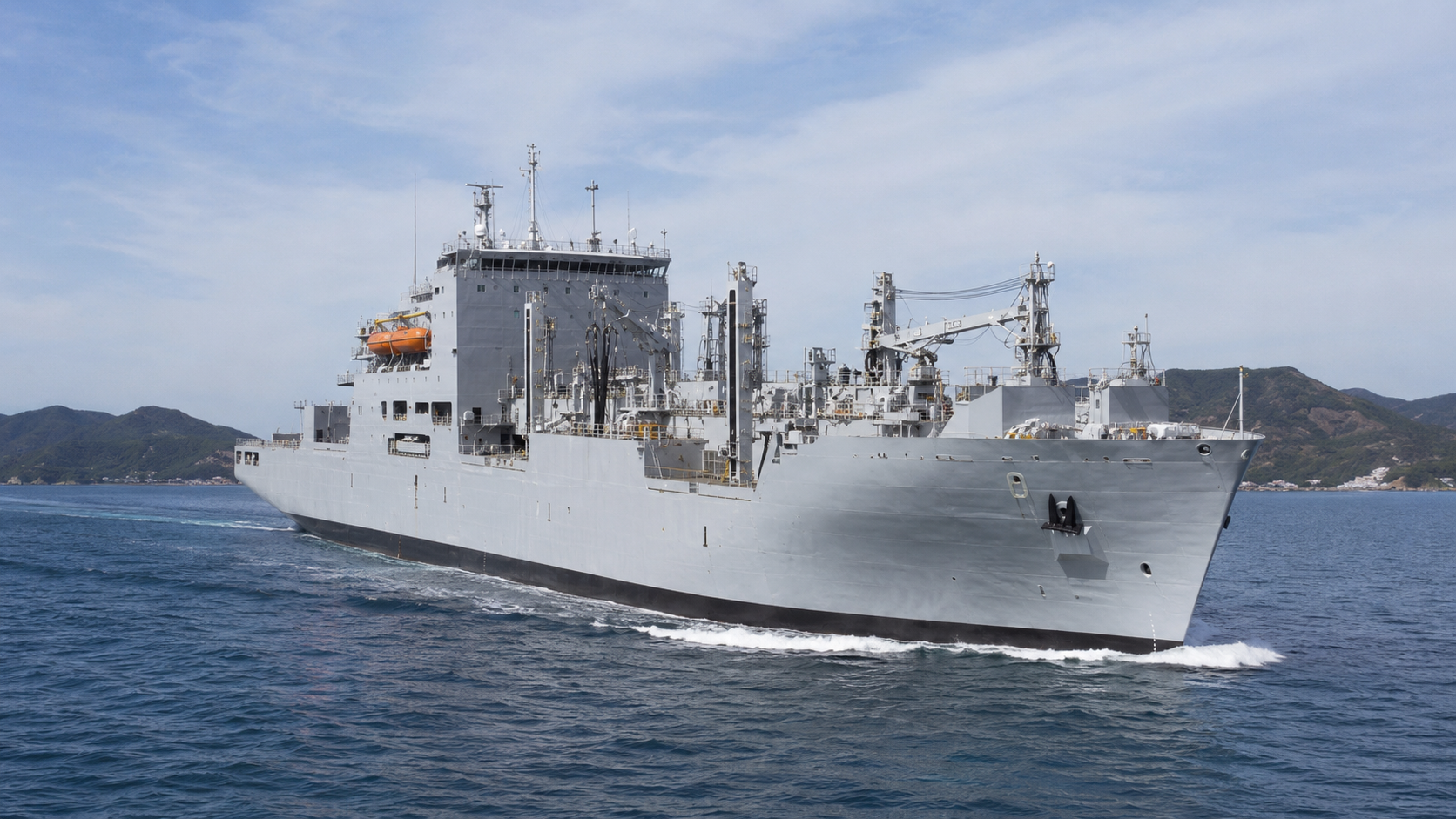
The other two programmes concern auxiliary vessels: Consolidated Cargo Replenishment at Sea tankers, known as CONSOL tankers, and roll-on/roll-off ships used to transport wheeled and tracked military equipment.
No specific designs or foreign contractors have been selected. The Pentagon must establish competitions in which companies can offer mature and proven ship designs that are ready for production.
First Two Ships Could Be Built Overseas
A qualifying foreign company would be allowed to construct the first two vessels at its parent shipyard. Every subsequent ship in the relevant series would have to be built in the United States.
Participation would require a foreign shipbuilder to establish a new US shipyard or acquire an existing facility or a majority interest in one. The company would also have to hire and train American citizens, license its proprietary technologies and construction methods to its US operation, and develop a domestic supply chain for building and maintaining the ships.
The Navy would not be allowed to make repeated changes to the original mature designs. Major deviations would require approval from senior officials at the Pentagon, Navy, Office of Management and Budget and National Security Council. The provision is intended to prevent expensive redesigns after construction has started.
Congress Must Be Notified
US law generally prohibits the construction of Armed Forces vessels and major hull or superstructure components at foreign shipyards. A waiver is possible when overseas construction is determined to be necessary for national security.
The memorandum delegates authority to the Pentagon to make such determinations for projects meeting the Finland Model requirements. Congress must then be notified, and no contract can be awarded until 30 days after lawmakers receive the notice.
The policy therefore creates a legal route for foreign construction but does not remove congressional oversight or guarantee that all three programmes will proceed overseas.
Hanwha and Fincantieri Could Have an Advantage
Potential participants include international shipbuilding groups that already operate or invest in American facilities. Following the memorandum’s release, shares in South Korea’s Hanwha Ocean rose by 5.6%, while Italy’s Fincantieri gained 3.2%, according to Reuters.
Hanwha has acquired Philly Shipyard and pledged $5 billion to expand the facility. Fincantieri has invested more than $800 million in its US shipyards over the past decade, including facilities in Wisconsin.
Industry analysts expect replenishment tankers and roll-on/roll-off vessels to be the most likely initial candidates. Integrating a foreign combatant design with American weapons, sensors, communications standards and maintenance systems would be considerably more complex.
United States Plans a Fifth Public Navy Shipyard
The Pentagon has 120 days to produce a plan for a fifth public Navy shipyard, which the White House says would be the first new facility of its kind in more than 80 years.
The yard would primarily support maintenance of nuclear-powered submarines and aircraft carriers. Potential locations near the Pacific Fleet must be considered, including the continental United States, Alaska, Hawaii and US territories.
The project could include up to three new dry docks capable of accommodating current and future submarine classes. Public-private partnerships are among the proposed financing options.
One Repair Centre Would Support Five Submarine Classes
A separate plan for a Component Repair Center must be submitted within 90 days. The facility is expected to be located near major road, rail and river transport networks.
It would receive new components, refurbish used equipment and maintain at least one spare ship set for each of the Los Angeles, Virginia, Seawolf, Ohio and Columbia submarine classes.
Centralising this inventory could shorten repair times and reduce the dependence of individual shipyards on long component deliveries. For the logistics sector, the centre would create a new flow of oversized and specialised equipment between manufacturers, repair facilities, ports and naval bases.
CVN-81 Could Lose EMALS
Another part of the memorandum concerns the future USS Doris Miller, designated CVN-81. It will be the fourth Gerald R. Ford-class aircraft carrier and is being built by Newport News Shipbuilding.
The Pentagon must prepare a plan within 60 days to replace the Electromagnetic Aircraft Launch System with steam catapults. The Advanced Weapons Elevators would be replaced with hydraulic systems. The first three carriers in the class will retain their electromagnetic equipment.
EMALS supplier General Atomics warned that production for CVN-81 is already nearly 50% complete. The company said changing direction now would create significant cost, schedule and system-integration risks. The carrier’s keel is expected to be laid by the end of 2026, with delivery to the Navy anticipated in early 2034.
US Shipbuilders Oppose Overseas Construction
The Shipbuilders Council of America has criticised the decision to consider foreign construction of US military vessels. The association argues that every hull built overseas diverts orders, jobs and industrial capabilities away from domestic shipyards.
The White House sees the initial foreign orders as a temporary way to obtain ships more quickly while attracting long-term investment to the United States. The outcome will depend on whether the programme delivers genuine technology transfer, workforce development and domestic supplier networks rather than merely accelerating the construction of the first vessels abroad.
Read also: HD Hyundai to Modernize U.S. Shipyard with AI and Robotics