

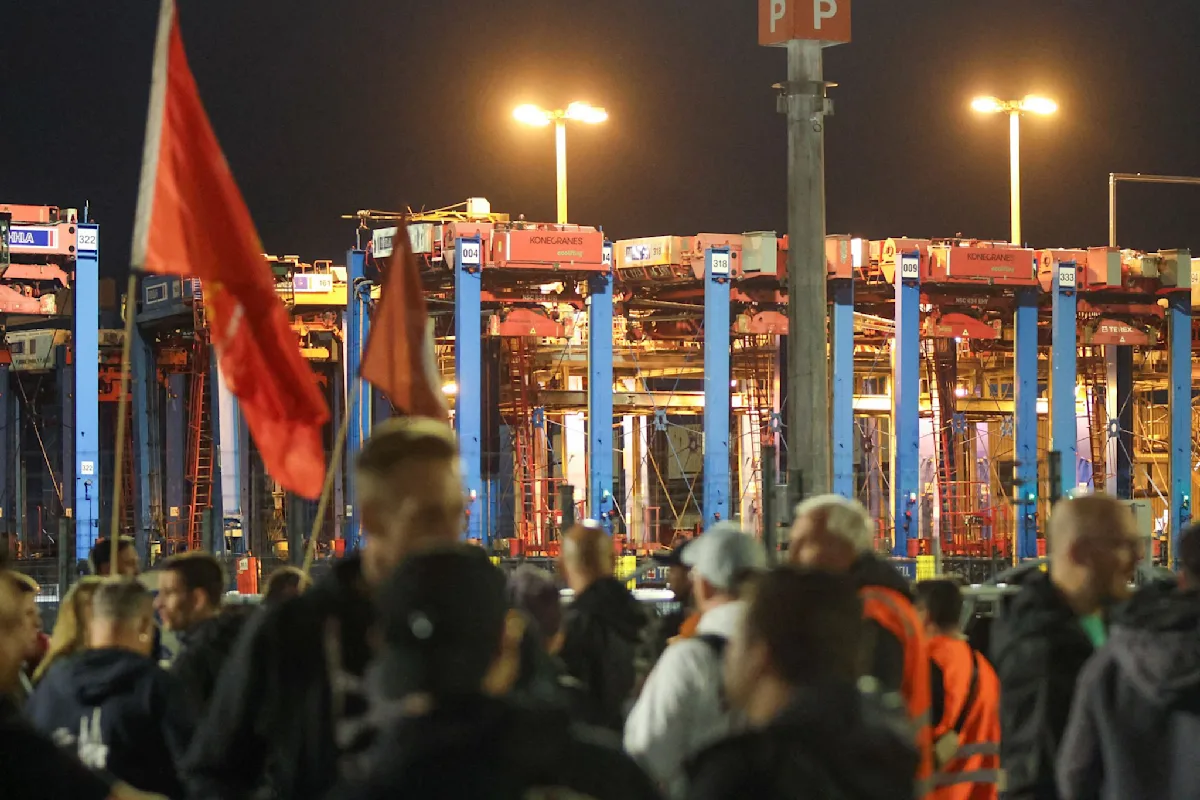
The second wave of industrial action has affected Hamburg, Bremerhaven, Bremen, Wilhelmshaven, Emden and Brake, temporarily blocking truck and rail container movements
Workers at six German seaports have launched a second wave of warning strikes as the ongoing wage dispute intensifies. The industrial action began with the late and night shifts on September 2 and is scheduled to continue through September 4, 2026. Hamburg is facing a continuous 48-hour stoppage.
The strikes are affecting Hamburg, Bremerhaven, Bremen, Wilhelmshaven, Emden and Brake. The collective bargaining agreement at the center of the dispute covers approximately 11,000 employees across Germany’s seaports, according to the Ver.di trade union.
In Hamburg, employees at more than a dozen companies were called to join the action. The affected facilities include Hamburger Hafen und Logistik AG’s Container Terminal Altenwerder, Container Terminal Burchardkai and Container Terminal Tollerort, as well as the Eurogate Container Terminal Hamburg.
The action therefore affects some of the most important container-handling capacity at Germany’s largest port.
According to Kuehne+Nagel, container terminals are expected to suspend operational activities during the strike. Container deliveries and collections will not be possible, while transshipment operations could come to a complete halt.
CMA CGM warned customers that operations would be disrupted at the ports of Hamburg, Bremerhaven and Wilhelmshaven. Truck deliveries, container pick-ups and related rail services may remain unavailable throughout the 48-hour strike period.
The interruption of landside connections means that the impact extends beyond quayside operations. Containers cannot be delivered to terminals in time for loading or collected after being discharged from vessels. This creates the risk of missed rail departures, cancelled terminal appointments and cargo accumulation at nearby logistics facilities.
Vessel handling is also expected to face delays. Even after employees return to work, terminals may require additional time to clear queues, restore schedules and coordinate container movements with trucking companies and rail operators.
German ports serve as major gateways not only for Germany but also for Central and Eastern European markets. The disruption could therefore affect shippers in Poland, the Czech Republic, Austria and other countries that depend on Hamburg and Bremerhaven for access to global ocean services.
As K2Cargo.News previously reported, major container flows are particularly vulnerable to landside disruption because delays in cargo release rapidly spread through truck and rail supply chains.
The second wave of strikes followed an internal Ver.di survey in which more than 6,000 employees rejected the latest offer from the Central Association of German Seaport Operators, known as ZDS.
Employers proposed a 5.1% increase in collectively agreed wage rates, with a guaranteed minimum hourly increase of €1.20. The proposed agreement would remain in effect for 18 months. The package also included a €616 increase in a special allowance for container-sector employees and an additional €150 in holiday pay.
Ver.di is demanding an 8.2% increase in hourly wages, with a minimum rise of €2.50 per hour, under a 12-month agreement. The union argues that the guaranteed minimum increase is necessary to provide greater support to employees in lower- and middle-income groups.
Christian Warnke, an HHLA employee at Container Terminal Burchardkai and a member of Ver.di’s federal collective bargaining commission, said before the strike that the union was still waiting for a new negotiating date.
ZDS chief negotiator and HHLA executive Torben Seebold stated that employers had reached the limit of what they considered economically acceptable. The two sides therefore remain divided, and no official date for renewed negotiations has been announced.
The latest action follows a 24-hour warning strike held on August 18 at the same six German ports. The Hamburg stoppage is twice as long this time, increasing pressure on employers and raising the risk of container backlogs.
The immediate consequences for cargo owners and freight forwarders may include loading and discharge delays, postponed departures, revised terminal slots and higher container storage costs. Additional expenses could also result from truck waiting times or the need to reroute shipments through alternative Northern European ports.
The final impact will depend on how quickly terminal operations return to normal after September 4. Until a new collective bargaining agreement is reached, the possibility of further warning strikes cannot be excluded.
Read also: Maersk Sends 36,276 TEU Through Suez in One Convoy as Red Sea Return Expands