

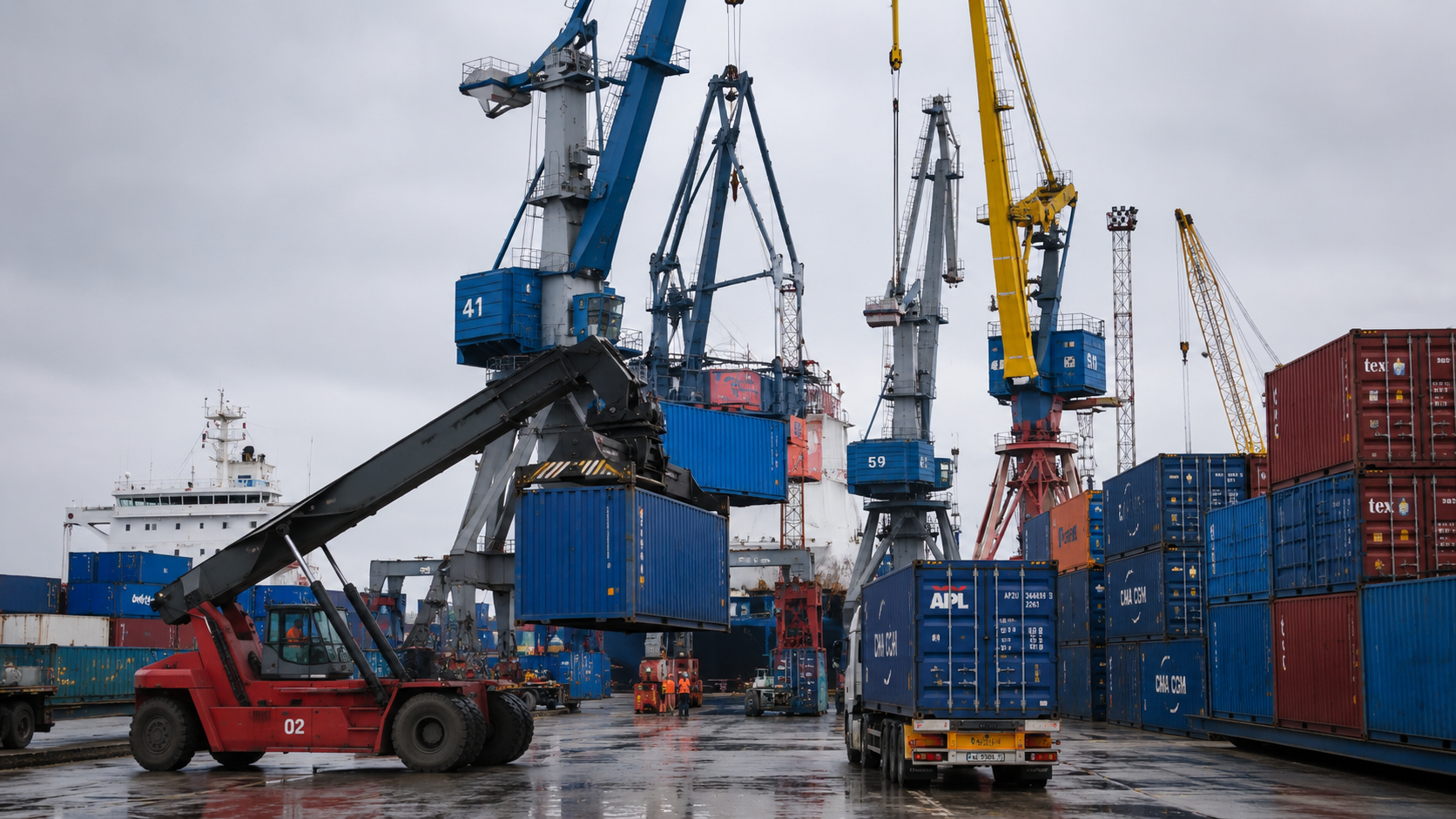
The prospects for deeper cooperation were discussed by Valery Sherin, First Deputy Chairman of the Government of the Kaliningrad Region, and Olimjon Abdullayev, Deputy Minister of Foreign Affairs of Uzbekistan.
The two sides reaffirmed their commitment to expanding bilateral trade, increasing investment ties and developing joint projects in industry and logistics.
Uzbekistan to Increase Agricultural Exports
According to Valery Sherin, the current trade turnover between the Kaliningrad Region and Uzbekistan is primarily based on food products, agricultural raw materials and textiles. However, both parties believe there is significant room for further growth.
The Russian region is particularly interested in importing fresh vegetables, fruits and berries from Uzbekistan. Priority products include apricots, cherries, melons, watermelons and other seasonal produce.
“The Kaliningrad Region is interested in importing fresh vegetables as well as fruit and berry products. We believe that our cooperation in this area can be expanded many times over,” Valery Sherin said.
The expansion of agricultural supplies is expected to increase bilateral trade volumes while strengthening food supply chains between the two regions.
BRICS Opens New Opportunities
Additional momentum is expected from Uzbekistan’s participation in the BRICS partnership framework, which the country joined as a partner in 2025.
A BRICS Trade House is scheduled to open in Kaliningrad later this summer. The facility will serve as a platform for companies from BRICS member and partner countries to showcase their products while enabling Uzbek manufacturers to present investment projects and establish new business partnerships in the Russian market.
Both sides believe that BRICS mechanisms can significantly expand export opportunities for Uzbek businesses and attract additional investment into joint projects.
Industrial Cooperation on the Agenda
In addition to agricultural trade, the discussions focused on industrial cooperation.
Uzbekistan expressed interest in the industrial capabilities of the Kaliningrad Region, particularly in solar energy, mechanical engineering, battery manufacturing and the development of modern industrial facilities.
The parties also explored opportunities for Uzbek companies to participate in regional manufacturing projects and exchange industrial technologies.
Cooperation Beyond the Economy
The talks extended beyond trade and investment.
Representatives of Uzbekistan and the Kaliningrad Region discussed cooperation in education, healthcare and labor migration. According to the participants, stronger humanitarian ties will provide an additional foundation for long-term economic cooperation.
The authorities of the Kaliningrad Region expect that closer relations with Uzbekistan will boost foreign trade, broaden the range of goods available on the regional market and create new business opportunities for companies on both sides.
Experts note that, amid the development of transport corridors linking Central Asia and Russia, such agreements are becoming part of a broader strategy to strengthen trade and logistics connectivity and diversify supply chains across the region.
Read also: Air Cargo Volumes in Uzbekistan Surge 70% in Early 2026
