

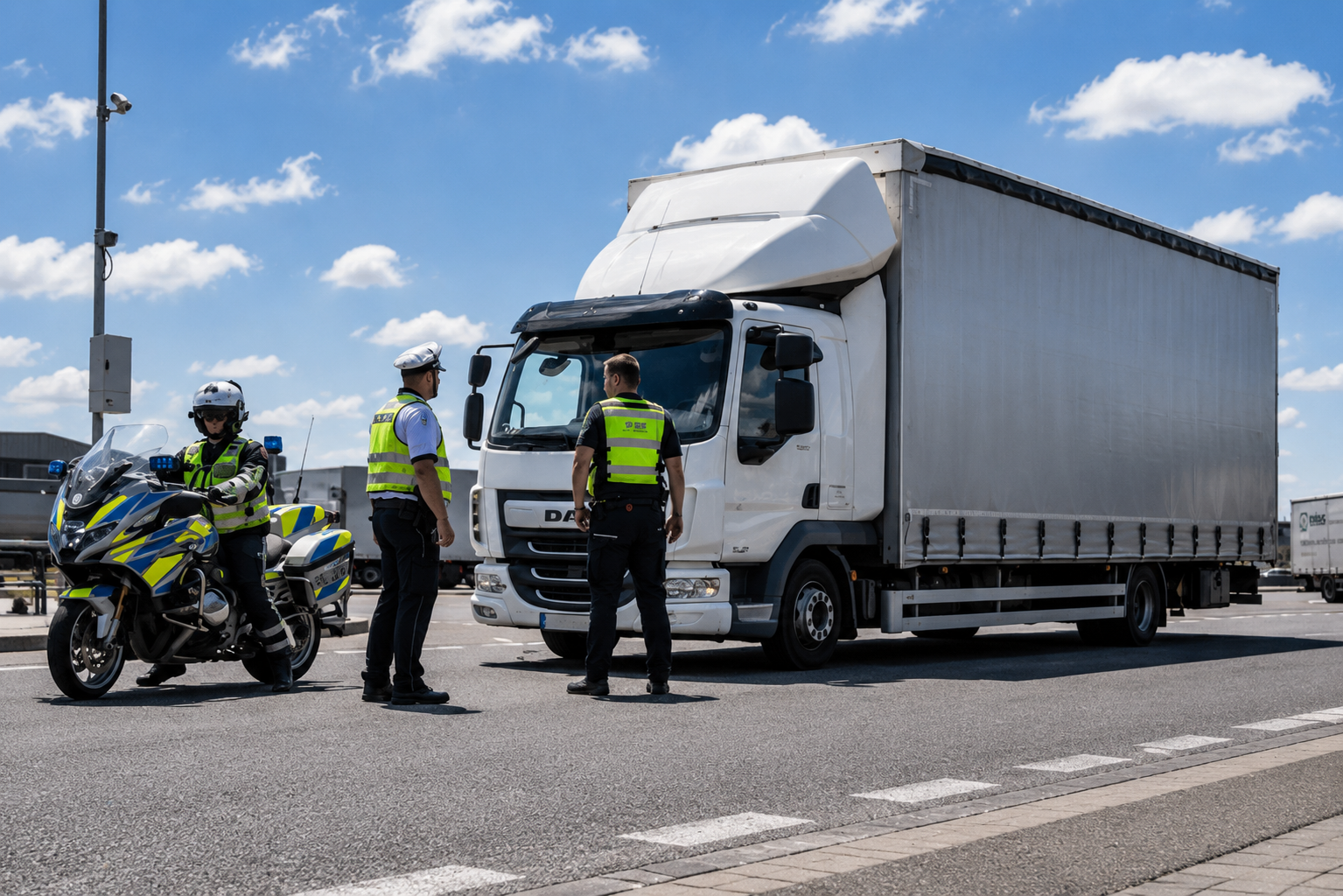
The Czech Road Transport Inspection, INSID, and the traffic police are preparing a series of joint road safety operations aimed at trucks and buses. The campaign will run from July to September across all regions of the country.
The inspections will focus on three main areas: driver alertness and rest periods, vehicle weight limits and technical condition. The goal is to strengthen control over freight and passenger transport at a time when road traffic increases because of holidays, tourist trips and children travelling to summer camps.
For carriers, the campaign means a higher probability of roadside checks on both transit corridors and local routes used by buses. The authorities say the format will not be the same everywhere. Each region will plan checks based on local traffic patterns and risk areas.
As K2Cargo News previously reported in Europe Introduces Summer Truck Driving Restrictions for 2026, summer has become one of the most difficult periods for European road freight. Seasonal traffic, heat, restrictions and enforcement campaigns all affect route planning.
Why Czechia Is Increasing Checks
The Czech Ministry of Transport says road safety is an absolute priority during the summer holidays. Trucks and buses are being singled out because crashes involving heavy vehicles can have especially serious consequences.
Such accidents may cause long traffic jams, high material damage and, most importantly, endanger many people at once. This is particularly relevant for buses carrying tourists or children and for trucks moving on busy holiday routes.
By combining INSID inspectors and police officers, the authorities want to carry out more targeted checks where the risk of violations and their possible consequences is highest.
Driver Fatigue Will Be a Key Focus
One of the main priorities will be compliance with driving and rest-time rules.
INSID reminds that bus and truck drivers may generally drive no more than nine hours per day, with selected exceptions allowing ten hours. After 4.5 hours of driving, they must take a break of at least 45 minutes.
Summer conditions make this issue more sensitive. High temperatures and dense traffic can tire drivers faster than usual. Inspectors will therefore check not only whether drivers take required breaks, but also whether they keep proper records and avoid illegal practices.
The checks may include tachograph data analysis, attempts to detect manipulation and cases where a driver uses another person’s driver card.
Weight Limits and Technical Condition
The second major priority will be vehicle weight.
Overloaded trucks damage road infrastructure, have longer braking distances and are harder to control. The Czech authorities expect cooperation between INSID and police to be especially useful during weighing operations on main roads.
If drivers try to avoid a checkpoint by using nearby roads, police may cover detour routes or direct vehicles back to the inspection point.
The third priority will be technical condition. Inspectors will use a mobile technical inspection station to check vehicles directly on the road. This equipment allows them to examine braking performance, axle condition and steering systems.
For carriers, this means that poor maintenance, hidden technical defects or overloaded vehicles can lead not only to fines, but also to a ban on continuing the trip.
Why Cooperation Matters
INSID and Czech police already work together outside special summer campaigns.
Inspectors have helped police evaluate tachograph data after serious crashes and weigh vehicles when patrols did not have the necessary equipment. Police, in turn, have supported inspectors when drivers refused checks, damaged immobilisation equipment or drove away despite a ban.
The summer campaign formalises and expands this cooperation. It also shows that Czech enforcement is moving toward more targeted inspections rather than random roadside control.
For professional operators, this can be positive if the system focuses on real risks and repeat offenders. But it also means that documentation, tachographs, weight planning and vehicle maintenance must be in order before the vehicle reaches the road.
Previous INSID Results Show the Scale
INSID’s first months of operation already showed a high level of violations in the sector.
During its first nine months, the inspection carried out more than 16,000 checks of trucks and buses. Violations were found in about 22.6% of cases, while fines and deposits exceeded 46 million Czech crowns.
The most common problems included breaches of mandatory breaks and overloaded trucks. These are exactly the issues that the summer campaign will target again.
For carriers operating in Czechia or transiting through the country, the message is clear: summer enforcement will be more visible, more coordinated and more focused on safety-critical violations.
Read also: Europe Introduces Summer Truck Driving Restrictions for 2026