

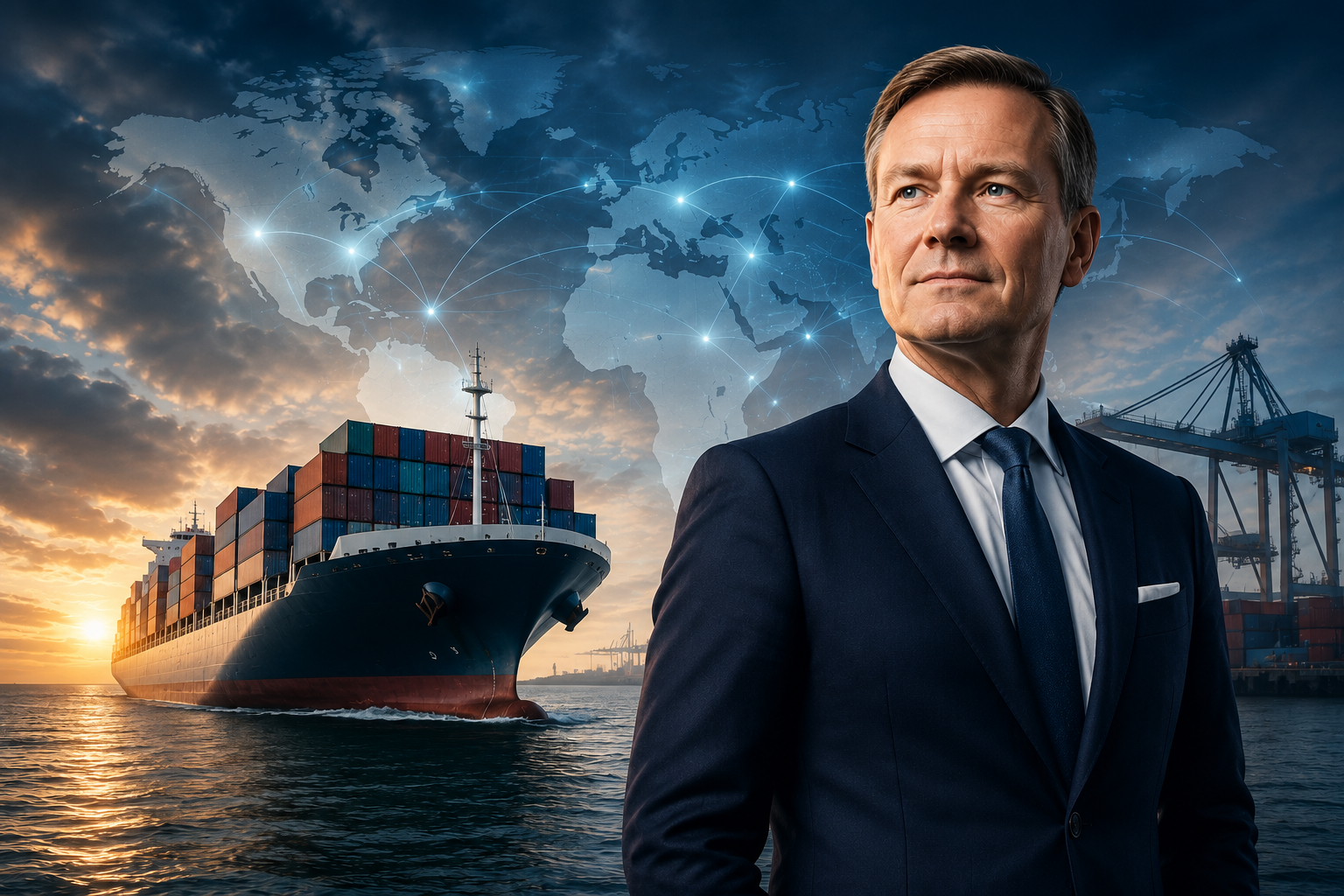
Anglo-Eastern Chief Executive Officer Bjørn Højgaard said the future of global shipping will depend on the industry’s willingness to challenge long-established assumptions, embrace digital technologies, and adapt to growing geopolitical uncertainty.
According to Højgaard, the maritime sector needs more than conferences that reinforce existing views. Instead, it requires open discussions in which participants are prepared to question conventional strategies. He identified geopolitical risks, the rapid development of artificial intelligence, and the energy transition as the three defining challenges for the next decade.
Højgaard placed particular emphasis on the adoption of artificial intelligence. In his view, the question is no longer whether AI will transform shipping, but how quickly companies can integrate it into their day-to-day operations. He believes AI should serve as a tool to support both seafarers and shore-based teams by improving decision-making, reducing administrative workloads, and increasing fleet operational efficiency.
He also noted that companies capable of bringing operational data together into a single, reliable management system will gain a significant competitive advantage. Technology, he stressed, should enhance human judgment rather than replace it.
Regarding decarbonization, the Anglo-Eastern CEO urged shipping companies to continue investing in energy efficiency and practical solutions despite ongoing uncertainty surrounding future marine fuels, infrastructure, and regulatory frameworks.
According to Højgaard, the global maritime industry must prioritize resilience, innovation, and data-driven decision-making, as these factors will determine competitiveness in an increasingly volatile world.
Read also: Attack on Commercial Vessels in the Strait of Hormuz Raises Risks for Global Trade
