

First Windrose Joins a European Fleet
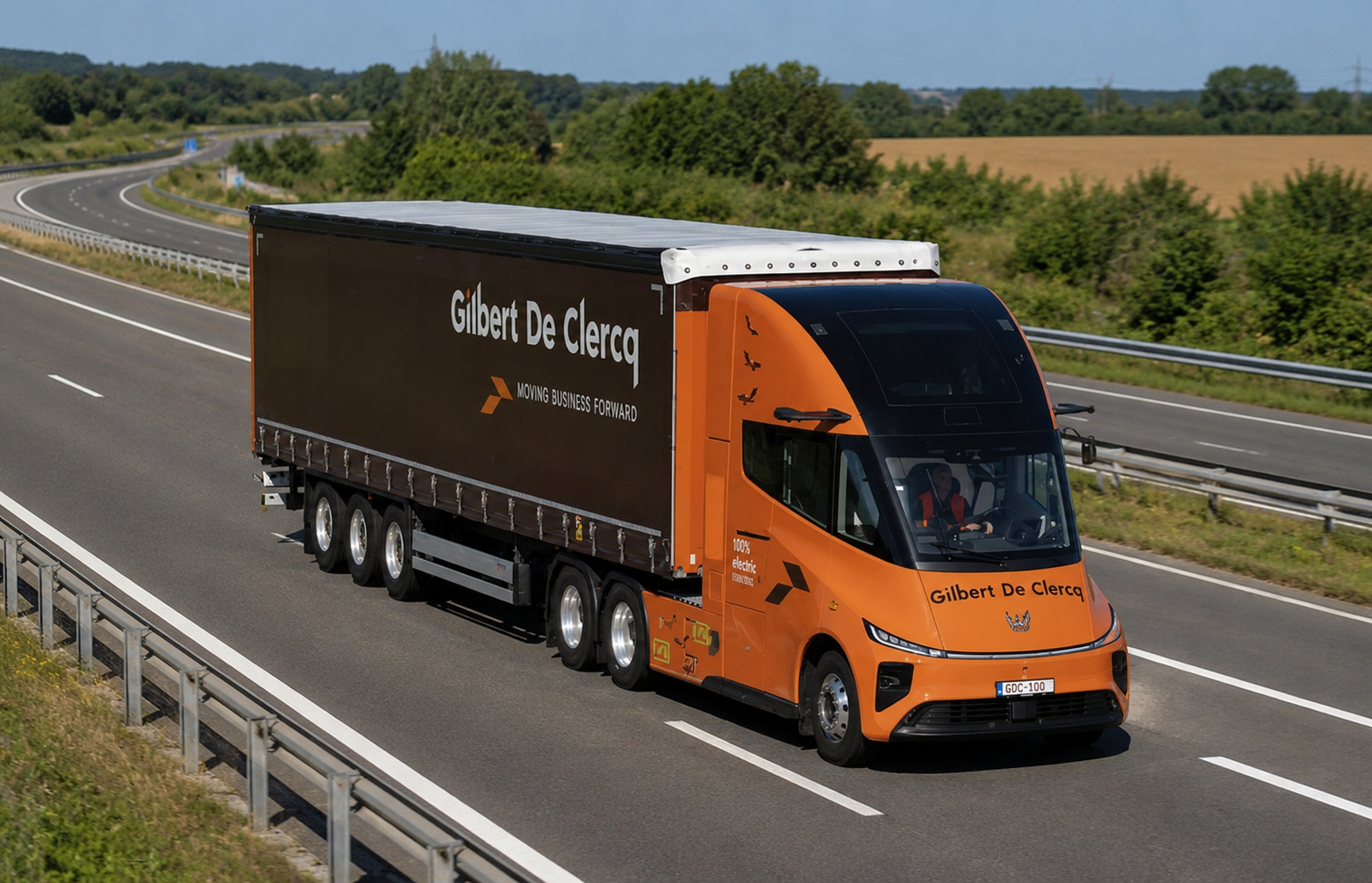
Belgian transport and logistics operator Gilbert De Clercq has started commercial operations with a Windrose Global E700 electric tractor, also known as the R700.
The orange truck is the first Windrose vehicle officially delivered to a European customer. Windrose trucks had previously completed trials in several countries, but had not entered regular commercial service as part of a European carrier’s own fleet.
The deployment follows an extensive testing programme and the completion of the required approval procedures. The tractor will operate on different routes in Flanders from Gilbert De Clercq’s depot in Puurs, where it will also be charged.
The carrier has not initially assigned the vehicle to a single customer or fixed route. Instead, it plans to collect operational data covering range, energy consumption, charging time and performance under different transport conditions.
Battery Provides Around 650 km of Range
The Windrose R700 is equipped with a lithium iron phosphate battery with a capacity of approximately 705 kWh. When operating at a gross combination weight of around 40 tonnes, the claimed driving range is approximately 650 km.
The manufacturer’s current technical documentation also lists a calculated range of up to 670 km for the European model. Actual performance will depend on cargo weight, temperature, driving speed, terrain, auxiliary equipment and traffic conditions.
This range means the tractor is not limited to short regional journeys. With suitable charging infrastructure, it could serve longer routes connecting warehouses, ports and distribution centres.
Gilbert De Clercq is nevertheless beginning with operations that allow the vehicle to return to its own depot. This model reduces dependence on public charging stations and gives the carrier greater control over charging schedules.
The arrival of Windrose in Belgium reflects the wider international expansion of manufacturers from China. K2Cargo.News previously reported that Chinese electric vehicles are strengthening their position in the global market, particularly as European demand continues to grow.
Special Permit Required for the Combination
Although the Windrose R700 has received European whole-vehicle type approval, its dimensions currently create an operational restriction.
The tractor combined with a standard semi-trailer has an overall length of 18.15 metres. This exceeds the standard European limit of 16.5 metres for an articulated vehicle combination.
Gilbert De Clercq therefore had to obtain a special permit to operate the truck as an exceptional combination. The authorisation allows the Windrose to operate at up to 50 tonnes, but it is currently valid only within Flanders.
The restriction is not caused by incomplete European certification of the truck itself. The R700 is approved for registration and sale in the EU, but its elongated design requires separate permission when coupled to a conventional full-size semi-trailer.
This issue is commercially important for Windrose. If each vehicle requires regional exemptions, carriers may find it difficult to deploy the model on international routes crossing several European countries.
Possible solutions could include changes to the tractor’s dimensions, the use of a different trailer or adjustments to rules that allow additional length for aerodynamic and zero-emission vehicles.
Windrose Plans Assembly in Antwerp
The R700’s entry into commercial service is connected to Windrose’s wider European expansion strategy.
The company is developing Windrose Park Antwerp at the Port of Antwerp-Bruges. It will become the manufacturer’s first European flagship centre, combining electric truck assembly, research and development, and after-sales support.
The project will occupy two plots covering a total of 9.5 hectares along Noorderlaan in Antwerp. Windrose plans to ship components by sea and assemble completed vehicles in Belgium.
The finished trucks will subsequently be supplied to customers in other European countries. The project could eventually create around 200 permanent jobs and generate additional container traffic from the Far East through the Port of Antwerp-Bruges.
Local assembly should shorten delivery times, simplify customer support and help the manufacturer adapt its vehicles to the requirements of individual European markets.
The initial model is based on assembly from imported components rather than the complete relocation of the production chain from China. Windrose has indicated that deeper localisation could later include parts of the electric powertrain and battery systems.
Commercial Service Will Be the Main Test
Before the delivery to Gilbert De Clercq, Windrose trucks had already taken part in demonstrations and trial operations across Europe. Regular fleet service will provide more valuable operational data.
The carrier will need to assess more than maximum driving range. Reliability, payload, charging performance, spare-parts availability and maintenance costs will all influence the vehicle’s commercial viability.
Residual value will also be important. European transport companies need to know whether an electric tractor from a new manufacturer can be resold after several years of operation.
Successful performance by the first R700 could help Windrose secure additional orders in Belgium and other EU markets. Problems involving reliability, servicing or permits could slow the brand’s expansion.
The deployment demonstrates that competition in Europe’s electric truck market is beginning to extend beyond established manufacturers. Chinese companies are moving from demonstrations and short-term trials into real commercial fleet operations.
Read also: Milence Opens Its First Truck Charging Station in Denmark