

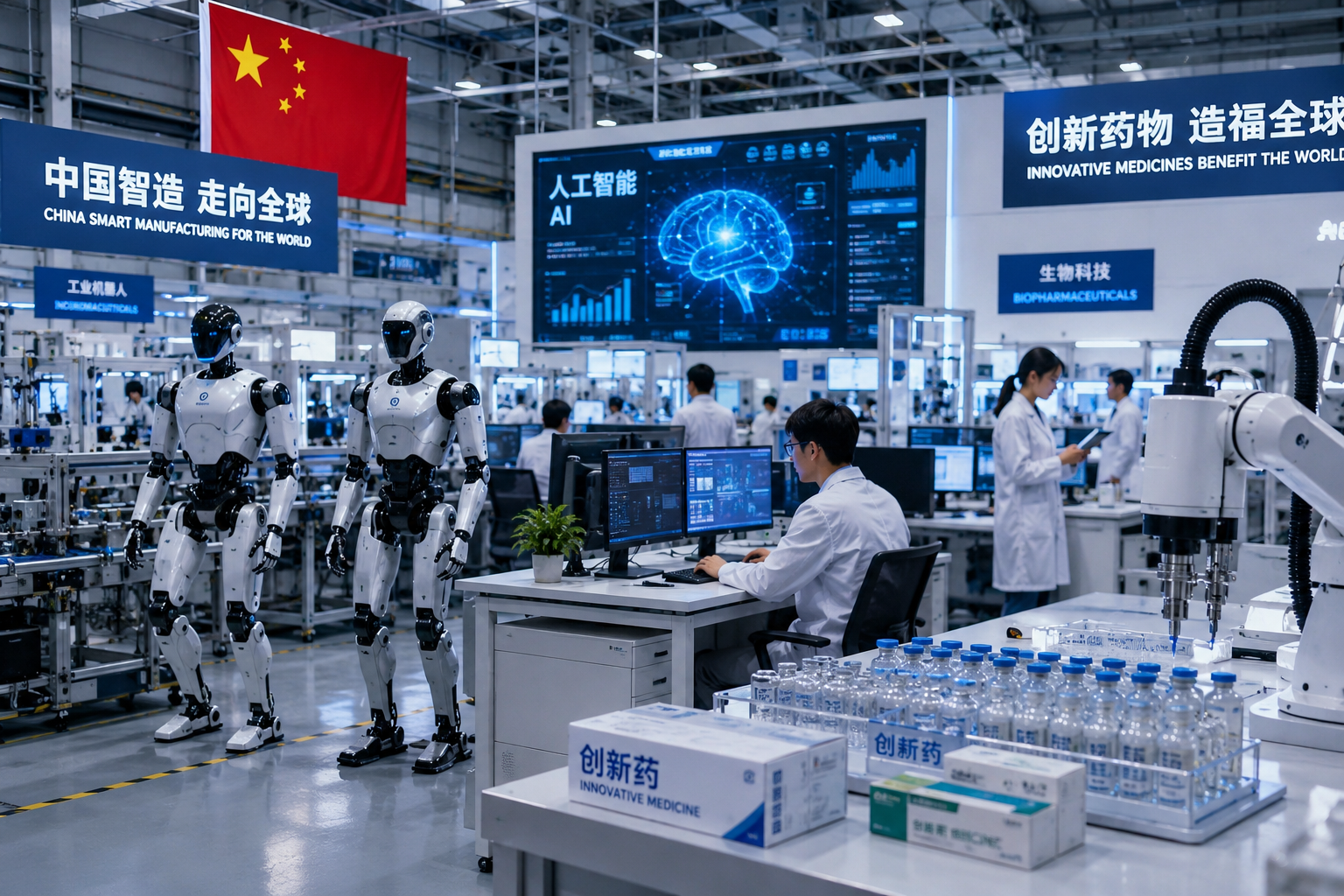
Robotics, artificial intelligence, and innovative medicines are emerging as the new drivers of China’s exports, gradually overtaking electric vehicles, batteries, and solar energy. Beijing is no longer focusing solely on individual technologies but is instead investing in integrated innovation ecosystems designed to strengthen its long-term global competitiveness.
China is reshaping its technological development strategy, placing industrial robotics, AI, and biopharmaceuticals at the center of its next growth cycle. While electric vehicles, lithium batteries, and solar panels have dominated the country’s high-tech exports in recent years, industries with significantly higher value-added potential are now taking center stage.
According to China’s customs authorities, exports of industrial robots reached 6.29 billion yuan in the first half of 2026, while exports of surgical robotic systems totaled 480 million yuan. At the same time, China continues to lead the world in the deployment of large language models and the development of generative AI technologies.
From Products to Technology Ecosystems
Experts say China is steadily moving beyond exporting individual products toward delivering comprehensive technological solutions. The new model integrates hardware, software, AI algorithms, cloud infrastructure, and industry-specific applications into unified ecosystems.
This approach enables Chinese companies to scale innovations more rapidly and accelerate the commercialization of new technologies in global markets.
Chinese Robots Are Expanding Worldwide
Chinese robotics companies are rapidly strengthening their international presence. AgiBot’s humanoid robots are undergoing extensive testing at industrial facilities, DEEP Robotics’ quadruped robots are being deployed for infrastructure inspections, including at nuclear facilities, while Dobot’s collaborative robotic arms are finding growing applications across manufacturing and service industries.
Meanwhile, China’s medical technology sector is also gaining momentum. Chinese surgical robotic systems are gradually entering overseas markets, while research institutions continue investing heavily in next-generation AI models for healthcare, neuroscience, and biotechnology.
According to analysts, this new “trio” of technologies reflects China’s ambition to strengthen its position in the world’s most promising high-value industries and shift its economic focus from large-scale manufacturing toward exporting advanced technologies, integrated innovation ecosystems, and intellectual property.