

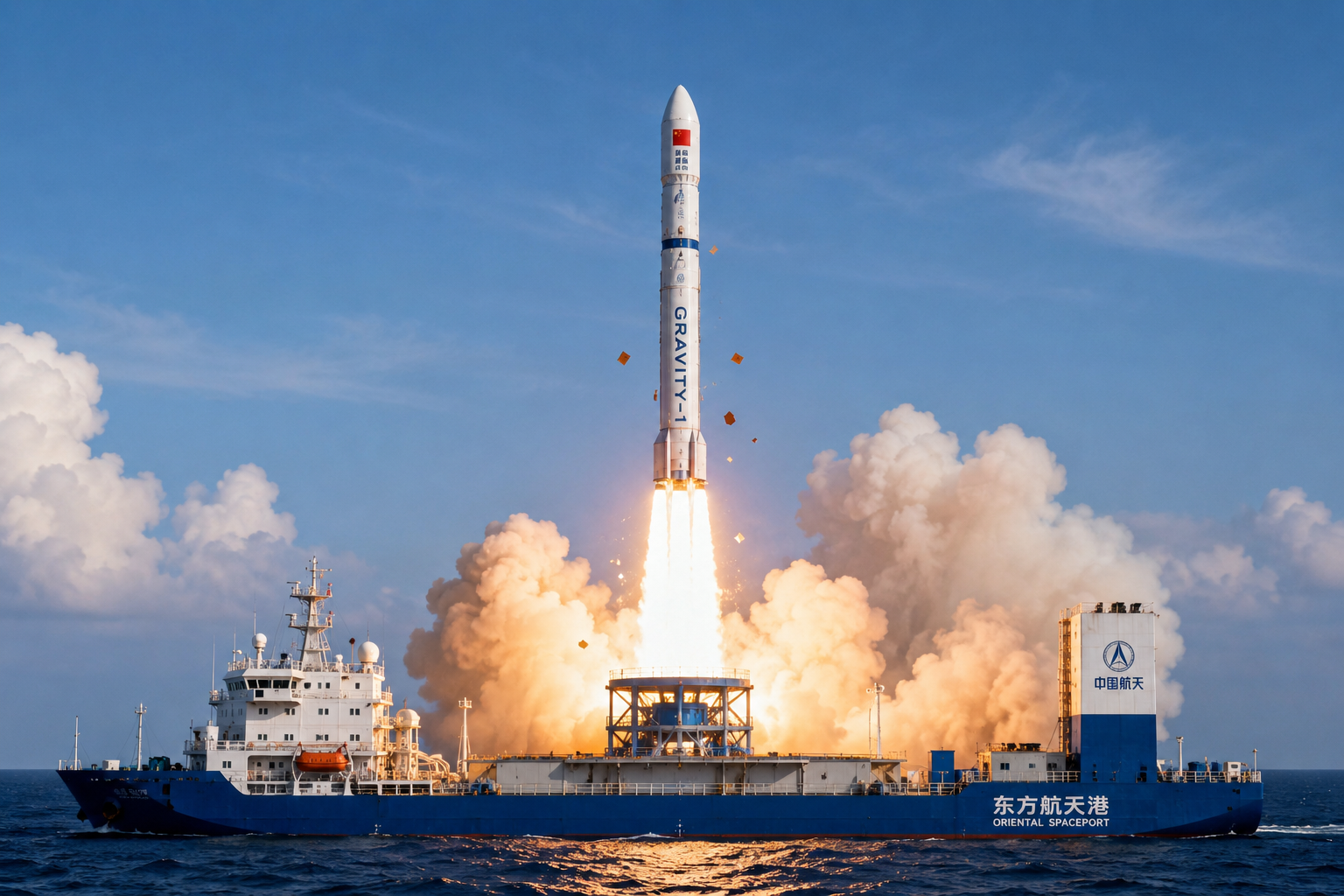
China continues to showcase new capabilities in space launch technology. The Gravity-1 rocket successfully lifted off from a sea-based platform off the coast of Shanghai, deploying nine satellites into orbit during a single mission.
China is rapidly expanding its commercial space industry and sea-based launch capabilities. The Gravity-1 launch vehicle successfully blasted off from a maritime platform near Shanghai, placing all nine satellites into their designated orbits.
The launch took place on July 22 at 10:54 a.m. Beijing time. According to Chinese media, all satellites were successfully delivered to their planned orbits, and the mission achieved all of its objectives.
Gravity-1 is one of China’s most powerful commercial solid-fuel launch vehicles. Operating from a sea-based platform provides greater flexibility in selecting launch locations, reduces pressure on land-based infrastructure, and improves the overall efficiency of space missions.
The successful mission further underscores China’s ambition to strengthen its position in the global commercial launch market. The country continues to invest heavily in new launch vehicles, expand its satellite constellations, and increase the frequency of sea-based launches, viewing them as a key component of its long-term national space strategy.
Read also: Seafarers Offered Six Months’ Salary for a Single Voyage Through the Strait of Hormuz