

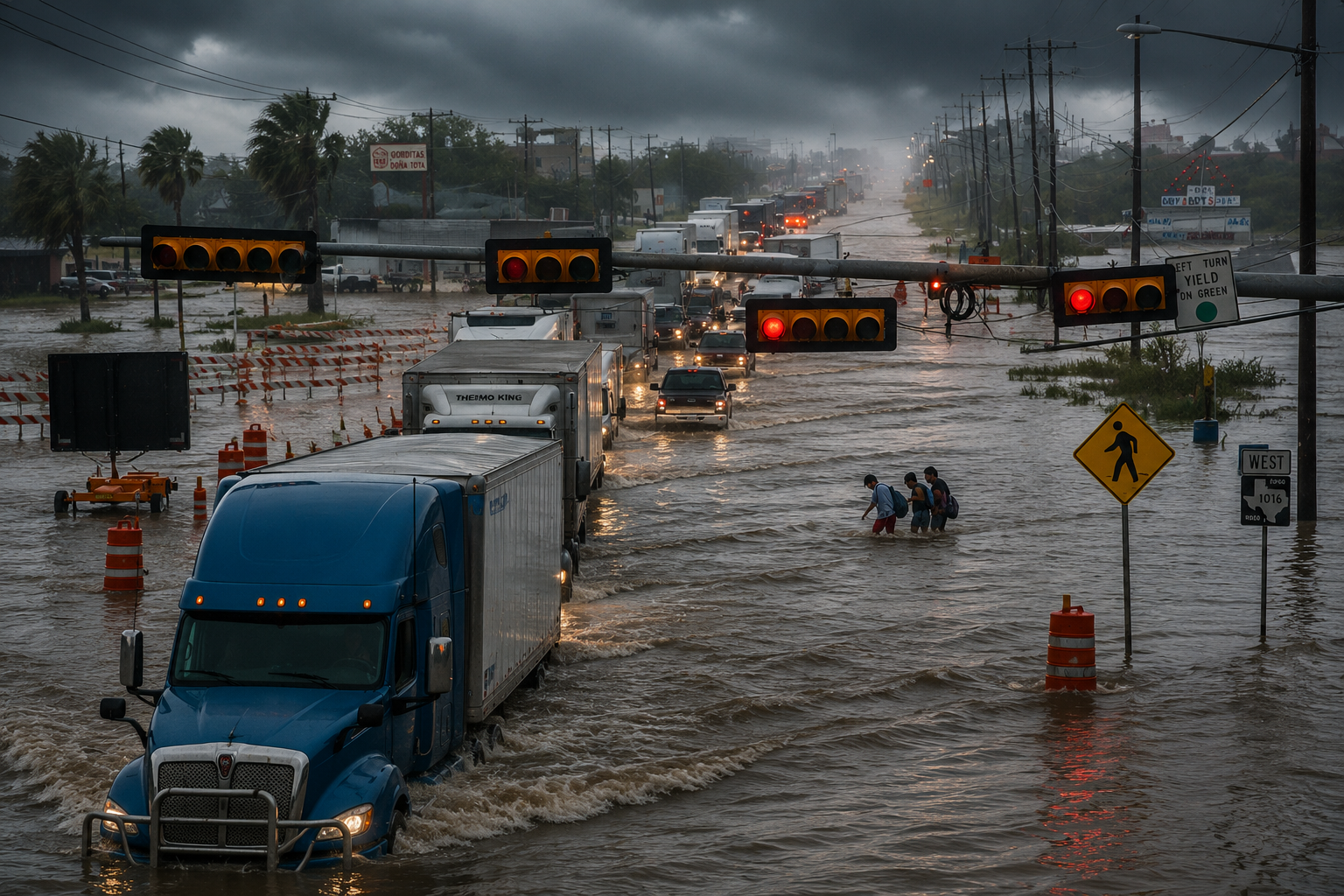
Texas is once again battling more than heavy rain. It is facing a test of the resilience of its infrastructure.
Just one year after a catastrophic flood and the Camp Mystic tragedy shocked the nation, floodwaters have once again turned roads into rivers and routine rescue operations into a race against time. But this story extends far beyond a single American state. It is another warning that extreme weather is increasingly shaping economies, disrupting transportation networks, and testing governments’ ability to protect people and critical infrastructure.
Texas Is Underwater Again
Over the past 24 hours, a powerful storm system has battered central and southern Texas. In some areas, nearly half a year’s worth of rain fell within only a few hours. Small rivers and creeks that normally pose little danger rose rapidly, flooding communities, highways, and rural roads.
The most serious conditions were reported in Uvalde, Kerr, Kendall, and Bandera counties, as well as in the San Antonio area. Rushing water swept away vehicles, damaged bridges, and cut entire communities off from the outside world.
Authorities Responded More Quickly This Time
The lessons of last year’s tragedy were painful, but they appear to have changed the speed and scale of the response.
Texas Governor Greg Abbott declared a state of emergency in 59 counties, while more than 1,300 emergency personnel, National Guard units, aircraft, and rescue boats were deployed across the affected region.
State officials said dozens of people were rescued during the first hours of the emergency. Many had become trapped inside vehicles or homes as the water continued to rise.
When Transportation Becomes a Vulnerability
For the global economy, disasters like this are no longer merely regional events.
Texas is one of North America’s most important logistics hubs. Major highways, rail corridors, pipelines, and supply chains run through the state, connecting Mexico, U.S. manufacturing centers, and ports along the Gulf Coast.
The flooding forced the closure of more than 100 roads, disrupting truck traffic and the operations of distribution centers. For businesses, that means more than delayed deliveries. It also means higher costs from rerouting freight, vehicle downtime, and the redistribution of warehouse inventory.
Is Extreme Weather Becoming the New Normal?
What is most alarming is not only the scale of this flood, but how quickly another major disaster has returned.
Only a year has passed since one of the most destructive floods in modern Texas history, and the state is once again facing a similar scenario. The National Weather Service warned that total rainfall in some areas could approach 30 inches, or roughly 760 millimeters, with a continued risk of life-threatening flash flooding over the next 24 to 48 hours.
For logistics and supply-chain professionals, this represents a fundamental shift in risk assessment. Events once treated as rare exceptions are increasingly becoming factors that must be considered when designing transportation routes, selecting warehouse locations, and insuring cargo.
A Global Warning
Texas is far from the only region experiencing climate-related disruption. In recent months, major floods have damaged transportation networks across Europe, Asia, and West Africa, while droughts have restricted shipping on key inland waterways.
That is why the images of submerged highways in Texas are more than a record of another natural disaster. They are a reminder that the resilience of the modern economy depends not only on efficient supply chains, but also on whether infrastructure can withstand climate extremes that are becoming less exceptional and increasingly systemic.
Key Figures
| Indicator | Figure |
|---|---|
| Counties under a state of emergency | 59 |
| Emergency personnel and responders deployed | More than 1,300 |
| Rescue operations conducted | More than 75 |
| Roads damaged or closed | More than 100 |
| Maximum rainfall already recorded | Up to 16 inches, or approximately 406 mm |
| Potential total rainfall | Up to 30 inches, or approximately 760 mm |
| Period of continued danger | 24–48 hours |
| Deaths reported in the current flooding | None reported at the time of publication |
| Deaths in the previous Camp Mystic disaster | About 140 people, including 27 children |
