

EIB Funding Moves Into Poland’s Road Programme
Poland has cleared the way to use €1.1 billion in European Investment Bank financing for major expressway projects. On July 10, 2026, the General Directorate for National Roads and Motorways, GDDKiA, signed a tripartite agreement with the Polish development bank BGK and the Ministry of Infrastructure defining how the funds will be channelled into road construction.
Technically, the loans were granted by the EIB to BGK rather than directly to GDDKiA. The money will enter the National Road Fund, which finances motorway, expressway and bypass projects managed by the Polish road authority.
Of the total package, €500 million will co-finance sections of the S17 expressway in the Lubelskie Voivodeship. The remaining €600 million is intended for the S74 expressway and the Opatów bypass. Together, the projects cover nearly 205 kilometres of new high-speed roads.
Four S17 Sections Will Receive €500 Million
The S17 financing covers four separate sections between Piaski and Hrebenne with a combined length of 93.2 kilometres. These are Piaski Wschód–Łopiennik, Krasnystaw–Zamość Sitaniec, Zamość Wschód–Tomaszów Lubelski and Tomaszów Lubelski–Hrebenne.
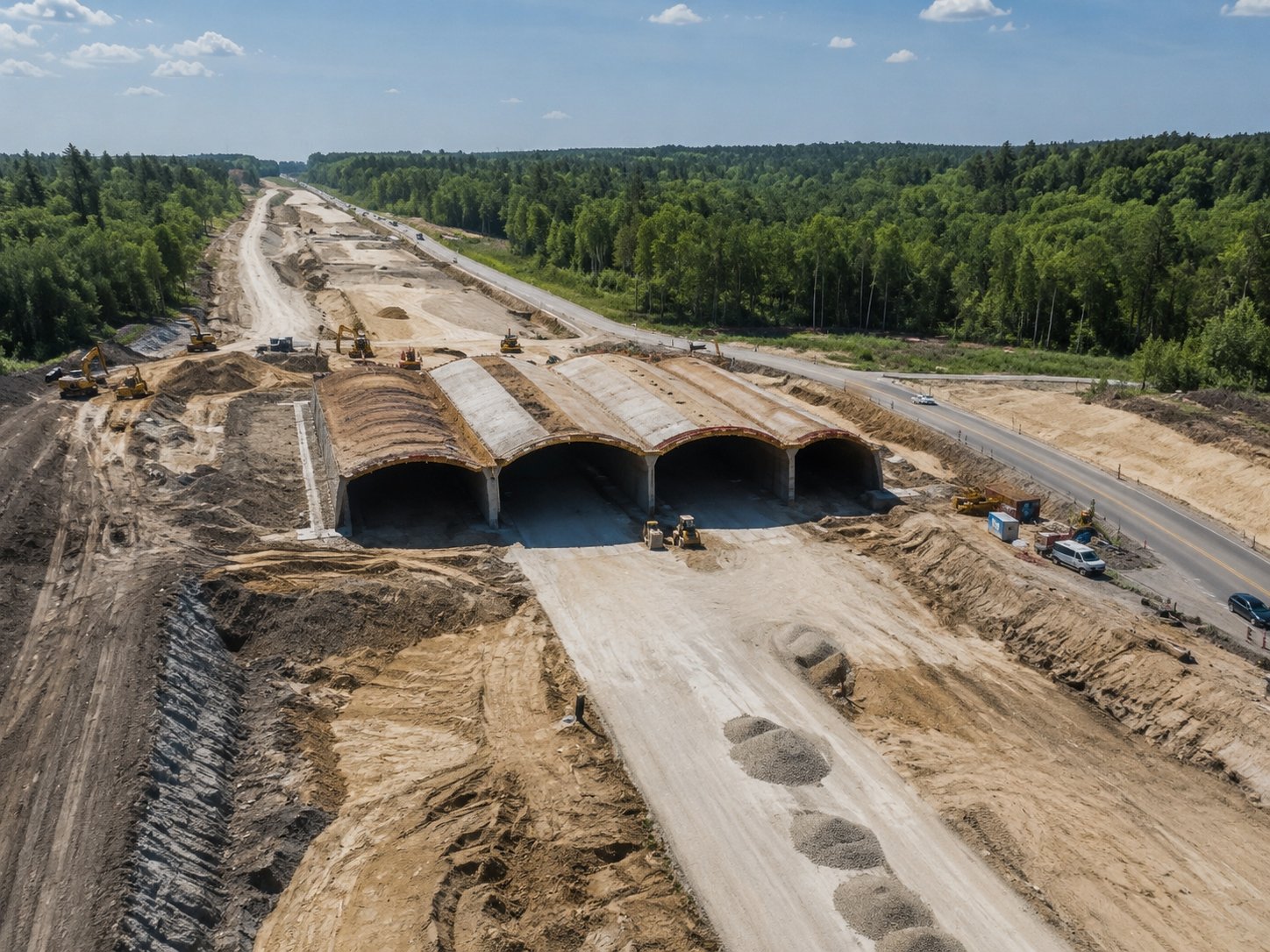
The programme also includes two service areas on the existing Tomaszów Lubelski bypass. Earlier project documentation indicated that the new infrastructure would include dual carriageways, 14 grade-separated junctions, more than 150 kilometres of access roads, modern traffic management systems, drainage infrastructure and wildlife crossings.
The EIB funding will supplement Polish state financing and EU support provided through the Connecting Europe Facility, or CEF 2. This blended structure reduces pressure on the national road budget while allowing several sections of the corridor to proceed simultaneously.
S17 Is Becoming a Strategic Poland–Ukraine Corridor
The S17 already connects Warsaw with Lublin. Once the missing sections are completed, it will continue through Zamość to Hrebenne on the Polish-Ukrainian border, creating a continuous expressway corridor from central Poland to Ukraine.
The route also forms part of the international E372 connection between Warsaw and Lviv. From the perspective of freight transport, the project should improve access from the Ukrainian border to Poland’s central road network, including links toward the A1 and A2 motorways and other major European freight corridors.
The investment comes as Poland’s road transport industry shows renewed confidence. As K2Cargo News recently reported, the Polish truck market recorded a strong recovery in the first half of 2026, increasing the importance of infrastructure capable of handling future freight growth.
The S17 will not by itself eliminate delays at the border. Crossing capacity, customs procedures and traffic management in Hrebenne will remain separate factors. However, replacing conventional roads with an expressway should make the inland section of the journey faster, safer and more predictable.
No Single Completion Date Has Been Announced
GDDKiA said the financing applies to sections that are already under implementation, but its latest announcement did not provide a single date for completing the entire 93.2-kilometre programme. The sections are being delivered under separate contracts and may therefore open at different times.
For logistics companies, the long-term effect could be significant. A completed S17 would strengthen east-west cargo flows, improve access to the Lublin region and provide a more efficient connection between Ukraine and Poland’s main distribution and industrial centres.
The project also has a broader European dimension. Polish and European institutions describe both the S17 and S74 as strategic roads that can support commercial transport, regional development, infrastructure resilience and civilian and military mobility on the EU’s eastern flank.
Read also: Heat Damages Germany’s A2 Motorway, Bringing Traffic Toward Poland to a Standstill
